Yes—the AION Y Plus is a credible family EV when the household can use its five-seat space and arrange dependable charging. The Hong Kong Basic specification provides a concrete basis: a 2,750 mm wheelbase, 40:60 split-folding rear seats, rear ventilation and a 63.2 kWh LFP battery rated at 490 km NEDC. This supports both spacious family use and range flexibility. The strongest match is a household whose actual passengers and luggage fit with the necessary seats occupied, and whose normal parking gives enough opportunity to replenish energy.[YHK]
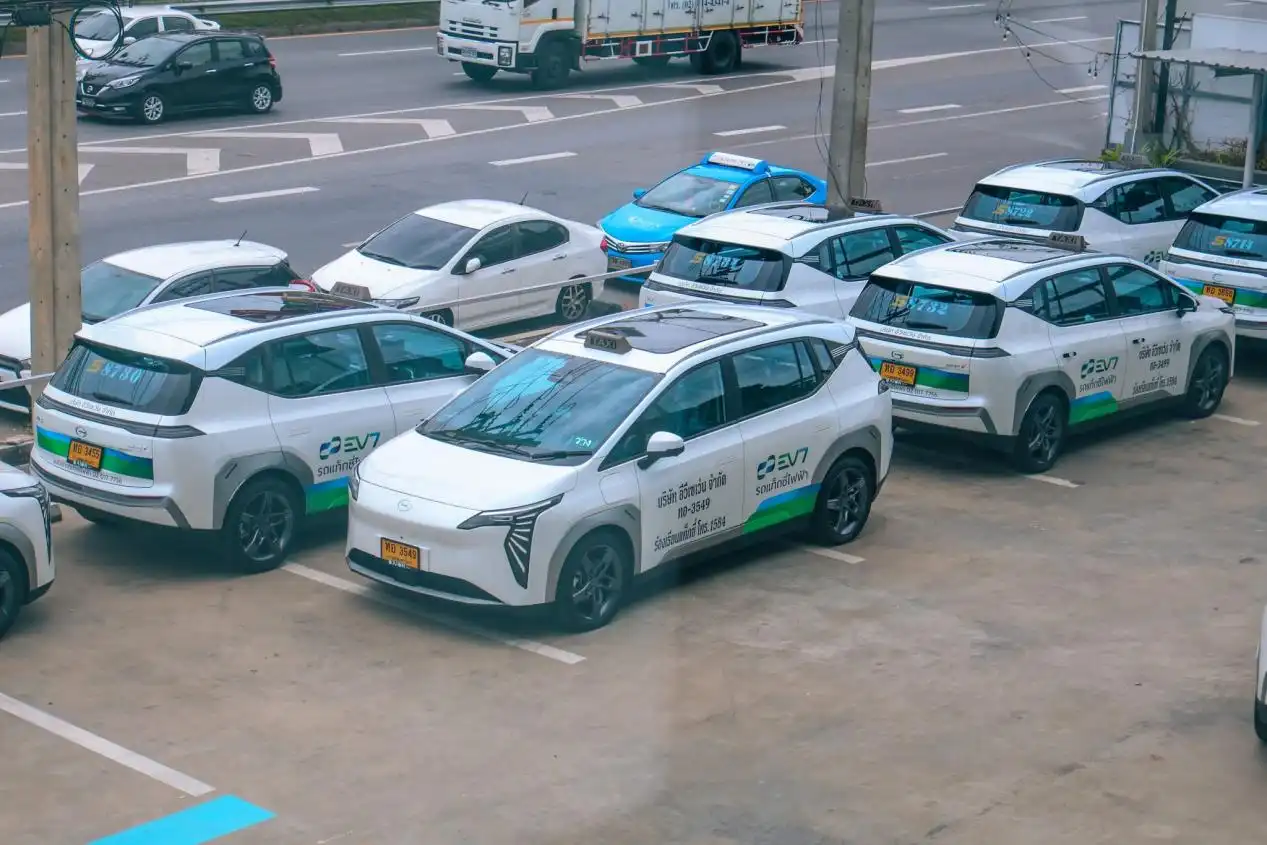
A family EV has to allocate space and time well
A family car performs two forms of carrying. It carries people and their equipment, and its energy supply carries the family's plans from one appointment to the next. The AION Y Plus has a convincing starting package for both: the Hong Kong Basic specification lists five seats, a 2,750 mm wheelbase, a 63.2 kWh lithium-iron-phosphate battery and a 490 km NEDC range rating. Those are the concrete foundations of its spacious, long-range family proposition.[YHK]
The benefit becomes clearer when space and range are considered together. A roomy cabin is less useful if a family outing requires a passenger seat to be folded for ordinary luggage. A substantial battery is less convenient if its owner has no dependable time or place to recharge. Conversely, a car that accommodates the household with its seats occupied and replenishes energy during normal parking can remove repeated compromises from the week.
This analysis uses the Hong Kong Basic specification as its main vehicle reference. Malaysian documents provide separately identified examples of cargo measurement, charging ratings and maintenance disclosure. The same nameplate does not make those market specifications interchangeable. No simulated journey below is presented as a road test, and no physical loading arrangement is claimed to have been tested by this publication.
The aim is a practical answer to the family question: how the car's documented design can support school journeys, shared driving, shopping and occasional longer days. Is the GAC AION Y a good family EV? Why Space and Range Work Better Together explains the relationship between cabin room and usable range; the sections below turn that relationship into specific seating, loading and energy decisions.
The Hong Kong package puts passenger room ahead of a bulky exterior
The Hong Kong AION Y Plus Basic specification identifies a 4,535 mm body length, 1,870 mm width and 2,750 mm wheelbase. The wheelbase is about 61% of the listed overall length. That arithmetic does not measure legroom, but it shows why the vehicle deserves consideration as a compact exterior package with a substantial distance between its axles. The actual seating arrangement determines how effectively that space is used.[YHK]
For a family, the important measurement is not the driver's knees with every other seat empty. It is the space left behind the regular driver's normal position, followed by the room remaining when a child restraint occupies the adjacent seat. The AION Y Plus's five-seat layout and split-folding rear bench create flexibility, but occupied seats cannot simultaneously be counted as cargo space. This is the distinction that makes a generous cabin a useful household asset rather than simply a showroom impression.
Rear air-conditioning vents and USB connections are listed for the Hong Kong Basic grade. They give the second row a practical role in the cabin design: passengers have a direct ventilation outlet and a place to connect suitable devices. These are modest details individually, yet they matter repeatedly when the vehicle is used for school trips and family visits.
The local specification also lists a panoramic roof with an electric shade. An airy appearance can contribute to how spacious a cabin feels, while the shade gives occupants control over incoming light. Neither feature replaces a physical headroom check. The positive case is the combination of a substantial wheelbase, a flexible rear bench and equipment intended for the people sitting there.
Door access is a real part of usable family space
The Malaysian AION Y Plus presentation highlights doors capable of opening to 90 degrees. That is a useful example of how access can support family use: a wide opening can make it easier to approach a child restraint or help a passenger enter. It is a manufacturer description of the model presented in that market, rather than a measured advantage over every competing vehicle.[YMYMODEL]
The full opening is only available where the surrounding space permits it. A narrow parking bay can limit the door well before its mechanical maximum. For a Hong Kong household using a fixed parking place, the most revealing demonstration is therefore the normal access path at a realistic door angle. The person fitting the child's harness needs room to work; the child needs a safe route into the seat; and an adjacent vehicle or wall may determine which side is easiest to use.
This is where a design feature becomes more than a brochure line. Consider two adults travelling with one child and an older relative. The family may choose the rear seating positions according to both access and restraint requirements. A generous opening can help, but it does not decide the entire arrangement. The front passenger's seating position, the relative's mobility and the placement of the child seat remain relevant.
The Hong Kong model's official local presentation is the appropriate starting point for arranging a demonstration of the delivered vehicle. A positive family judgment should reflect how the household enters, sits and exits under ordinary conditions. Spaciousness is not just what can be measured inside the car; it includes how comfortably people can use that interior every day.
Build the seating plan before making a luggage plan
A useful family demonstration begins with the maximum number of people who regularly travel together. For two adults and two children, install the actual restraints and set both front seats for their regular occupants. Then check buckle access, the ability to reach each harness and the remaining rear centre position. A five-seat specification establishes seating capacity, but it does not prove that every combination of three child seats will fit correctly across the bench.
The Hong Kong Basic equipment list includes ISOFIX child-seat anchors, front side airbags and side curtain airbags. These are relevant provisions for family use, yet the presence of anchor points is not a substitute for following the vehicle and restraint instructions. The car's configuration must be assessed with the specific restraints, their permitted installation method and the passengers who will actually use them.[YHK]
Now introduce an occasional fifth passenger. That changes the loading problem immediately: the rear bench must remain available, and a bulky object cannot occupy the space allocated to that person. An arrangement that works beautifully for a family of three may be unsuitable for a family of five carrying the same pushchair and bags. The AION Y Plus should receive credit for usable space that remains available in the required seating configuration, not for capacity created by removing necessary seats.
AION Y Plus: Spacious Family Travel with the Seats Still in Use develops this occupied-seat approach. Its practical value is avoiding a misleading demonstration with every seat moved forward or folded. If the actual household fits comfortably in normal positions, the spacious-family claim has become meaningful evidence about that buyer's use.
Two loading examples reveal different uses of the split rear bench
The Malaysian specification provides a useful numerical reference: 405 litres with the rear seats available and 1,200 litres with the rear seat folded. These are the figures for the Malaysian Elite and Premium sheet dated February 2026. The Hong Kong Basic table does not publish the same cargo-volume field, so those litre values should not be silently transferred into a Hong Kong sales claim.[YMY]
Consider first a normal four-person outing: two adults, two children, a folded pushchair, a small cooler and several soft bags. The meaningful question is whether those items fit in the luggage compartment while all required seats remain usable. Load larger rigid items first, then use soft bags to fill the spaces around them. This is an illustrative packing method, not a claim that a particular pushchair or cooler has been tested in the car.
A second situation is a two-person collection trip involving a long boxed item. The Hong Kong Basic specification lists a 40:60 split-folding rear seat, allowing part of the rear cabin to be repurposed. That is a different form of flexibility from the four-person example. The driver still needs an appropriate load position, secured cargo and unobstructed operation of the vehicle; a folded-seat volume is not a permission to carry any object that can be pushed through the opening.
These examples explain why the AION Y Plus can be a useful family vehicle without claiming class-leading luggage volume. It offers a passenger-focused configuration for normal travel and a changeable interior for occasional carrying tasks. AION Y Plus: Spacious Weekends Without Giving Up Everyday Family Use explores that transition. The advantage is being able to change the arrangement when the passenger requirement genuinely changes.
The 490 km rating provides planning headroom, not a fixed trip distance
The Hong Kong Basic model's official range is 490 km under NEDC, paired with a 63.2 kWh LFP battery. The Malaysian specification identifies the same rating and explains that actual driving results depend on behaviour and external conditions. The correct positive conclusion is that the car has a substantial published range for family use within the named test cycle. It is not a promise that a fully loaded vehicle will cover 490 km on every route.[YHK][YMY]
Range headroom matters even on short daily journeys. It can absorb an unplanned collection, an additional family visit or a missed charging opportunity without making the next day automatically impossible. This is a practical benefit of carrying more energy than a single routine trip requires. The household should still preserve a sensible reserve based on its route and reliable charging access, rather than using the headline as a target to exhaust.
The test-cycle label must remain beside the number. A 490 km NEDC claim cannot be ranked directly against another vehicle's WLTP or CLTC figure as if the tests were identical. Nor should a conversion factor be invented to produce an apparently precise real-world result. A comparison is strongest when it uses matched conditions or clearly states what remains different.
For an owner, actual energy records become increasingly useful after delivery. Several ordinary journeys reveal how the car behaves on the family's roads with its usual passengers and climate-control settings. AION Y Plus: Long Rated Range for a More Flexible Family Week explains why rated range is a starting point for flexibility, while observed consumption and dependable charging determine the routine the household can sustain.
A 240 km example shows why parking time can matter more than peak power
Take an illustrative family schedule consisting of five 32 km weekday circuits and an 80 km weekend outing. Total distance is 240 km. For planning only, assume the vehicle uses 18 kWh per 100 km at the battery; that produces a weekly energy requirement of 43.2 kWh. This consumption assumption is deliberately explicit and is not a measured AION Y Plus result.
If charging is assumed to be 90% efficient from the supply to the battery, the electricity required would be approximately 48 kWh. Dividing this amount by a hypothetical sustained 6 kW supply gives eight hours of charging time across the week. At 3 kW, the same simplified calculation gives sixteen hours. These are scenario calculations; actual power, efficiency and charging behaviour depend on the vehicle and installation.
| Illustrative input | Calculation | Planning result |
|---|---|---|
| Five weekday circuits | 5 × 32 km | 160 km |
| Weekend outing | 80 km | 240 km total |
| Assumed battery consumption | 240 × 18 ÷ 100 | 43.2 kWh |
| Assumed 90% charging efficiency | 43.2 ÷ 0.90 | 48 kWh from supply |
| Hypothetical sustained charging | 48 ÷ 6 or 48 ÷ 3 | 8 or 16 hours over the week |
The result explains the ownership mechanism. A household with several long parking windows may replenish the energy without a dedicated weekly trip to a fast charger. Another household covering the same distance but with no dependable parking-based charging may spend more active time managing the car. Battery capacity and rated range provide flexibility; the available hours determine how easily that flexibility is restored.
Make regular charging dependable before relying on occasional fast stops
Hong Kong's Environmental Protection Department guidance on EV charging recommends considering charging arrangements before buying an electric vehicle. It describes home, workplace and other suitable regular locations as the normal basis for charging, with the public network providing supplementary top-ups. That is directly relevant to a family evaluating the AION Y Plus: the location where the car already spends time can be more useful than an impressive charger elsewhere.[HKCHARGE]
The Hong Kong specification lists Type 2 for AC and CCS2 for DC. Connector compatibility is a necessary starting point, while the delivered vehicle, charger and electrical installation together determine the available power. The Hong Kong table reviewed here does not provide a maximum charging-power figure, so it would be inappropriate to borrow one from another market without confirmation.
For comparison, the Malaysian sheet explicitly lists 6.6 kW AC and 80 kW DC. Those figures help a Malaysian buyer plan around that specification; they are not a declaration that every Hong Kong vehicle has identical limits. The difference between a connector standard and an input-power rating is important: two installations can use the same connector while delivering very different charging rates.[YMY]
A family using public charging should consider access hours, payment, the distance from its usual route and a second usable location. A station beside a regular activity can fit naturally into the schedule. A station requiring a special detour can add work even if its peak output is high. The AION Y Plus's long rated range offers room to plan, but dependable replenishment is what makes that room useful.
A longer day needs an energy budget and a passenger break
The weekend scenario can change quickly when the family makes a longer outing. Suppose an illustrative trip is 200 km in total and planning consumption is again assumed to be 18 kWh per 100 km. The journey would require 36 kWh at the battery before any extra detours or change in conditions. That arithmetic helps identify the scale of the task; it does not establish the car's actual consumption or the usable energy available at a particular displayed charge level.
Start with the expected departure state of charge, then identify a dependable charging option along the route or at the destination. The purpose is not necessarily to stop at every available charger. It is to know how the journey can continue if traffic, weather or an unplanned additional trip changes the original assumptions. A family benefits from having that option before passengers become tired and the remaining margin becomes uncomfortable.
A charging stop can also serve the passengers. Food, toilets and a safe place to stretch may be more useful than a small theoretical improvement in peak charging speed. When a stop coincides with a break the family already wants, the time feels different from a detour made solely to recover energy. This is an ownership-planning observation, not a measured time saving attributed to the AION Y Plus.
The connection to space remains important. A comfortable rear cabin and accessible luggage make a longer day easier, while a realistic charging plan keeps the itinerary flexible. The car's family appeal is strongest when those two capabilities support the same journey rather than being presented as unrelated headline numbers.
Use the local equipment list to choose the comfort package
A family may like a model's general design but still need to distinguish between grades and markets. The Hong Kong Basic table lists automatic air conditioning, rear vents, a six-way powered driver's seat, a 14.6-inch central display and a 360-degree camera system. These provide specific reasons to investigate comfort and convenience on the actual car. They do not establish that every feature shown in an overseas promotional photograph is included.[YHK]
The Malaysian brochure is a useful reminder of this distinction because it separates Elite and Premium equipment. Its table includes features whose availability differs by grade, including some convenience and assistance items. A family considering a Hong Kong vehicle should therefore use the Hong Kong specification and delivery documentation, rather than assembling an imaginary version from the most attractive features advertised across several countries.
The same discipline applies to rest configurations. A folding seat back can make a parked cabin more versatile, but reclining or folded arrangements shown for relaxation should not be interpreted as appropriate seating positions while the vehicle is moving. Travelling passengers need to use the seating and restraints as instructed. A spacious interior is valuable because it supports correct, comfortable use, not because it removes those requirements.
Try the controls that recur on every trip: temperature, demisting, audio, camera display and the information the driver needs. A large display is only beneficial when its operation is understandable to the regular users. The AION Y Plus offers substantial family equipment in the named Hong Kong specification; its practical value is confirmed when both adults can use it comfortably and the rear passengers receive the room and ventilation they need.
The family verdict rests on a workable combination
The AION Y Plus is a good family-EV candidate because its documented package addresses two central needs together. A five-seat cabin with a substantial wheelbase and a split rear bench supports passengers and changing loads. A 63.2 kWh LFP battery and 490 km NEDC rating provide meaningful range headroom, particularly when energy can be replenished during ordinary parking. These are tangible reasons to consider the car, not merely a claim that it looks family friendly.
The purchase becomes stronger when the household can demonstrate its own arrangement: regular occupants in normal positions, actual restraints fitted, everyday luggage loaded and a dependable charging location identified. A large folded-seat figure should not conceal a shortage with the seats occupied. A long laboratory range should not conceal an inconvenient replenishment routine. Neither issue is unique to this model, but both determine whether its strengths translate into an easier week.
Maintenance is also part of continuity. The Malaysian preventive-maintenance schedule illustrates that an EV still has scheduled inspections involving brakes, cooling, electrical systems and other components. Its intervals and prices apply to that market. A Hong Kong buyer should obtain the local schedule and support arrangements for the delivered vehicle instead of adopting the Malaysian document as a contract.[YMAINT]
For a family whose seating, loading and charging arrangements fit, the verdict is positive: the AION Y Plus offers a credible combination of spacious accommodation and long rated range. Its value is the ability to handle ordinary family tasks without repeatedly sacrificing a passenger position or reorganising the day around energy. That conclusion is specific enough to test and useful enough to guide a purchase.
Sources & references
- [YHK] AION Y Plus Hong Kong Basic specificationGAC Hong Kong · Checked 6 November 2026. Basic grade, 63.2 kWh LFP, 490 km NEDC and 2,750 mm wheelbase. Malformed height field excluded.
- [YHMODEL] AION Y Plus Hong Kong model pageGAC Hong Kong · Local model presentation and links to specification, manual and dealer routes; checked 6 November 2026.
- [YMY] AION Y Plus Malaysia specification sheetWTC Automotif / GAC Malaysia · Sheet dated 13 February 2026; Malaysian Elite/Premium, 405/1,200 litre cargo figures and 6.6 kW AC/80 kW DC. Not treated as Hong Kong equipment.
- [YMYMODEL] AION Y Plus Malaysian model presentationGAC Malaysia · Describes 90-degree door opening and cabin equipment; individual grade applicability controlled by local specification.
- [HKCHARGE] Promotion of Electric Vehicles: Installation of EV ChargersHong Kong Environmental Protection Department · Official guidance on considering home/workplace and other regular charging arrangements before buying an EV; checked 6 November 2026.
- [YMAINT] AION Y Plus Malaysian preventive maintenance scheduleGAC Malaysia · Effective 31 January 2026; Malaysia-specific time/distance intervals and inspection tasks, not a Hong Kong service contract.
This is a source-based editorial guide, not a first-hand road test. Equipment, prices, warranties and availability can change by market and version. See our editorial approach for how we handle specifications and uncertainty.