The 2027 China-market GAC AION i60 range extender is rated for 350 km of battery-only driving under CLTC. The longest-range China-market BYD Song Pro DM-i Feichi grades are rated at 301 km CLTC, giving the identified i60 a 49 km lead on the same cycle. Against the 220 km CLTC Song Pro Feichi grades the published difference is 130 km. The gap is most useful to households that sometimes go several days between charges. Drivers who routinely recharge after short trips may have enough battery distance with any of the three versions. All three comparisons refer to fuel-backed plug-in vehicles sold in mainland China. AION’s 2027 China configuration table · BYD’s official Feichi model data · AutoHome’s China Feichi grade listings
Match the versions before comparing the numbers
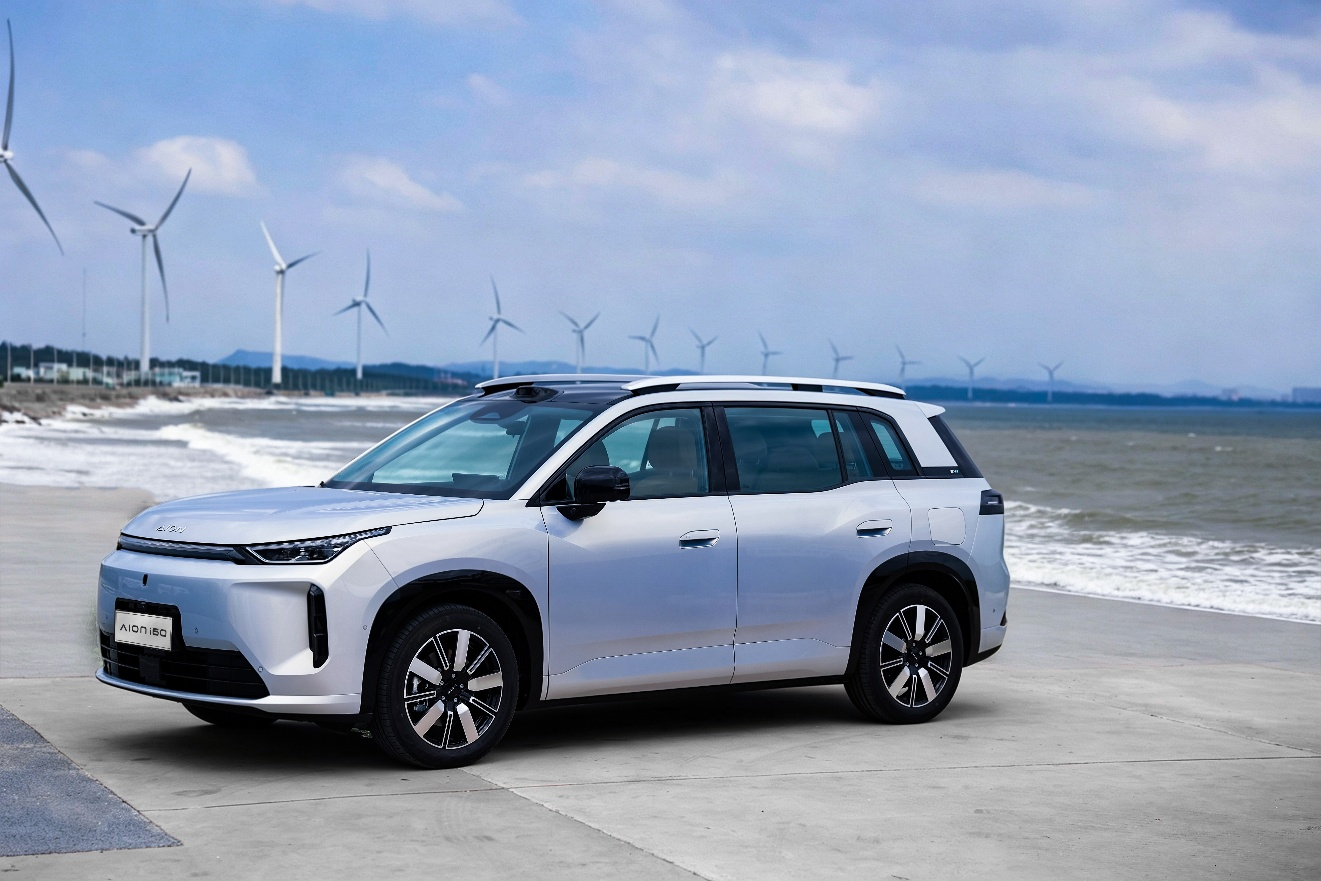
The i60 in the headline is the 2027 1738 Super Range Extender or the 1738 Lidar version. The manufacturer gives the two versions the same 45.37 kWh stated battery energy and 350 km CLTC electric rating. Its 520 km and 700 km configurations are battery-electric i60s. They are relevant to choosing a vehicle if you can rely on charging on every trip, while the 1738 range extenders are the proper i60 versions when comparing fuel-backed driving with the Song Pro DM-i. AION’s six-grade specification
On the BYD side, the comparison uses the Feichi line shown in BYD’s dedicated China product entry. The selected longer-range grades are the 301KM Chaoyue (超越型) and 301KM Zhuoyue (卓越型). The shorter-range comparison refers to the 220KM Lingxian (领先型) and 220KM Chaoyue (超越型) versions from the same line. The Feichi product record features 301 km CLTC at the series level, while published configuration listings identify the two electric-range groups and the particular grades. A quote that simply says Song Pro or only mentions DM-i is too broad to tie the vehicle to one number. BYD China’s Feichi model page · Inside China Auto’s dated Feichi trim index
| China-market configuration | Published CLTC battery-only distance | Listed battery energy |
|---|---|---|
| 2027 AION i60, either 1738 range-extender grade | 350 km | 45.37 kWh |
| 2026 Song Pro DM-i Feichi, named 301KM grades | 301 km | 34.27 kWh |
| 2026 Song Pro DM-i Feichi, named 220KM grades | 220 km | 26.6 kWh |
The i60’s energy figure is from AION. The two BYD pack values are corroborated by third-party Chinese configuration listings for the named grades. BYD’s official Feichi summary independently identifies 301 km as CLTC battery-only distance. Labels such as battery energy describe how the specification source states a pack value. An owner’s usable window and the wall energy billed by a charger need separate evidence. AION’s configuration · BYD’s Feichi data · Pacific Auto’s Song Pro configuration tables · EV Auto’s Feichi 301KM grade record
One comparison answers the electric-distance question
Subtracting 301 from 350 gives 49 km, equivalent to 16.3% of the BYD’s 301 km rating. Subtracting 220 from 350 gives 130 km, equivalent to 59.1% of the BYD’s 220 km rating. Switching from the shorter- to the longer-range Song Pro increases the stated distance by 81 km within that product line. A double-digit percentage looks substantial on paper. Its value for a driver is whether the extra rated distance can bridge the actual gap to the next convenient charge.
The i60’s listed battery energy is 11.10 kWh above the listed battery energy for the 301 km Feichi and 18.77 kWh above the figure for the 220 km Feichi. The higher pack figure helps explain why the i60 can serve a different routine. It does not quantify efficiency. To compare energy cost, measure wall kWh and kilometres for a completed trip at a similar charge state, then record when fuel was used. A ratio made directly from the catalogue pack and rated distance uses neither billed electricity nor verified usable pack energy. AION’s configuration table · Pacific Auto’s BYD specifications
AION also lists 280 km of WLTC electric range and a 1,738 km CLTC combined range for the same range-extender pair. Together these figures illustrate how much the range label matters. The 350 and 280 figures refer to electric operation under different procedures. The combined 1,738 km value includes fuel. A headline that compares 280 with the BYD’s 301 changes the cycle between cars, while comparing the combined 1,738 with 301 changes the energy sources in the comparison. The 350-to-301 calculation answers the matching-cycle, battery-only question. AION’s China configuration table · BYD’s CLTC Feichi listing
A November 2026 GAC announcement shows why the country must also travel with the number. GAC’s Indonesian i60 debut describes a local electric configuration with a 75 kWh battery and more than 602 km on NEDC. That is a local battery-electric product specification. It sits outside the China range-extender comparison even though the AION i60 model name appears on both. Check the local brochure first if a search for a Chinese specification leads to the Indonesian release, an export dealer or a source quoting another cycle. GAC’s Indonesian i60 debut release
Daily home charging changes what a bigger pack buys
Consider a household with a 40 km round trip every weekday and a designated parking bay where it can charge overnight. Charging after each day means the vehicle seldom has to cover more than 40 km between regular opportunities. The distance is only about 18% of the shortest published rating in the table. The arithmetic does not predict a particular displayed battery percentage. It shows that the headline gap is unlikely to decide every workday if an overnight top-up is consistently available.
In that situation the battery upgrade may have its biggest effect on unusual days. A Friday that includes a further 95 km to relatives after work becomes 135 km from the last overnight charge. The operation changes again if the car needs to come back on Saturday without being plugged in overnight. The right distance to write in the diary is the sum since the last reliable charger. A driver who normally returns to a home plug should still use the distance of the occasional extended outing when deciding how much buffer is worth buying.
A bigger battery can also reduce dependence on charging every single night. Drivers who find it inconvenient to connect after a late return may choose to top up two or three times per week instead. The value is measured partly in avoided charging appointments. For one owner connecting a home cable takes little effort. For another owner a plug requires relocating a car from a street space to a shared garage with a reservation. The same 49 km catalogue gap can have different practical value even when both people drive the same distance.
A long fuel-backed trip calls for an additional comparison
A family covering 620 km to visit relatives has a larger job than any electric rating in the table. Passing the start of engine-supported operation is an expected possibility for both vehicles. Before the trip, add up toll and rest stops and ask whether any existing stop is a realistic charging opportunity. A dependable charger at a lunch stop can restore part of the onward electric distance. A trip with two seven-minute stops creates a different constraint even on the same road.
Fuel-backed range and fuel consumption then become important. Record the powertrain mode, displayed state of charge and whether the trip began after charging. A single combined figure in a launch story describes a particular test basis and starting conditions. For trip budgets, the post-charge fuel consumption and normal driving pattern help determine how often the driver will stop and what energy they will buy. A larger pack can help on the electrically driven portion and a driver can still prefer another vehicle for a route where charging contributes very little.
On this kind of trip, it is worth recording three moments for any demonstration. Note the starting charge, when the car first runs its engine along the planned route and the ending charge at the destination. Cabin heating, high speed and gradients can change the distance available. A low displayed figure can also lead a driver to select a different operating mode before the next charge. Record those choices in the log so that two trips with different behaviour do not get interpreted as direct efficiency comparisons.
Check whether a real drive changes the decision
A short demonstration can answer whether a version handles the family’s route well. A repeatable drive gives better range evidence. Use the same route direction, similar traffic, the same occupants and comparable temperatures. Begin at the same indicated charge level in the mode you would normally choose. Record speed and climate settings rather than relying on memory after you return. Using a highway route for one car and an urban route for the other would introduce a difference large enough to make a headline electric-range comparison difficult to interpret. Use the distance recorded by the trip meter, and state whether each engine ran.
If both cars remain mostly electric over the demonstration, recharge each to the same indicated level it had at departure, then use the charger receipt for the kWh and price actually paid. Charge bills are useful for ownership economics because they register what is purchased, including losses that may be missing from a dashboard figure. Recovering 18 kWh over 100 km at a hypothetical RMB 0.75 per kWh, for example, costs RMB 13.50 for that example. Do not apply that number to either vehicle without taking the measurement. A refill that changes the start or end level creates apparent differences even if the two real drives used the same amount of energy.
A longer test can record how far electric operation lasted before the engine assisted, with the selected mode and temperature beside the result. The event is only directly useful if each car has enough charge to start the route in the same intended mode. If these conditions are impractical on a single dealership visit, use the visit to confirm the equipment and vehicle functions. Revisit the range calculation using reports that identify both the conditions and the specific China grade. A correctly matched CLTC value then serves as a reference for interpreting those observations.
Watch for earlier figures when comparing available inventory
BYD’s page for its earlier second-generation Song Pro DM-i leads with a 1,400 km combined range claim. That can still surface in a new-vehicle search beside two Feichi trims with different battery-only figures. The BYD catalogue result can describe a different model offering and a different measurement simultaneously. The easiest way to see the difference is to read the words next to the number. Combined distance refers to fuel-backed operation. A figure marked CLTC battery-only is about distance on the electric allowance under that cycle. The two products can share the same model-family wording across a shortlist. BYD’s second-generation Song Pro DM-i page · BYD’s Feichi data
The timing issue affects the GAC as well. AION describes the 350 km range-extender rating as part of the 2027 update launched in 2026. Delivery date and model year therefore serve different purposes. Cars presented alongside each other in the same showroom can carry different model-year configurations. Get a screenshot or printed copy of the schedule with the exact offered grade checked, especially if the dealer is offering inventory with a stronger discount. For a household with a dependable charger at home, the earlier grade might still serve the same short electrical routine. For another household on the edge of a shared charging window, specifying the correct pack can make the central reason for buying a different car. AION’s manufacturer account for the 2027 i60
Recheck the battery rating on the final order
Three fields will make most of the ambiguity disappear. Keep the country shown on the order, the full grade name including the powertrain and the published distance with its test-cycle label. A fourth field can capture the charging window you actually use. The practical decision lands where these meet. The 2027 i60 range extender has the highest stated CLTC battery-only range in this comparison. A 301KM Feichi is the closer rated substitute for drivers who need occasional long electric stretches. A 220KM Feichi can still fit a driver who regularly restores charge after shorter blocks. The ranking of the specifications is fixed within this comparison, while the value of paying for more reserve depends on the longest reliable gap between charges.
See the GAC AION i60 and BYD Song Pro Electric Range Compared guide for more on this question.
Sources & references
- [S1] AION’s 2027 China configuration tableGAC AION
- [S2] BYD’s official Feichi model dataBYD
- [S3] AutoHome’s China Feichi grade listingsautohome.com.cn
- [S4] BYD China’s Feichi model pageBYD
- [S5] Inside China Auto’s dated Feichi trim indexinsidechinaauto.com
- [S6] Pacific Auto’s Song Pro configuration tablesprice.pcauto.com.cn
- [S7] EV Auto’s Feichi 301KM grade recordxinnengyuan100.com
- [S8] GAC’s Indonesian i60 debut releaseGAC Group or local GAC operation
- [S9] BYD’s second-generation Song Pro DM-i pageBYD
- [S10] AION’s manufacturer account for the 2027 i60GAC AION
This is a source-based editorial guide, not a first-hand road test. Equipment, prices, warranties and availability can change by market and version. See our editorial approach for how we handle specifications and uncertainty.