GAC presented the XT80 as a rugged SUV for road travel and outdoor use in Abu Dhabi in August 2026. The China-market Yue7, identified by GAC as the domestic counterpart, gives the clearest specification behind that role. Its listed four-wheel-drive grades pair a rear differential lock with terrain settings and low-speed off-road cruise. China-market Ultra adds height-adjustable air suspension and lists 230 mm of minimum ground clearance at standard height and 310 mm at the highest setting. Those specifications make it possible to explain what the GAC design brings to firm gravel, uneven ground and soft surfaces. Results for a local-market XT80 still depend on its delivered equipment and how it performs with people and gear aboard. GAC’s XT80 overseas debut announcement · GAC’s Middle East launch and drive project · GAC Trumpchi’s China Yue7 configuration
The Abu Dhabi and Riyadh records describe the rollout
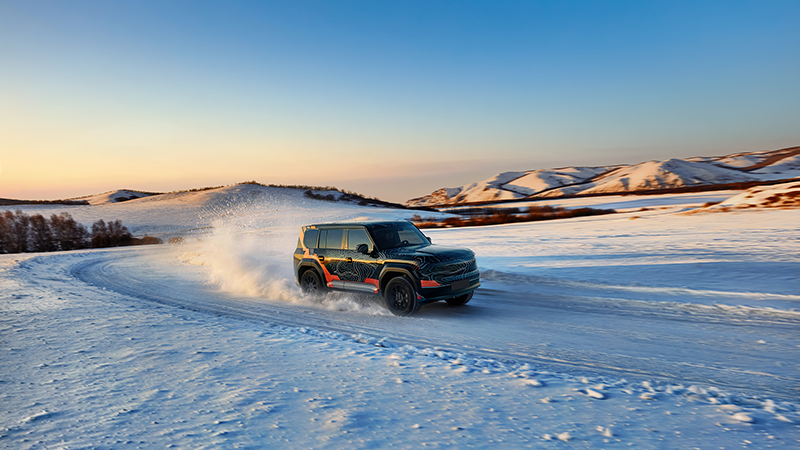
The Abu Dhabi International Hunting and Equestrian Exhibition supplies a location and date for the international XT80’s public debut. GAC released its account on 31 August and dates the presentation to 28 August. Its release describes the intended role and venue. In October, GAC’s procurement notice called the XT80 the international Yue7 and described a United Arab Emirates launch and media-drive project. The project sets out an intended combination of ordinary roads and light off-road use. These records tell us where the manufacturer is preparing to demonstrate the product and what kinds of use it wants to show. GAC’s Abu Dhabi release · GAC’s procurement notice · Public text of the UAE procurement brief
The Saudi evidence gives the timeline a second country. On 6 October, local motoring outlet ArabGT reported that distributor Aljomaih displayed an XT80 at the Saudi International Falcons and Hunting Exhibition in Riyadh. The report includes a distributor announcement referring to the arrival of test activities. It is useful corroboration of a Saudi public appearance, while the country-specific vehicle brochure and order code will establish what a Saudi customer can buy. Keep dealer comments about planned testing tied to the date they were made. An exhibition vehicle, a local engineering test vehicle and a delivered vehicle may be at three different stages of the same programme. ArabGT’s Riyadh exhibition report
Four questions make a mixed-surface drive informative
| Part of the journey | Main question | Evidence to look for |
|---|---|---|
| City and highway | How settled is the vehicle with its usual occupants and gear? | Fitted tyres, suspension grade, passenger feedback and the actual surface. |
| Firm gravel or a graded track | How does the vehicle respond when the surface changes repeatedly? | Wheel and tyre specification, speed, rut depth where relevant and what the driver has to correct. |
| Ruts and rough sections | Will the vehicle clear the route and maintain progress at low speed? | Ride-height setting, clearance reference, available traction aids and whether the route reflects real use. |
| Soft or wet surfaces | What has been demonstrated with this exact configuration? | Tyre make and type, surface state, grade, driver aids and comparable observations over more than one pass. |
Start with the things that can be identified while the car is parked. Ask for the name on the order form, the factory wheel and tyre fitment, the suspension grade, the spare and the presence of the traction hardware named in the brochure. At the end of the drive, compare those notes with what occurred on the route. A result attributed to a particular mode is easier to interpret if the fitted tyre and ride height are known. Someone inspecting a retail vehicle can also see whether a test article described an optional item or a standard item.
Paved travel sets the benchmark for the rest of the day
Many countryside drives start with a city departure and a long segment on regular roads. Here the priority is predictable steering, repeated bump response and how comfortably people can travel for an hour or two. The domestic four-wheel-drive Yue7 uses a double-wishbone front layout and a five-link independent rear arrangement. GAC lists electronic damping and dual-chamber air suspension on the Ultra configuration. The documented layout helps explain what equipment to look for, while the actual spring and damping choices and the fitted tyres determine how the example responds. A short parking-lot drive is useful for judging width and visibility. A passenger who frequently rides in the back should also experience the longer part of the journey. China Yue7 configuration · AutoHome’s Yue7 Max and Ultra equipment comparison
On paved roads the relevant observation after crossing a repaired patch is how promptly the vehicle settles. Surface texture, tyre sidewall, dampers and passenger position can all account for differences. If the front-seat driver says a bump felt mild but the rear passenger reports a sharper motion, record both impressions. That information is more transferable to a future drive than a single general comfort rating. Use a comparable section again when changing the tyre or grade. If the test vehicle combines an upgraded suspension and a different set of wheels, its ride impression describes the package as a whole.
Firm gravel tests consistency across several inputs
A level maintained gravel road and a washboard section both lack asphalt, yet they ask different questions. On the first, what matters may be the ease of holding a straight course and judging the surface. A washboard adds closely spaced bumps that keep the tyres and suspension moving. Where a road changes from one texture to the other, note how much correction is needed and whether rear passengers experience repeated impacts or mostly hear the stones. A vehicle that deals smoothly with a single bump in town can still be busy over several successive bumps.
The China Yue7 four-wheel-drive tyre list is a useful starting point for this observation. It includes standard 265/65 R18 road tyres, an optional 18-inch off-road alternative and a separate 275/55 R20 road choice. Ask what is actually fitted to a local XT80 demonstration vehicle. A wheel-size photograph can't identify tread or construction, and two tyres with the same dimensions can behave differently on loose surfaces. The listed 18-inch and 20-inch road sizes also have different nominal sidewall dimensions. Their type, load rating and construction belong beside the diameter in any account of gravel comfort. GAC’s domestic configuration table
On ruts, separate body clearance from tyre contact
The domestic Max gives a 230 mm reference for minimum ground clearance. Ultra publishes the same standard value and 310 mm for the highest height setting. The 80 mm difference is explained by the higher suspension setting specified in the grade data. Headline clearance is only one dimension. Approach angle refers to the front of the vehicle, departure angle to the rear and breakover to the vehicle’s ability to pass a crest between the axles. Track shape and how the body is loaded determine which point is relevant. Check the configuration sheet for the exact measurement condition before interpreting a picture of a vehicle with one wheel high. GAC’s Yue7 configuration table · AutoHome’s geometry and grade summary
Traction and clearance can pose separate questions at the same rut. The manufacturer lists a rear differential lock on China four-wheel-drive grades and a front lock in a package. A locking differential can constrain the difference between the wheel speeds on its axle when engaged. The actual ability to develop traction still depends on which tyres have contact and what the surface will support. GAC’s name for central energy coordination should be kept distinct from a mechanical centre differential lock or a separate low-range transfer gear. A product sheet that calls out the rear and optional front equipment is better evidence than a general reference to several locks. GAC’s China Yue7 configuration · GAC Trumpchi’s manuals index
A buyer may therefore find that different versions serve the same route in different ways. If the usual road is managed gravel with shallow drainage dips, the higher adjustment range may rarely matter. If the actual route varies with conditions and regularly takes the vehicle across pronounced crests, the height capability becomes easier to justify. Confirm how the relevant mode and suspension setting are intended to operate using the manual for the locally delivered grade. The domestic listed setting helps explain the engineering option without establishing a local operating limit.
Soft sand, slick mud and ice each test something different
The China four-wheel-drive specification names sand, mud, snow and other terrain modes. Their practical purpose is to let the vehicle use control settings for different surfaces. Changing the selected mode leaves the underlying tread and surface unchanged. Soft dry sand asks whether the tyre and powertrain can sustain useful progress in material that moves under the vehicle. Wet mud adds variation in how much grip and steering response are available. In cold terrain the tyre type, road condition and temperature are important comparison facts. The mode menu gives a reason to look for a specific demonstration in each of those environments. GAC’s Yue7 driving-mode and configuration data
Repeated runs can add information that a single clip omits. The second climb may occur with the battery at a different charge state or after the traction system has been working for a while. A driver can report whether initial response was similar on both passes and whether the vehicle issued any messages. Report the source for each response. Evidence from a high-charge departure is useful for understanding that condition, while an extended part of a hot route asks more about how the system sustains its work. A foreign exhibition reveal and a domestic specification explain which vehicle to inspect. A local terrain result needs named conditions and a measured or described outcome.
Wading figures and validation evidence serve different purposes
GAC’s domestic table gives 700 mm as maximum wading depth for China four-wheel-drive Max and 780 mm for Ultra. The manufacturer’s September development account separately discusses a battery immersion test, a 1,000 joule underside ball-impact test and air-spring validation. These describe component or development procedures. The listed depth is a vehicle and grade specification with its own conditions. The local owner’s instructions provide the relevant limits for a delivered vehicle. Recording the exact goods in the order is important here because a number for China Ultra could otherwise be repeated as a blanket XT80 figure. GAC’s China grade table · GAC Group’s September 2026 Yue7 validation account
The same development account reports 685 test vehicles, a programme of three years including two winters and two summers, and an equivalent 500,000 km endurance test for a vehicle. It is useful documentation of the manufacturer’s development work because it identifies Yue7 and the durations involved. Record it separately from a regional road result. A driver looking for local confidence can ask whether a retail vehicle was tested with the same tyre package in the intended market. A report that specifies the route, conditions and equipment gives a stronger basis for interpreting how the work applies. GAC’s documented domestic development programme
Keep track of power available at the end of the route
The domestic China four-wheel-drive configuration lists 45.975 kWh of battery energy and a 60-litre fuel tank. GAC publishes 259 km of CLTC electric range and 188 km of WLTC electric range for this equipment. These figures describe laboratory road-cycle performance, useful for identifying the car and its energy stores. A rocky access road, repeated low-speed climbing and stationary power use are separate demands on that energy. On a two-part drive, record the indicated charge after the paved approach as well as before the return trip. That is more informative than quoting only the fully charged condition at the beginning. GAC’s domestic energy and configuration table
The domestic equipment table also includes 6 kW external power output on the four-wheel-drive hardware. A power figure can describe the capacity to support a given load. The duration of a campsite stay depends on the amount used and the vehicle operating conditions. As a simple accounting example, a 0.5 kW appliance that runs for two hours consumes 1 kWh at the appliance, before any conversion losses. Four hours at the same load doubles the energy demand. This example does not assign a usable battery window to the car. Confirm the local vehicle’s outlet rating and any charge reserve it enforces if stationary use is part of the purchase decision. GAC’s China Yue7 configuration and output rating
Interpret domestic drive reports by the equipment they identify
AutoHome’s China guide distinguishes the four-wheel-drive Max and Ultra retail setups and identifies the Ultra’s additional suspension hardware. That is useful for classifying a car seen in a separate report. The guide itself gives a grade comparison. Reports from drive events contribute first-person impressions where the specific car can be identified. A venue with a prepared slope, gravel and repeatable low-speed obstacles can reveal how one package responds. Its conditions may differ from a loaded touring route with repairs, changing weather and no convenient charge stop. AutoHome’s China Yue7 buying guide
One way to use a domestic report is to ask which detail can be checked again at a regional drive. If the writer describes the rear lock working on a prepared obstacle, look first for a named axle-lock provision on the regional grade. If the author associates the ride with adjustable damping or a tyre choice, establish whether the regional vehicle has the same item. Those checks make the domestic information a useful research lead. They also let a local owner see where an apparently similar result depended on a feature only included in a particular graded package.
Add the everyday load before drawing a conclusion
The most representative drive is the one that describes what a family actually carries. Two adults and a light bag can put different demands on the vehicle from five occupants, camping gear and a full fuel tank. Record the load arrangement and secure normal luggage before travelling. Passengers who will usually sit in the second row should try that row on the same piece of gravel and ordinary pavement. This is when stowage, seat position and rear passenger comfort are most likely to affect the decision.
For a reader comparing XT80 reports across countries, the most useful details to record are the exact grade, tyres, suspension setting, route, passenger load and initial charge. If a video covers gravel and a short rough section but gives no model code, it can illustrate the type of route without fixing the specification. In the same way, a proven load-carrying use case does not need to include deep sand to be relevant to someone who normally visits a paved campsite. Decide which surfaces occur on the regular route and use those to evaluate whether a given demonstration answered the right question.
Ask what a tested wheel package means for replacements
The tyre package that makes sense on a regular route must also be practical to replace. The number moulded into a sidewall identifies the nominal width, aspect ratio and rim size. The full model description establishes tread, load index and speed rating. Ask a dealer to put those details and the spare on the written local order. The China Yue7 four-wheel-drive configuration lists a full-size spare and alternate tyre packages. That makes the basic question easy to ask for the export version. Confirm the actual spare size and the combination specified for the supplied car. A tested vehicle on an optional setup tells a buyer more when the exact setup is obtainable for the vehicle they would use. GAC Trumpchi’s domestic grade and tyre configuration table
The driver who regularly uses paved roads with a short gravel approach has a different supply question from someone whose trips involve rough roads several times a week. For the first, a familiar road tyre can keep day-to-day replacement simple, with only occasional interest in another tread. The second may want an approved off-road option that can be replaced locally before a trip. Either shopper can use a same-day photo of all four fitted tyres, a note identifying the spare and the relevant local assistance terms to make the comparison practical. Those observations become particularly valuable when the drive report focuses on the automatic terrain controls and leaves the tyres unnamed.
How to interpret the XT80 evidence today
The documented strengths of GAC’s related China configuration are concrete. Rear locking hardware on four-wheel-drive Yue7 grades supports a low-speed traction proposition. Ultra’s suspension adds an identifiable adjustment range. The tyre choices also create a meaningful separation between road-oriented and off-road-oriented setups. The UAE debut and Saudi exhibition confirm that GAC has put the XT80 in front of Gulf outdoor audiences. For a local buyer, the best next evidence is a test of the specific production grade on road, firm gravel and the roughest section the household actually uses, with the configuration and conditions recorded.
See the GAC XT80 Terrain Performance: Confirmed Positioning, Design Context and Open Questions guide for more on this question.
Sources & references
- [S1] GAC’s XT80 overseas debut announcementPR Newswire
- [S2] GAC’s Middle East launch and drive projectGAC Group
- [S3] GAC Trumpchi’s China Yue7 configurationgacmotor.com
- [S4] Public text of the UAE procurement briefyfbzb.com
- [S5] ArabGT’s Riyadh exhibition reportarabgt.com
- [S6] AutoHome’s Yue7 Max and Ultra equipment comparisonautohome.com.cn
- [S7] GAC Trumpchi’s manuals indexgacmotor.com
- [S8] GAC Group’s September 2026 Yue7 validation accountGAC Group or local GAC operation
This is a source-based editorial guide, not a first-hand road test. Equipment, prices, warranties and availability can change by market and version. See our editorial approach for how we handle specifications and uncertainty.