Yes. The Chile-market petrol GAC GS8 is a good seven-seater for a family that usually travels with five people and regularly needs two extra places. GAC Autos Chile lists seven seats in both the GL 2WD and GX AWD, 181 litres of luggage volume with all seven seats in use, and 863 litres with five seats in use. The GX adds powered second-row easy entry and powered third-row folding, two intelligent features that help when the seating plan changes several times a week. The decisive test for a family that often carries seven is whether its actual luggage fits behind the upright third row within the vehicle’s allowable load. GAC Autos Chile technical sheet · GAC Autos Chile GS8 model page
This guide uses the petrol GL and GX listed by GAC Autos Chile with Gildemeister’s support in November 2026. The current two-grade technical sheet gives both a 5,015 mm body length and 2,920 mm wheelbase. An earlier Chilean brochure lists a 4,980 mm body length and four configurations. Use the chassis and equipment details from the quote for the vehicle you intend to see. The difference between the two documents also makes the Chilean version a useful reminder that a model name alone leaves out information about bumper dimensions, equipment and individual grades. GAC Autos Chile technical sheet · Gildemeister distribution announcement · Earlier GAC Motor Chile GS8 brochure
The two numbers a family can use immediately
| Seating plan in the current Chilean sheet | Published boot volume | What to verify at the car |
|---|---|---|
| Seven seats available | 181 L | Can the regular stroller, shopping or small bags fit behind row three? |
| Five seats available | 863 L | Is the third row easy to stow, and do the largest objects fit through the opening? |
The published difference between the seven- and five-seat states is 682 litres. That is nearly 4.8 times the nominal boot volume when the last row is stowed. A family gains a genuinely different carrying setup by folding that row. GAC’s public sheet gives the configuration and capacity, while the lengths of the load floor, boot opening and space between wheel housings remain dimensions to verify in person. The older brochure and current two-grade sheet print different figures for the largest extended arrangement, so this guide relies on the two values shared across the documents and uses physical checks for larger objects. Current GAC Autos Chile specification · Earlier Chile technical brochure
The numbers answer different questions. For a long school day with all three rows occupied, 181 litres represents space for the bags the family can actually carry behind seven seating positions. On a shopping day with four or five people, 863 litres is the volume associated with the much more generous five-seat layout. In both cases, the solid load opening, the angles of the tailgate and the height of the parcel matter more for large items than an extra few litres on paper.
Seven seats for everyday routes
Think of an ordinary week. On Monday the driver picks up two children on one side and two on the other. On Saturday two grandparents join for lunch. The seven-seat setup helps because the family can reserve a more accessible seat for the oldest rider while using the third row for other passengers. An occasional seventh passenger can make a large difference to a family that would otherwise need two cars. In this case the most revealing check is whether the person who actually uses the back can get to their seat, fasten the belt and leave the vehicle without assistance they would seldom have.
Set the first row to the regular drivers’ positions before checking the rear. Move the second row to the settings that suit its usual passengers. Then have each third-row occupant look at headroom, knee space, foot placement and the angle of the belt. An adult who is comfortable during a ten-minute ride may want more room for an hour. Follow the manual’s guidance for each designated seat. Use the test to identify which passenger assignments work for your household and which trips would benefit from changing them.
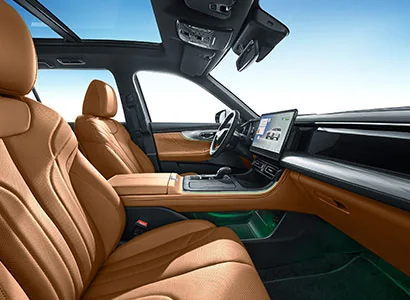
The GX deserves attention here because the Chilean sheet specifically lists electrically assisted second-row easy entry, quick-fold second-row backrests and power folding for the third row. The GL has the same seating capacity and nominal cargo figures, with a simpler set of controls in that sheet. Demonstrate the powered motion from the side door and have each regular driver operate it. Pay attention to the reach from outside the car, what the passenger does after the seat moves, and where the indicator confirms that the seat is returned and latched. These small interactions explain more about daily convenience than a list of display sizes. GAC Autos Chile equipment comparison
When the stroller matters more than another suitcase
Cargo volume usually becomes a practical question at the narrowest part of the opening. Suppose your folded stroller is 80 cm long, 50 cm wide and 30 cm high. Its rectangular bounding box is about 120 litres. A second bag measuring 50 by 30 by 25 cm adds about 38 litres in the same simple exercise. The sum comes in below 181 litres, yet the two pieces can still fail to fit if the stroller lacks a flat 80 cm run, the tailgate slopes into the bag, or the wheel housings take away the width needed to place both pieces together. The arithmetic describes the two items only. It gives you a reason to bring them to the car.
Bring the largest thing you carry with all the seats in use. A kit can be folds of clothing in sacks, several soft sports bags, or one rigid suitcase. Lay out the pieces below the seatbacks and check the correct way to secure them using the loading guidance in the manual. With the tailgate open, measure width between the parts that intrude the most and depth at the height of the tallest item. Before closing it, look at where the inner tailgate panel will move. A thin packing blanket and a tape measure can make the same task easier to repeat on another SUV.
Families that often use six seats can run a third trial. With the dealer, check whether the exact third row lets one approved seating section stay in use while the other is stowed and where any load could be secured. Check the mechanism on the stock vehicle and read the owner manual for approved load positioning. A split arrangement is useful when it works for a particular passenger and a particular bag. The published 181- and 863-litre figures describe complete seven- and five-seat states, so measure this intermediate setup as its own fit test.
Available weight deserves the same attention as volume
The Gildemeister-backed specification gives a 2,460 kg gross vehicle weight and 1,920 kg empty weight for the GL. It gives 2,556 kg gross and 2,000 kg empty for the GX. Subtracting the brochure figures leaves 540 kg for GL and 556 kg for GX on paper. This calculation gives a sense of why a full set of passengers, attachments and holiday luggage deserve a check together. The exact allowable load should come from the vehicle’s certification and loading information, including the empty-weight definition and any individual axle limits. The weight of an optional accessory, for instance, can use some of the available capacity even during a trip with a spacious boot. GAC Autos Chile dimensions and weights
For scale, seven occupants averaging 75 kg have a combined mass of 525 kg. A demonstration calculation like that can help a family anticipate how close a heavy passenger trip could be to the margin displayed in the brochure, once the load and occupants are accounted for correctly. The allowable load calculation for the supplied vehicle depends on its labels and the precise definition of the figure. Ask the supplying dealer to show where the gross and axle ratings are stated, and which occupants, fluids or equipment the basis already includes. If yours is a frequent all-seat touring case, make that information part of the comparison.
Consider two trips through the same lens. Seven people going to a concert with a few jackets mostly need belts and access. Five people getting away for a week might need a larger mix of equipment with more floor space, plus a different passenger and cargo weight. Run the usual trip and the heaviest expected trip through the same check. If trailers or roof equipment are part of the plan, ask for the relevant permitted limits and use the fittings approved for that vehicle. The seating count, boot numbers and gross rating each answer one part of the decision.
Why the GX is the intelligent choice for frequent layout changes
Both Chilean grades share the 14.6-inch centre screen and a surround camera system listed as 540 degrees in the local sheet. Both have the practical advantages that come with an official seven-place layout in the same body. The GX combines its powered seat controls with AWD, driver-seat memory, and a suite of driving aids that includes adaptive cruise and lane-keeping assistance. The camera view is a low-speed visibility tool, while the powered seat equipment changes what a regular caregiver can rearrange from the side or rear of the car. The everyday value of paying for GX depends on how often the powered controls, traction hardware or its extra driver aids solve a recurring problem. GAC Autos Chile full GL and GX specification · Chilean GS8 model and feature descriptions
Start the demonstration in GL if your typical week includes one extra passenger trip and the third row spends most of its time in the same position. Try GX next if people move between rows, if the driver regularly changes seat settings, or if you need AWD for routine conditions. Repeat the same seat and luggage arrangement in both. The size and weight checks still apply regardless of trim. If the additional controls solve a task that repeats several times a week, the GX’s contribution is easy to identify. If the GL already fits the trips you make, you have a clear baseline for weighing the remaining features.
The current model page lists 19-inch wheels on the front-drive grade and 20-inch wheels on GX. If rough roads or curbside loading are part of family duty, drive both over a familiar mixed surface with the tyre specification for the quoted car. Keep the ride assessment separate from the seat tests. The wheel and tyre combination and the driver’s chosen trim can affect the way the trip feels before the passengers or luggage change. GAC Autos Chile grade details
A useful final test is to park in a space roughly the size of the bay you use at home. Leave the actual space you can spare at the sides, place your normal load inside and see where the side doors and tailgate open. Try placing the stroller while the car sits nose-in, then try the version of the same exercise you would perform with a wall or garage door near the back. The GS8's footprint can matter as much at the loading point as it does on a narrow street. A reversing-assistance display is an advantage when you already know how much tailgate room the family needs.
Three family trips to evaluate side by side
| Trip | Seating priority | Load check |
|---|---|---|
| Two adults and three children on a school morning | Keep the seating positions compatible with the required restraints and confirm the usual exit side | Place the regular bags and equipment in the boot with row three stowed |
| Six or seven on a short trip to a restaurant or event | Check access and belt reach for the people using the last row | Try the real setup with every passenger seat needed and any mobility aids or bags |
| Five on a longer holiday with equipment | Leave room for every passenger to sit comfortably after the front seats are set | Use the five-seat arrangement, secure the load and check it against the vehicle’s allowable weight |
One person may move from the third row to the second as the trip changes. If an older relative needs more space or an easier exit, set that position first and organise the remaining places around it. A seat plan drawn from the real people in the car is more informative than asking generally whether seven adults can fit. The same exercise exposes the difference between a seven-seat vehicle with useful occasional room and the particular conditions in which a family will need most of its luggage space at once.
If cargo varies dramatically through the month, take two large items to the same demonstration. One could be a compact stroller for a seven-person school run. The second could be the hard-sided cooler or folding sports equipment you carry in a five-seat layout. Photograph the position of the folded rear seats with the heavier item in place and identify any step in the floor. Ask where the manual places the rated tie-down points and how the cargo cover is removed. On another model, repeat the exercise in the same order with the same equipment. Your own dimensions can settle a close comparison when two brochures quote luggage capacity using different measurement arrangements.
The family verdict
The Chilean petrol GS8 makes the most sense as a five-seat daily vehicle with two useful extra places. Its published 181 litres behind seven seating positions and 863 litres in a five-seat layout tell a clear story about how to use it. The GL gives a straightforward seven-place starting point. GX is the stronger choice when frequent changes to the back rows make electrical easy entry and power folding worth having, or when its other equipment also suits the way the household drives. A family that fills all seven places on long tours should prioritise one real packing check with all the intended seats upright, the actual passengers accounted for, and the load limits confirmed for the exact car. GAC Autos Chile petrol GS8 specification
See the GAC GS8 7-seater Versatility and Intelligent Cabin Features guide for more on this question.
Sources & references
- [S1] GAC Autos Chile technical sheetGAC Chile
- [S2] GAC Autos Chile GS8 model pageGAC Chile
- [S3] Gildemeister distribution announcementGAC Chile
- [S4] Earlier GAC Motor Chile GS8 brochuregacmotor.cl
- [S5] CONASET child-restraint selection and useconaset.gob.cl
This is a source-based editorial guide, not a first-hand road test. Equipment, prices, warranties and availability can change by market and version. See our editorial approach for how we handle specifications and uncertainty.