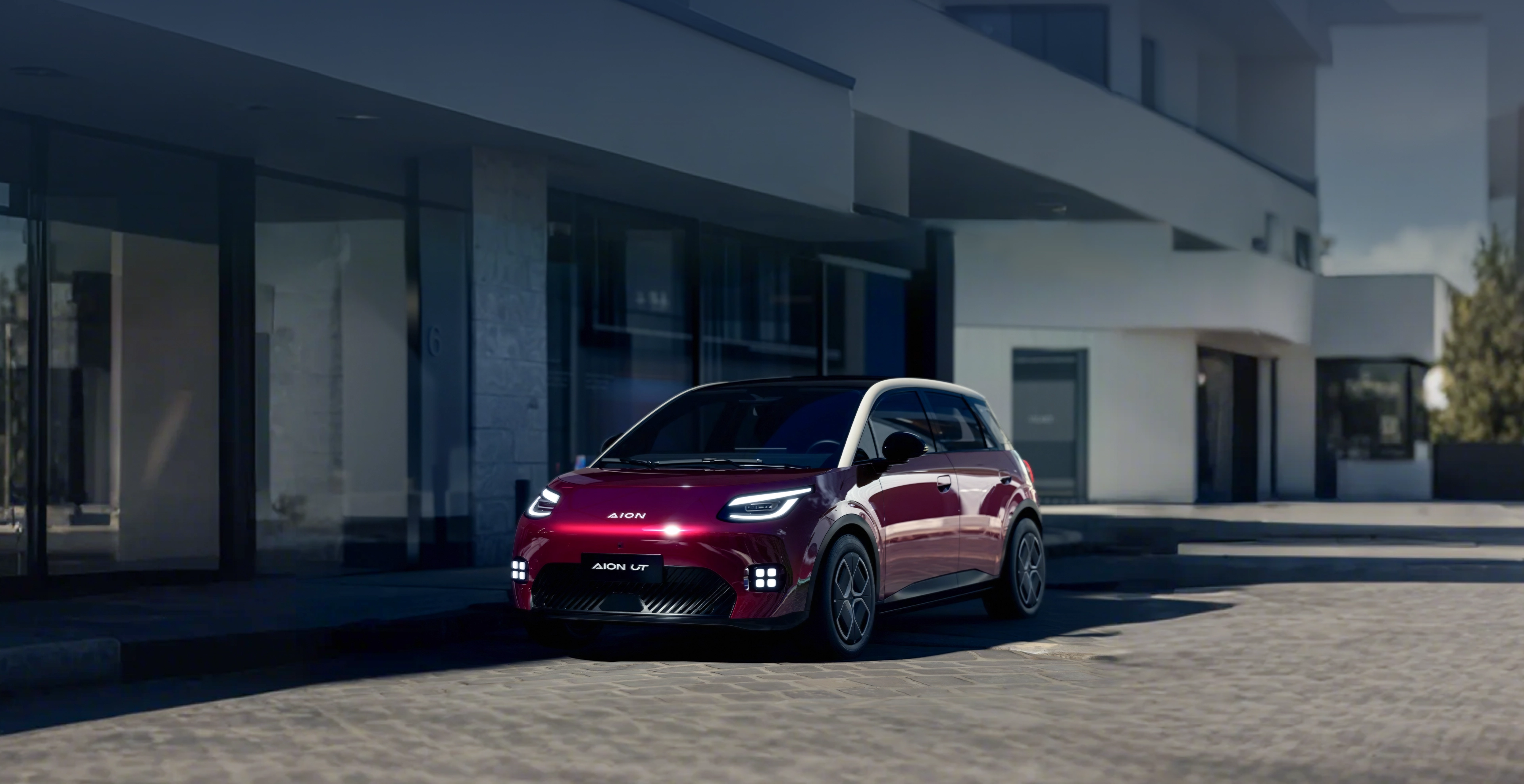
The European AION UT has a published 440-litre luggage compartment with the rear seats up and a 1,600-litre folded-seat maximum. [R1] These figures describe different seating arrangements. Our assessment is that family luggage should first be tested with every required passenger seat available, using the actual pushchair and bags. Boot litres alone do not reveal opening size, usable floor shape, load security or weight allowance, so no fixed suitcase count can responsibly be promised from the published volume.
Start with a passenger plan before choosing a cargo layout
The AION UT's useful cargo arrangement starts with the people who must travel. Write their seating positions down before folding anything. A couple collecting a household purchase can consider a layout that would be unavailable to a family using every rear seat. Both are valid uses of the car, but they should not be described with the same luggage claim.
A cargo plan should identify the fixed requirements first: occupied seats, installed child restraints and any item that must remain accessible. Everything else can then be arranged around those requirements. If the only way to carry the normal equipment is to remove a seat needed on the same journey, the proposed configuration has failed regardless of its maximum advertised volume.
This guide develops a loading method from the manufacturer's published configurations. We have not packed a specific set of bags into a UT or measured its aperture. It therefore explains what to verify and how to interpret the evidence, rather than presenting an invented luggage test. The intended result is a reproducible decision for your own objects.
Why boot measurement methods matter when comparing cars
The current French AION UT specification identifies the seats-up boot figure using an SAE liquid method. The pan-European page gives a capacity without the same methodological detail in its luggage row. [R5][R1] When comparing another car, record its method, seat position and loading boundary before assuming that a difference in litres translates directly into an advantage with rigid bags.
Liquid volume can describe recesses that a suitcase cannot fully use. A rectangular bag also needs a workable route through the hatch opening. The fact that an object's calculated volume is smaller than a boot's stated volume does not prove it will fit: a long thin object and a compact cube can occupy equal volumes while requiring very different spaces.
For a buyer, comparable definitions are useful for shortlisting, but actual object fit remains decisive. Ask whether the published measurement includes areas you would use and whether the parcel shelf or any floor setting must be changed. If a salesperson cannot clarify the boundary, note the uncertainty rather than converting the figure into a confident bag count. Compare the same load in both cars wherever possible.
Measure the opening and the useful floor separately
For the AION UT, an effective measurement exercise distinguishes access from storage. First measure the narrowest relevant part of the hatch opening. Then assess the floor area, wheel-arch intrusions, available height and the shape of the closed tailgate. A load may pass one of these checks and fail another.
| Measurement | Why it matters | What to record |
|---|---|---|
| Opening width and height | The object must enter without force | Narrowest practical route |
| Usable floor length | Long items may meet the rear seats | Actual passenger-seat configuration |
| Width between intrusions | A wide case may not sit flat | Position where the object will rest |
| Closed-hatch clearance | The opening shape is not the shut shape | Safe clearance around the tallest item |
Do not use the tailgate motor or latch to compress a load into place. Demonstrate the intended placement without damaging trim or restricting the required seating arrangement. Exact dimensions for these loading boundaries are not established by the sources reviewed for this guide, so a numerical fit guarantee would go beyond the evidence.
How to assess a pushchair without inventing a stroller capacity
A pushchair test for the AION UT should use the model, wheels and accessories the family actually carries. Fold it as it would normally be folded on a rainy school morning, not into an unusually stripped-down display configuration. Add the bag or equipment that accompanies the child on a typical outing.
Try the main orientations and identify which can be repeated easily. If removing a wheel makes the difference, decide whether that step is realistic and where the loose component will go. Ask whether the chair can be lifted over the loading lip comfortably by the person who usually handles it. A physically possible placement can still be inconvenient if it requires awkward lifting or precise repacking every time.
Then add groceries or the normal day bags. A boot that holds the pushchair alone has demonstrated only that single task. Leave necessary items reachable and check that nothing depends on using a seating position required by a passenger. Record the successful orientation and its compromises. This produces a specific finding about one family's equipment, which is more useful than a universal claim that the car takes a certain number of pushchairs.
Holiday bags need an access plan as well as a packing plan
For an AION UT weekend trip, group objects by when they will be needed. Overnight cases can be loaded first, while charging equipment and stop-time supplies may need accessible positions. The order matters because a neatly packed boot becomes less useful if a routine stop requires placing half the luggage outside the car.
Prefer an actual trial with the bags normally used. Soft bags can adapt to irregular spaces more readily than rigid cases, but they still need appropriate placement and retention. Do not assume that replacing every case is an acceptable solution; include that cost and inconvenience in the purchase decision if the household owns equipment it intends to keep.
The load also needs to remain compatible with normal passenger comfort. Moving bags into rear foot areas can interfere with the very seating arrangement being evaluated. Treat passenger room and luggage room as connected requirements rather than counting the same space twice. A satisfactory holiday configuration should be straightforward enough to recreate after a stop, with the required seats available and the car's load limits respected.
What changes when the rear backrests fold?
GAC's European specification lists a split-folding rear seat for the AION UT. [R1] That creates flexibility for a mixed passenger-and-cargo task, but the exact arrangement must still be checked against the people and restraints remaining in the car. A folded section is not an occupied seating position.
Try the folding operation yourself and inspect the resulting surface. Check any step, slope or gap that affects the intended object rather than assuming the load floor behaves like a perfectly flat rectangular van. Manufacturer marketing about a lounge or bed should not replace measurement of your equipment, and folded cabin surfaces are not a place for passengers while driving.
For long objects, verify the full path into the car and the clearance around the front seats. Do not let a load compromise the driver's controls, visibility or normal seating. Use only the vehicle's approved load-retention arrangements and check the manual for the exact car. If the task requires a passenger to abandon a proper seating position, arrange another means of transport for the object.
A numerical example shows why litres cannot promise a fit
Consider an illustrative rigid case measuring 70 × 45 × 28 cm externally. Multiplying those dimensions gives 88,200 cubic centimetres, or 88.2 litres as a rectangular envelope. This is teaching arithmetic, not the measured capacity of a specific suitcase and not a packing test in an AION UT.
The calculation cannot determine how many such cases fit in the UT. It ignores the hatch opening, wheel arches, sloping surfaces and empty spaces between cases. It also says nothing about handle protrusions, the ability to lift the case through the opening or the height at which it would need to be stacked. Dividing advertised boot litres by 88.2 would therefore produce a misleading guarantee.
The useful application is more limited: the case dimensions provide a measurement checklist for a physical trial. Make a cardboard outline if the actual object is unavailable, then confirm with the real case before a purchase that depends on it. Keep the result labelled as a test of that object and configuration. This is a much stronger basis for a personal decision than a mathematically neat but physically untested luggage count.
Large empty space does not imply unlimited carrying weight
AION UT luggage planning needs a mass check after the shape check. Heavy equipment, dense shopping and multiple adults can create a weight problem even if the boot looks partially empty. Conversely, a large lightweight object can fail the dimensional test while leaving ample weight allowance.
Published UT weight rows differ between the pan-European and French pages, so use the documentation supplied for the delivered vehicle to establish permissible total and axle masses and the applicable starting-mass definition. [R1][R5] Ask the dealer to explain the available allowance for your actual trim and fitted accessories. Do not take a convenient online number from another market and assume it controls the car on the order form.
Weigh the luggage that drives the decision and include routinely carried accessories in the inventory. If a near-limit trip is central to the purchase, seek a documented assessment of the actual loaded vehicle. A roof box or trailer is not an automatic solution: it requires an approved capacity and installation for the exact vehicle. The absence of interior room does not itself establish permission to carry the load elsewhere.
A repeatable loading test and final judgment
What should I bring to an AION UT viewing?
Bring the largest regularly carried object, typical bags, relevant child restraints and a tape measure. Arrange enough time to test the normal passenger layout before any maximum-cargo configuration.
Can the maximum boot capacity be used with five occupants?
No. The published maximum depends on folding rear seats. A journey requiring those seating positions must be assessed using a layout that leaves them available.
Does a larger litre figure always mean a better boot?
No. Comparable measurement methods help, but the opening, floor shape and actual objects determine the useful outcome. Ease of loading and retrieving equipment can matter as much as nominal volume.
When is the AION UT's boot sufficient?
Our practical criterion is that the recurring load fits with the required seats available, can be retained appropriately, stays within the vehicle's documented mass limits and is easy enough to load repeatedly. Occasional oversized purchases can be planned separately if that compromise suits the buyer.
Keep the successful loading arrangement in a short note with the grade and equipment used. That gives the household an honest, specific answer and makes it possible to verify the same setup on the delivered car.
Sources & references
- [R1] AION UT European specification: Luxury and PremiumGAC Europe · Live regional specification reviewed 15 October 2026. URL year is not treated as the delivered vehicle model year; weight definitions differ from the French specification.
- [R5] AION UT French specification, document version 5.2GAC France · Live national specification reviewed 15 October 2026. Specifies SAE liquid boot volume and national weight rows. Grade columns are Premium then Luxury.
This is a source-based editorial guide, not a first-hand road test. Equipment, prices, warranties and availability can change by market and version. See our editorial approach for how we handle specifications and uncertainty.