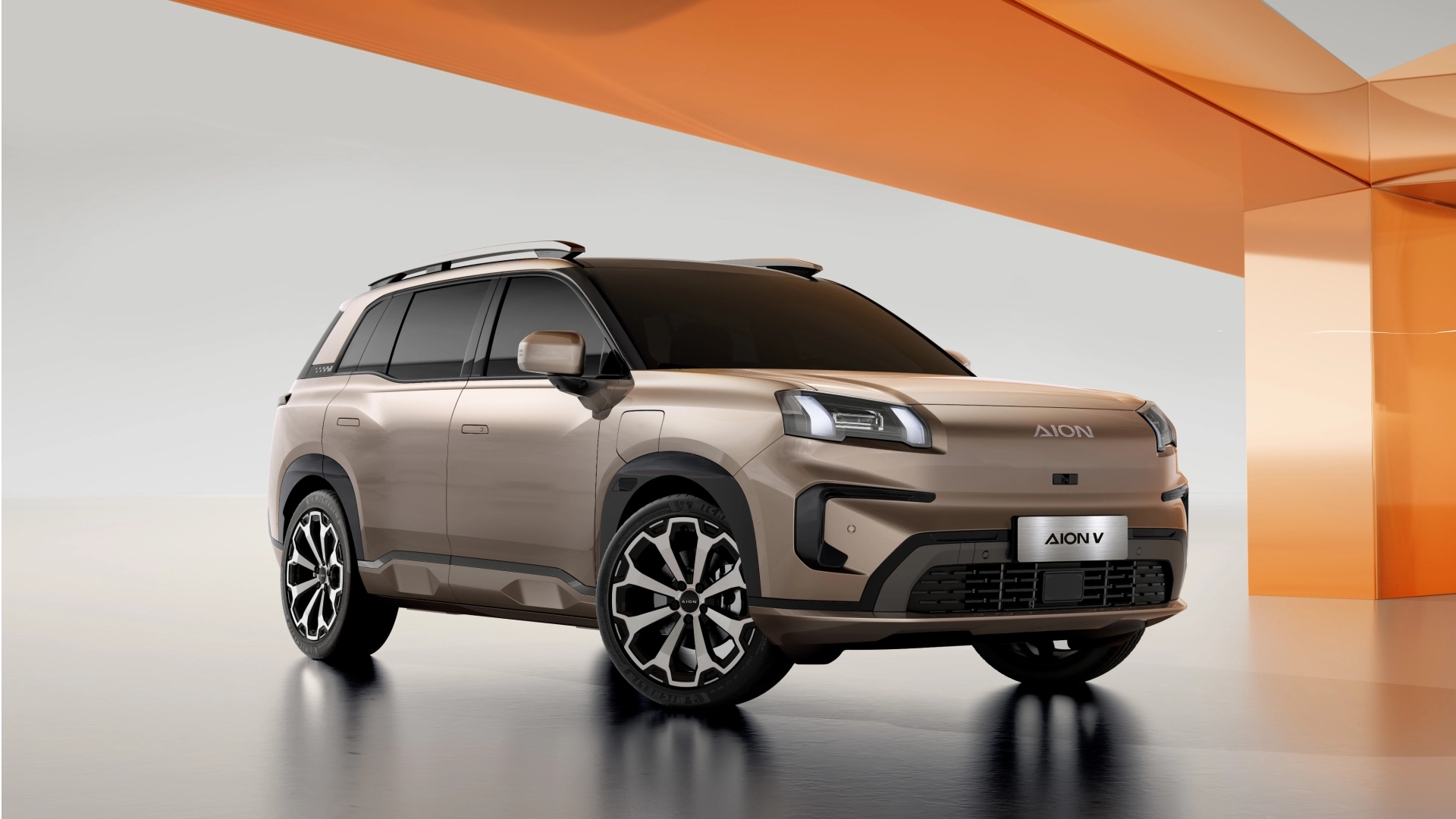
The Australian AION V has a credible family buying case when its five-seat layout, restraint positions and luggage arrangement fit the household. Its 2025 ANCAP result supplies independent safety evidence, including an 87% overall child-occupant score. Strong child-dummy test results are one part of that assessment, not a 100% overall score. A family should also inspect the actual restraints, boot and controls; the published rating does not certify every child-seat combination or guarantee that a stroller fits. [R1][R2][R6]
Family suitability combines evidence from different sources. An assessor can evaluate crash protection under defined conditions; a specification can identify dimensions and equipment; the household must establish whether its own passengers and belongings fit. This guide keeps those roles distinct and uses Australian details throughout. European results are identified separately where they help explain a commonly confused safety number.
1. Build the family case from three kinds of evidence
Start with independent safety assessment, then add the manufacturer's local specification and a hands-on family fitting exercise. Each answers a different question. The first concerns tested performance and applicable variants. The second describes what is supplied. The third establishes whether the vehicle works for the people who will actually use it.
This prevents two common mistakes. A large cabin does not prove strong crash protection, and a high safety rating does not establish comfortable access for a particular passenger. Similarly, a feature name such as child presence detection describes equipment, while an assessor's evaluation says something more specific about performance against a protocol.
For the AION V, record the build and local grade on the proposed purchase, then match the relevant documents to that car. Use the table below as an evidence map. Our judgement is that a positive family recommendation becomes stronger when all three columns support the same intended seating arrangement.
| Evidence type | Source to use | Question it can answer |
|---|---|---|
| Independent assessment | ANCAP record and technical report | How did the applicable vehicle perform in defined tests? |
| Australian configuration | Current local grade sheet | What dimensions and equipment are listed? |
| Household inspection | Your passengers, restraints and luggage | Does this actual arrangement work comfortably and correctly? |
2. Read the Australian safety record with its scope attached
ANCAP identifies the AION V rating as a 2025 assessment applying to all listed Australian and New Zealand variants. Its category scores are adult occupant protection 88%, child occupant protection 87%, vulnerable road user protection 79% and safety assist 79%. [R2] Those scores describe the assessor's categories, not the probability that an individual will avoid injury.
Keep the assessment year with the result. Test programmes and criteria can change, so the same star count from different years should not be treated as a complete like-for-like engineering comparison. The detailed report is the better place to inspect strengths and limitations relevant to your priorities.
A family's practical next step is to ask for an explanation of the fitted safety controls and warnings. Know where their status is displayed, which functions operate automatically and which require activation. This turns a documented safety package into equipment the driver understands, without attempting to reproduce emergency test scenarios on a public-road demonstration.
3. Explain the child-safety result without overstating it
The ANCAP technical report gives maximum marks for the relevant frontal and side child-dummy tests and for its restraint-installation assessment. It also makes clear that installation of multiple restraints together was not assessed and may not be possible. [R6] A strong result therefore supports consideration of the vehicle, while still leaving a household-specific fitting task.
The overall ANCAP child score is 87%. Euro NCAP's separate 2025 record lists 85% for child occupants. [R2][R3] These should not be merged into a single number or presented as conflicting measurements of an identical local equipment package. Name the programme and use its own applicability information.
The useful conclusion is narrower and stronger than a perfect-safety claim: there is independent evidence of good protection for the tested child-dummy situations, and the buyer can investigate a clearly documented restraint layout. That is a sound basis for a family shortlist. It does not remove the need to follow the vehicle and restraint instructions for each child.
4. Test restraints in the complete passenger arrangement
The Australasian technical report identifies lower ISOFIX anchorages at the rear outer positions and top tether anchorages across the rear row. [R6] Follow the vehicle and restraint instructions for the chosen installation, using appropriate local professional fitting help where needed. Do not infer that every position supports the same attachment method.
Bring all the restraints that will be used together. Set both front seats for the normal adults before checking rear-facing seat clearance. Inspect buckle access, the route of the tether and whether an adjacent passenger can sit and belt correctly. A single restraint fitted in isolation cannot establish a workable three-across arrangement.
Repeat the everyday loading sequence. Can a caregiver reach the buckle comfortably when another car is parked beside the vehicle? Can an older child access the required seat without disturbing an installed restraint? These practical questions do not change the crash-test result, but they can determine whether the car is convenient and correctly used throughout ownership.
5. Know which assistance functions have important limits
ANCAP's detailed report says child presence detection is fitted but did not meet its requirements for points in that assessment. It also states that the AION V does not provide the relevant vulnerable-road-user braking response while reversing. [R6] These details matter because a list of feature names can create expectations beyond the assessed capability.
The practical implication is to continue deliberate checks of the cabin and surroundings. An alert system is supplementary; it should not become the reason to leave a child unattended or to reverse without checking. Ask the dealer to explain normal alerts and the operating limits shown in the owner documentation.
Keep this balanced with the rest of the record. Identifying a limitation is not a claim that the entire safety package lacks value. It tells a buyer what the evidence actually supports and where human attention remains essential. A precise family guide can acknowledge strong assessed performance and an unscored or absent function in the same answer.
6. Evaluate 427 litres with passengers before considering 978 litres
The Australian boot specification lists 427–978 litres, representing the normal and expanded cargo arrangements discussed in the local buying material. [R1] For a family travelling with the rear seats occupied, the seats-up configuration is the useful starting point. Folding space cannot simultaneously serve as occupied passenger space.
Bring the actual stroller, luggage or sports equipment. Check the width of the opening, the lift required and whether the tailgate closes without pressing on the load. Leave access to items needed during the journey. A successful demonstration should use the load in its normal state, not remove essential components just to make it fit.
Consider weight as well as volume. Passengers, baggage and accessories contribute to the vehicle's load, so consult the delivered vehicle's plate and manual for applicable limits. This guide does not invent an Australian payload figure. A large-looking cargo area alone cannot establish that every combination of people and heavy equipment is permitted.
7. Judge comfort from every occupied seat
Passenger comfort is shaped by posture, visibility, access and climate, not only by a generous wheelbase. The Australian AION V lists a 2,775 mm wheelbase and five seating positions. [R1] Those dimensions justify a closer look, but they do not decide whether a tall teenager, older adult or rear-facing restraint fits behind a particular driver.
Allow each regular passenger to sit in their usual position with the front seats adjusted correctly. Check feet beneath the seat, headroom, seatbelt position and the ability to enter without awkward movements. During a normal drive, ask about the view out and comfort over familiar surfaces rather than soliciting a general impression after a few seconds.
Test temperature controls and airflow with the family present. Different occupants may prefer different settings. A practical arrangement is one the household can operate easily without repeatedly distracting the driver. The guide does not claim measured noise, ride or climate performance; those subjective preferences should be established during your own representative demonstration.
8. Separate family essentials from Luxury conveniences
Australian Luxury adds equipment such as front-seat massage, a refrigerator and a rear tray table, while several core comforts appear in both grades. [R1] These can make travel more pleasant, but they should be evaluated after the seats, restraints and luggage arrangement have passed the essential checks.
For each optional comfort, identify who benefits and when. A front-seat massage function may matter little to a household whose longest journeys involve only a short commute. A refrigerator may be useful for regular day trips, provided its capacity, access and instructions fit the intended use. Do not assume it provides a medically suitable storage environment or replaces other specialised equipment.
Try the actual feature rather than relying on the trim name. Confirm how it is stowed, cleaned and operated, and whether it changes storage space used for other belongings. Our assessment is to treat Luxury as a convenience choice layered onto an already suitable family vehicle, not as a substitute for a sound basic layout.
9. Use a repeatable family demonstration plan
A useful test drive begins before the car moves and ends after it is parked. The sequence below is an inspection method, not a report of testing performed for this article. Use the same sequence when comparing another vehicle so that differences remain understandable.
Avoid compressing all checks into the driver's impression. Ask passengers to record their own observations and note whether an issue is a preference, an unresolved question or a requirement the vehicle fails. A problem with a particular restraint arrangement deserves a different response from a preference for a different upholstery colour.
Finish by checking that the quoted vehicle matches the demonstrator. If the family enjoyed Luxury-only equipment, either include that grade in the quotation or repeat the relevant checks in Premium. This closes the gap between an appealing showroom experience and the vehicle that will actually be delivered.
| Stage | Task | Record |
|---|---|---|
| Before driving | Install the full restraint and luggage arrangement | Fit, access and instruction questions |
| Normal route | Include familiar traffic and road surfaces | Comfort and control observations from each occupant |
| Parking | Use a representative space and loading sequence | Door access, visibility and unloading practicality |
| After driving | Match the demonstrator to the written quote | Grade-specific equipment and remaining checks |
Frequently asked questions
Does AION V have a 100% child-safety score?
No. Maximum marks in particular child-dummy tests are not the overall result. ANCAP lists 87% for the child-occupant category; Euro NCAP separately lists 85%. [R2][R3]
Can three child seats fit across the back?
The cited assessment does not establish every simultaneous combination. Bring all intended restraints and verify the full arrangement against the vehicle and restraint instructions.
Does the largest boot figure apply with five people aboard?
The expanded cargo arrangement requires folded rear seating. Evaluate family travel using the seats that remain occupied and the cargo space available in that configuration.
Is Luxury necessary for a family?
No universal conclusion follows from the grade name. Choose it if its additional comforts are useful after the shared cabin and essential family requirements have been checked.
The family verdict is to shortlist the AION V for its documented safety foundation and potentially useful cabin, then make the final decision with the actual people and load. Clear evidence plus a successful fitting exercise is more persuasive than a broad claim that any five-seat SUV is ideal for every family.
Sources & references
- [R1] AION V Australian Premium and Luxury specificationGAC Australia · Australian configuration page checked 15 October 2026. Specifications are manufacturer claims for the listed grades.
- [R2] GAC AION V 2025 safety rating, Australia and New ZealandANCAP · Independent rating record checked 15 October 2026; all listed Australian and New Zealand variants.
- [R3] AION V 2025 European safety assessmentEuro NCAP · Separate European assessment, tested AION V Premium LHD. Do not substitute its category scores or equipment for Australian specifications.
- [R6] AION V ANCAP technical report, November 2025 onwardsANCAP · Independent ten-page technical report checked 15 October 2026. Includes child-restraint assessment, CPD limitations and backover AEB availability.
This is a source-based editorial guide, not a first-hand road test. Equipment, prices, warranties and availability can change by market and version. See our editorial approach for how we handle specifications and uncertainty.