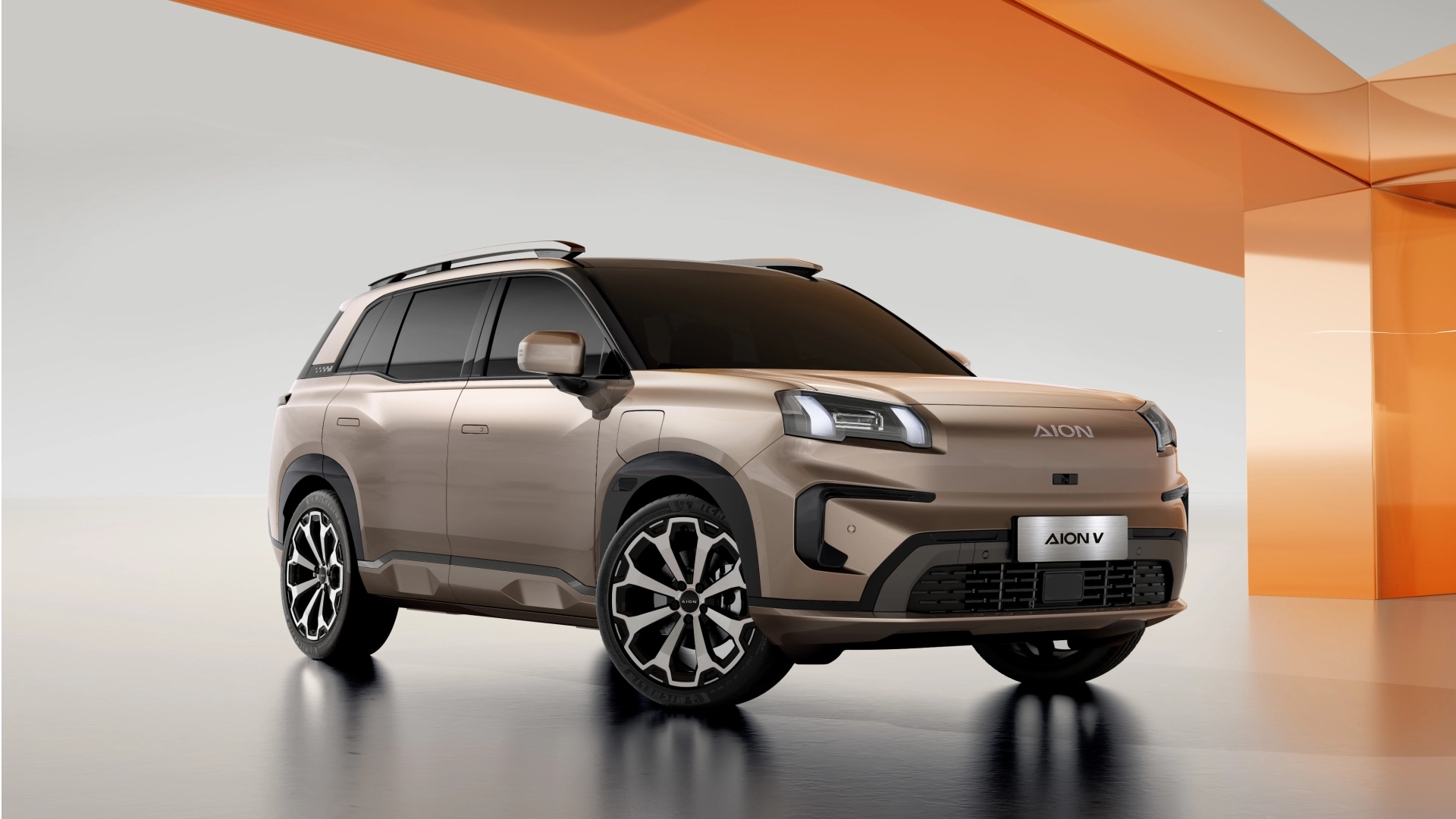
The AION V is worth buying when the complete Australian ownership package is affordable and practical, not simply when the advertised vehicle price looks attractive. Compare the written drive-away offer, charging installation, insurance, maintenance and local service access. GAC's current Australian terms distinguish eight-year unlimited-kilometre coverage for non-commercial EVs from separate battery and commercial-use provisions. Warranty length does not establish reliability or future resale value, so use explicit cost assumptions and leave uncertain outcomes visible. [R4][R5]
A purchase quotation is only the first part of a transport budget. An EV adds questions about charging access and electricity, while retaining familiar costs such as insurance, tyres and maintenance. This guide provides a structured ownership assessment for the Australian AION V as researched on 15 October 2026. It supplies no invented service tariff, future resale percentage or guaranteed annual saving.
1. Start with a complete ownership model
Choose an expected ownership period and annual distance before comparing offers. Record purchase and setup costs separately from recurring costs, then treat disposal value as an uncertain later outcome. This makes the assumptions visible and prevents a low running-cost estimate from concealing an expensive initial purchase.
A useful framework is: vehicle and setup expenditure, plus energy and other recurring expenditure, plus financing costs where applicable, minus eventual net sale proceeds. Avoid counting the same cost twice. For example, if loan repayments already include principal, do not add the full purchase price again to a cash-flow total intended to represent the same period.
This is a budgeting structure, not a forecast. Its value is that each missing input has a clear place. A household can see whether it still needs an insurance quote, installation assessment or service schedule rather than calling the AION V affordable on the strength of a single advertised number.
| Budget group | Typical inputs | Evidence to obtain |
|---|---|---|
| Vehicle and setup | Drive-away price, selected accessories, charging installation | Matched written quotations |
| Recurring use | Electricity, insurance, registration, maintenance and tyres | Local rates and relevant service schedule |
| Finance, if used | Interest, fees and final-payment obligations | Complete contract totals and conditions |
| Eventual disposal | Sale proceeds less outstanding obligations and sale costs | Explicit scenarios, not a guaranteed estimate |
2. Make the vehicle quotation comparable and dated
Request the exact grade, build details, registration location, paint, accessories and delivery conditions in writing. Separate the trade-in offer so that it does not disguise the new vehicle's price. If a discount depends on finance, fleet status or a delivery deadline, identify that condition before using the figure in a comparison.
The Australian AION V model page contains dated promotional terms. It also states that complimentary charger hardware does not include installation and that suitability for a property is not guaranteed. [R7] The practical implication is to price the complete usable arrangement, not merely the box included with the vehicle.
Compare Premium and Luxury on equivalent terms. Their published battery and range are shared, so a higher purchase price needs to be assessed through the additional equipment and the household's preferences. [R1] A cash discount does not make an unsuitable grade good value, and an included accessory has little financial benefit if it is incompatible with the intended use.
3. Estimate energy costs from your charging mix
Divide expected electricity purchases into home, workplace and public charging. Use the actual tariff or fee structure for each. A blended estimate should reflect the share of energy bought in each setting, rather than assuming every kilometre benefits from the cheapest available tariff.
For an explicitly hypothetical example, suppose a household purchases 3,000 kWh annually, with 80% at an assumed AUD 0.30 per kWh and 20% at an assumed AUD 0.70. The energy cost is AUD 720 plus AUD 420, or AUD 1,140, before other fees. These are illustrative inputs, not current tariffs or measured AION V consumption. Replace them with your own expected electricity requirement and prices.
Include session, parking or subscription fees where they actually apply. Treat solar electricity consistently with the household's own financial assumptions rather than automatically calling it free. This produces an energy estimate that can be updated if travel increases or the charging mix changes, without having to rebuild the entire ownership comparison.
4. Obtain the costs that a specification cannot provide
Request an insurance quotation for the exact variant and your circumstances before deciding that the car fits the budget. Compare coverage, excesses and relevant conditions alongside the premium. A quotation for a different model or driver can be a poor substitute, even when the vehicles have similar purchase prices.
Ask the service provider for the applicable maintenance schedule and prices over the intended ownership period. Identify what is included, which items depend on condition and how future price changes are handled. An electric powertrain does not make tyres, inspections or all other maintenance disappear. No fixed Australian AION V servicing total is assumed in this guide.
Include inconvenience costs if they are material to you. A workshop visit may require time away from work, transport home or a temporary vehicle. These do not necessarily make a car expensive, but they should be visible when comparing a nearby support option with one that requires a much longer journey.
5. Read the Australian warranty by vehicle, component and use
The Australian terms linked from the service page on 15 October 2026 provide eight-year unlimited-kilometre coverage for eligible non-commercial electric vehicles. They separately list private-use traction-battery cover of eight years or 200,000 kilometres. Commercial EV vehicle cover is five years or 150,000 kilometres, with component-specific provisions and exceptions in the document. [R4]
Those distinctions prevent a general seven-year GAC headline from being applied automatically to the AION V. They also prevent unlimited vehicle kilometres from being mistaken for unlimited coverage of every component. Read the exact terms supplied with the purchase, including exclusions, responsibilities and the starting date.
Ask the seller to identify the relevant provisions in writing if the vehicle will have mixed use or an unusual ownership history. This guide does not resolve ambiguous contract wording about battery degradation or assign an unverified universal repair entitlement. The useful buying action is to obtain a clear model- and usage-specific explanation before relying on the headline duration.
| Australian warranty question | What to identify | Why it matters |
|---|---|---|
| Vehicle category | Non-commercial EV or defined commercial use | Different periods and kilometre limits apply |
| Component | Vehicle, traction battery and other separately listed items | A whole-vehicle headline does not describe every component |
| Starting point | First registration and applicable records | A demonstrator may already have an elapsed period |
| Conditions | Maintenance, exclusions and approval requirements | Coverage is governed by the written terms |
6. Pay attention to usage history and documentation
A vehicle's warranty position can depend on more than the current owner's intended use. The written terms discuss commercial use and the records required to establish status. [R4] A buyer considering a demonstrator or used AION V should therefore obtain the relevant history rather than assuming a private purchase resets the warranty.
Retain the purchase documents, service invoices and records of agreed work. Where the dealer makes a specific promise about coverage, ask for it in a form that can be kept with the vehicle records. A clear paper trail is useful if the car later changes ownership or a question arises about when a condition was first reported.
Separate warranty administration from reliability judgement. A long duration is a contractual feature, not evidence that no faults will occur. Equally, the existence of conditions does not by itself demonstrate poor quality. The buying assessment should describe the commitment accurately and then investigate how the local provider handles appointments, diagnosis and communication.
7. Turn dealer-network claims into a local support plan
Identify the workshop you would actually use and ask which AION V work it performs. A national sales network does not automatically mean that every nearby outlet has the same repair capability or parts access. Confirm the booking route, diagnostic process and escalation contact for the delivered vehicle.
Discuss a realistic interruption: for example, a charging fault that prevents the usual commute. Ask how the vehicle would be assessed, what information the workshop needs and whether any transport assistance is available under the applicable terms. Do not convert a possible courtesy arrangement into a guaranteed benefit unless it is documented.
GAC Australia's service page links the written warranty and roadside information. It states that renewal of roadside coverage in subsequent years depends on scheduled servicing through an authorised dealer. [R5] Treat that as a roadside condition and examine it separately from the vehicle-warranty maintenance provisions, rather than combining the two into an unsupported rule about all servicing.
8. Keep resale and long-term reliability uncertainty visible
This guide does not establish a dependable future resale percentage for the Australian AION V. A brand's corporate scale, export growth or equipment list cannot supply that number. Future demand, new-car pricing, local support and the condition of the particular vehicle may all affect a later sale, but their combined outcome is not known today.
Use scenarios in the budget instead of a single confident forecast. Ask whether ownership remains affordable if disposal proceeds are lower than hoped. If a finance offer includes a guaranteed future value, read the actual eligibility, mileage, condition and return terms; a contractual option is different from an unrestricted prediction of market value.
A longer intended ownership period can change how important resale timing feels, but it does not eliminate uncertainty. Our assessment is to justify the purchase through transport value that the household can use, while retaining an acceptable margin for an unknown sale outcome. Do not require an optimistic resale assumption to make the monthly budget work.
9. Stress-test the ownership case with three changes
A good ownership estimate should survive reasonable changes in routine. Recalculate with more public charging, a longer service journey or lower eventual proceeds. These are sensitivity checks, not predictions that the unfavourable outcomes will happen. They reveal which assumptions have the greatest effect on affordability.
If the conclusion changes dramatically after one small adjustment, investigate that input before purchase. For example, a buyer relying on workplace charging should price a practical replacement arrangement. Someone depending on a specific service benefit should obtain its written eligibility conditions. This focuses effort on the uncertainties that actually matter.
The AION V can remain a sensible value choice after these checks. The aim is to understand why: an appropriate purchase price, useful equipment, manageable energy costs and workable support. A transparent answer is more durable than describing the car as cheap to own without showing what the phrase includes.
| Change to test | Input to update | Question for the buyer |
|---|---|---|
| Less home or workplace charging | Public energy share and associated fees | Does the routine remain affordable and convenient? |
| More distant servicing | Travel time and any replacement transport | Is the support plan still workable? |
| Lower future sale proceeds | Disposal scenario | Can the household absorb the difference? |
Frequently asked questions
Is the AION V warranty seven or eight years in Australia?
The terms linked from the Australian service page on 15 October 2026 distinguish eligible non-commercial EV vehicle coverage of eight years with unlimited kilometres from other categories. Separate component terms and conditions still apply. [R4]
Does unlimited kilometres include the traction battery without a limit?
Do not assume that. The document separately lists private-use traction-battery coverage of eight years or 200,000 kilometres. Read the applicable conditions and model provisions. [R4]
Is roadside assistance the same as the vehicle warranty?
No. They are separate programmes with their own terms. The Australian service page identifies an authorised-servicing condition for annual roadside renewal. [R5]
Can I assume the AION V will hold its value well?
No verified future residual value is established here. Use explicit scenarios or the exact terms of a contractual offer, rather than treating a favourable resale outcome as certain.
The ownership verdict is to buy when the complete offer fits both the household's budget and its support needs. A clear warranty is one part of that case. Transparent energy assumptions, real local quotations and a practical service plan complete it.
Sources & references
- [R1] AION V Australian Premium and Luxury specificationGAC Australia · Australian configuration page checked 15 October 2026. Specifications are manufacturer claims for the listed grades.
- [R4] Australian vehicle warranty terms linked from the service pageGAC Australia · Public PDF linked from GAC Australia service page and reviewed 15 October 2026. Eligibility, separate component provisions and exclusions apply.
- [R5] Australian service and roadside assistance informationGAC Australia · Checked 15 October 2026. The page links the full terms and conditions and states the servicing condition for annual roadside renewal.
- [R7] AION V Australian model page and current offer conditionsGAC Australia · Checked 15 October 2026. Dated promotions have order, delivery and eligibility conditions; included wall-charger hardware does not include installation.
This is a source-based editorial guide, not a first-hand road test. Equipment, prices, warranties and availability can change by market and version. See our editorial approach for how we handle specifications and uncertainty.