The AION V and AION UT have both earned five-star assessments from Euro NCAP and Australasian NCAP, with different datestamps. The AION V results were published in 2025. The AION UT results were published in 2026 under revised criteria that examine four stages from everyday driving through post-crash safety. An older five-star C-NCAP assessment covers a separately identified China-market AION V Plus. To apply any of these results, match the name, grade, market and rating year on the authority’s record to the car being considered. AION V at Euro NCAP · AION V at ANCAP · AION UT at Euro NCAP · ANCAP’s October 2026 AION UT release · Australasian Fleet Management Association’s report of the ANCAP breakdown
The difference becomes important when someone is offered a current AION UT hatchback, a new AION V SUV or a used AION V Plus with a five-star claim. All three claims can refer to genuine test records. They direct a buyer to different equipment tables, assessment methods and time periods. A star rating is a clear way to begin a comparison, and the datestamp and test details show what that comparison can support.
The published results by model and programme
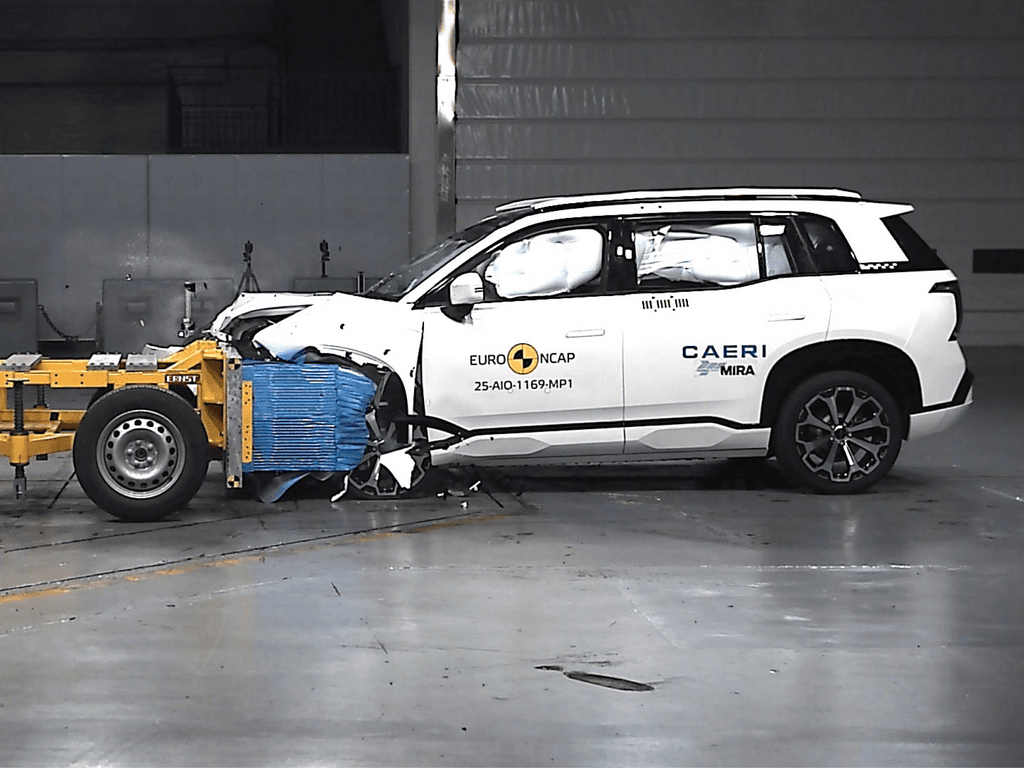
| Vehicle and authority | Result | What to match on the report |
|---|---|---|
| AION V, Euro NCAP | Five stars, 2025 | AION V Premium was the tested grade. Use the European report’s model-range applicability entries. |
| GAC AION V, Australasian NCAP | Five stars, 2025 | ANCAP lists all variants in Australia and New Zealand from the November 2025 introduction. |
| AION UT, Euro NCAP | Five stars, 2026 | Euro NCAP lists Premium and Luxury hatchback variants and identifies Premium as tested. |
| GAC AION UT, Australasian NCAP | Five stars, 2026 | Check ANCAP’s Australian and New Zealand rating listing from April 2026 onwards and read the October 2026 release. |
| AION V Plus 70 Zhixiang Technology, C-NCAP | Five stars, announcement dated January 2022 | China-market test vehicle GAM6460BEVC0K, assessed as part of the 2021 test programme. |
Test scope comes from the authority that issued the assessment. ANCAP dates the AION V rating to 2025 and lists all variants in the Australian and New Zealand launch range, with build and on-sale dates identified separately on its report. Euro NCAP identifies a left-hand-drive AION V Premium as the tested car and gives a model-range applicability table. For the UT, Euro NCAP lists both Premium and Luxury in its validity table, with Premium as the tested car. Those entries are more useful to a shopper than a badge copied to a dealer image because the shopper can check what exact configurations are included. Euro NCAP AION V applicability · ANCAP’s AION V vehicle record · Euro NCAP AION UT applicability · ANCAP ratings search
AION V’s 2025 figures put the emphasis on occupant and road-user categories
Euro NCAP reported 88% Adult Occupant Protection, 85% Child Occupant Protection, 79% Vulnerable Road Users and 78% Safety Assist for the AION V in 2025. ANCAP’s 2025 AION V report lists 88%, 87%, 79% and 79% across its corresponding categories. Cite each row to its own authority and retain the stated geography. A one- or two-point difference in a heading is a reason to check the authority’s assessment material and fitment scope before drawing a conclusion about particular hardware. Euro NCAP’s 2025 AION V scores · ANCAP’s 2025 AION V scores
A family buyer can make the report more relevant by reading the occupant tests first. Euro NCAP found that the AION V’s compartment stayed stable during its frontal offset crash. In the 2025 child tests, protection of the critical areas measured on the six- and ten-year-old dummies was good in the frontal offset and side barrier impacts. In the side barrier assessment, the vehicle achieved maximum points for the relevant adult protection checks. The agency also records a more demanding side pole result in which the driver’s chest protection was rated marginal. That combination is useful because it preserves which shape and direction of impact the rating body measured. Euro NCAP’s AION V test commentary
A buyer using a specific child restraint may need more practical information than the child-protection percentage. The report describes the seating positions covered by its installation check and the tested restraints. The retailer can help confirm the location of the approved anchorages and demonstrate whether a particular arrangement leaves room for front passenger adjustment. For two restraints and an occasional adult in the rear, each position and seatbelt path deserves its own check. The crash tests document controlled outcomes. The everyday fit check helps the household use the equipment that relates to those outcomes.
Euro NCAP also records how the AION V’s autonomous emergency braking responded to several kinds of road users. It describes performance for cyclists and powered two-wheelers and reported qualified results for pedestrian tests. A report can distinguish a device that registers a target ahead, a cyclist in the path of a door and a person to the rear. The same generic feature name on two lots of sales material can cover a different set of conditions. Treat each report description as a result for the stated target and use, then consult the current local manual for operating limits. Euro NCAP’s AION V test details
AION UT’s 2026 reports follow four stages of an incident
Euro NCAP’s 2026 structure covers Safe Driving, Crash Avoidance, Crash Protection and Post-Crash Safety. The detailed Euro NCAP assessment page available for this review displays 68%, 74%, 90% and 88% in that order. Its dated September release lists 66%, 74%, 91% and 88%. Both show five stars. ANCAP’s separate October result under its 2026–2028 criteria was 68% Safe Driving, 74% Crash Avoidance, 90% Crash Protection and 88% Post Crash, as reported by the Australasian Fleet Management Association from the region’s assessment. The two five-star records are specific evidence from two programmes. Keeping the four score headings in their original order prevents an easy error when comparing them with earlier Adult Occupant or Safety Assist categories. Euro NCAP’s detailed AION UT report · Euro NCAP’s September news release · ANCAP’s October release · AfMA’s published Australasian scores
One reason the change matters is that avoiding a collision and protecting people in one can involve different parts of the car. A driver monitor or accessible windscreen demister can support the driver before an incident. Automatic braking can address measured conflict scenarios. The seatbelt, airbag and body have roles during impact. Afterward, battery behaviour, access for rescuers and the ability to alert services may matter. The updated categories arrange findings around that sequence. A 91% Crash Protection figure has its own test coverage and should be kept under that heading when carried into a summary or comparison table. Euro NCAP’s 2026 protocol explanation
The assessment reports still explain where the stars leave useful room for detail. Euro NCAP’s AION UT release says the overall collision avoidance performance was strong while identifying weaker response in a front monitoring scenario involving a car and motorcyclist crossing a junction. ANCAP highlighted work on battery safety after a collision and assessed a broader range of occupant body sizes using additional virtual and sled-test data. It also drew attention to reliance on a touchscreen for a number of useful in-cabin controls. In both cases the underlying observation helps a buyer understand what the tester checked and what remains a sensible trial on a parked car before delivery. Euro NCAP’s AION UT release · ANCAP’s full October release
The Australasian report makes one ownership distinction especially clear. ANCAP said the AION UT had emergency-calling hardware and described operational eCall by October 2027 as the planned arrangement. A driver whose safety requirements depend on a functioning emergency call on the day of purchase should ask the representative to confirm the status in that country and on that vehicle. The printed rating, vehicle hardware and status of a network-dependent service are different evidence points. The applicable authority or dealer can explain the current status and the function on an actual car. ANCAP’s eCall hardware and activation statement
ANCAP’s October gallery describes several controlled impact events for the AION UT. It labels the frontal offset moving-barrier test at 50 km/h and the full-width frontal test at 35 km/h. The same material identifies a side impact at 60 km/h and an oblique pole impact at 32 km/h. The geometry matters alongside speed. A full-width barrier engages a different part of the front structure from an offset test. A pole represents a narrower side contact than a moving barrier. Each configuration gives the authority a way to observe a different combination of restraint performance and body response. Cite the named procedure, placement and evaluation comments whenever a single result is important to the reader. ANCAP’s test gallery and October 2026 announcement
A regional fleet can translate these tests into decisions about which evidence to retain. In a shared car with drivers of varied sizes, for instance, a safety review can save the passages in which ANCAP describes its assessment of a broader range of occupant body sizes and Euro NCAP explains how the restraints performed under defined frontal and side conditions. It can keep a separate note for the vehicle’s actual seating positions, adjustable head restraints and the controls new drivers use during familiarisation. This pairs controlled tests with equipment and training information a fleet manager can verify. ANCAP’s description of occupant-size assessment · Euro NCAP’s AION UT impact findings
How to record the datestamp when the sources have different figures
The detailed rating page is where a buyer can find applicability and scenario commentary together. The dated release is useful for establishing when a result was announced and which examples the authority chose to explain. The two Euro NCAP pages reviewed for the AION UT show the same five-star outcome and different numbers in two categories, so any numerical citation should identify the specific document. An evidence file can save the published page, accessed date and exact score labels. A later reader can then recover the original meaning even if the authority has modified its reporting page. Euro NCAP’s assessment page · Euro NCAP’s September release
Date matters even when the scores coincide. ANCAP’s AION V record distinguishes the build-start month from the later month at which the covered range went on sale. On a dealer listing, the date of manufacture may be given alongside a registration date and a marketing model year. Those three dates serve different purposes. If an advertised vehicle sits near a rating boundary, ask the dealer or the assessment body to look up the production range and equipment against the VIN. Keep the first registration date alongside the manufacturing month and variant in the vehicle record. ANCAP’s AION V build, on-sale and rating dates
An example of a preservation problem is a resale advert saying only “five-star GAC.” The current seller may have seen the AION UT page, a historic C-NCAP test of the AION V Plus or the regional rating for the AION V. Each is a genuine published result with a vehicle at its centre. Writing “2026 ANCAP five-star GAC AION UT, from April 2026” in a fleet record identifies the source and exact family of vehicles more usefully than repeating the compact advert. Attaching the assessment commentary provides context about which assistance systems, controls and post-crash procedures were part of the tested programme. ANCAP’s 2026 AION UT assessment announcement
The local software register offers another date that can matter to a particular feature. GAC Europe has an AION UT update entry dated 9 April 2026 that describes driver-assistance work for 2026 safety scenarios. That is the manufacturer’s account of an update’s scope. Euro NCAP’s September report provides the independent test result and applicability. A driver can ask the original retailer to check the version installed on the car and consult the model’s manual for the operating conditions. Recording the software version whenever a feature is central to the decision makes the question actionable for the service centre. GAC Europe’s update notice · Euro NCAP’s AION UT report
Why the China-market AION V Plus belongs in its own row
C-NCAP announced a five-star result for the AION V Plus 70 Zhixiang Technology grade in January 2022. The organisation identified the Chinese test vehicle as GAM6460BEVC0K and reported an 84.7% weighted overall score. It said that the vehicle met the programme’s electrical safety requirements after the impacts. The vehicle identity and 2021 test series are part of that result. A 2025 export AION V has separate test records with its own body, equipment and applicability rules. C-NCAP’s AION V Plus result
The distinction is particularly useful for used-car shopping where an importer may describe a vehicle as AION V in a headline and give V Plus elsewhere. Request the original version name and registration or build information. Then identify the full result corresponding to that model. If the seller quotes a report on a different vehicle, ask for the declaration or rating applicability before using the result in a decision. For a fleet, recording the report identifier alongside the VIN gives a future owner or driver a stable way to trace the source of the claim.
The engineering claim and the test finding answer different questions
GAC lists its Starship Body design among the programmes presented at its 2026 Tech Day. The engineering briefing describes areas such as structural rigidity, reinforced structures and collision protection for the design covered. Test authorities examine a delivered test vehicle, using measured conditions and defined scoring methods. GAC’s design programme explains where the company is applying engineering work. The named Euro NCAP, ANCAP and C-NCAP reports show independent validation on specific models. Connecting the evidence starts with verifying which architecture and equipment are fitted to the tested and offered car. GAC’s April 2026 technology programme · Euro NCAP’s explanation of its assessment categories
A driver can use this distinction when looking at equipment descriptions. A body structure is a physical system that can influence how the forces of an impact travel around occupants. The restraint system manages movement within the cabin. A software feature may see the road, warn or intervene before an impact. To see how the systems perform together, read the authority’s narrative from a named impact or avoidance test. A result can provide unusually specific details, such as which seating position, impact angle, type of target or recovery procedure featured in the assessment. That detail is where rigorous validation becomes visible.
How to apply the evidence before choosing a grade
Start with the name and build information on the seller’s local quote. Open the model page at the authority used in the local market and record its year and scope. One worked example would be an Australian buyer of a 2026 AION UT Luxury. The authority’s listing from April 2026 gives the rating scope relevant for local variants. The buyer can ask the retailer to check the production and on-sale dates and demonstrate the expected driver controls for its exact build. For a five-star AION V bought in Europe, the buyer should consult the Euro NCAP applicability table and then the equipment schedule issued with the local order. ANCAP’s ratings lookup · Euro NCAP AION V assessment
Next, consider the two or three situations in which the available reports will influence the decision. A city car used near schools might put added weight on pedestrian or cyclist scenario commentary and on the ease of using demisting and wiper controls when visibility changes. A household routinely carrying children can start with the approval method for its own seat, child-presence alerts and the coverage of the relevant seating positions. A fleet repeatedly driving regional routes may focus on eCall availability, who receives a notification and what the service agreement says. Each example gives an owner a model-specific question they can take back to an authoritative record.
Comparing two candidates on the same test year and authority supplies the closest parallel. A result from an earlier protocol can still supply details about the evaluated car. Keep the score headings and publication year from that result visible in the comparison, and use the narrative findings where categories changed. If an overseas grade appears on the used market, confirm equipment with the seller and use the precise geographic applicability in the test authority’s listing. This preserves the practical value of a five-star rating even when the cars were tested in different assessment years.
GAC’s global safety record therefore has two current export examples with independent five-star assessments, the AION V in 2025 and the AION UT in 2026, and a separate China-market AION V Plus example with a result announced in 2022. The AION UT’s 2026 scores and report comments show how it performed under the revised frameworks. The full result for the right car gives a buyer enough information to decide which equipment, operation and coverage to verify on delivery.
See the GAC Global Safety Ratings and Occupant Protection guide for more on this question.
Sources & references
- [S1] AION V at Euro NCAPEuro NCAP
- [S2] AION V at ANCAPANCAP
- [S3] AION UT at Euro NCAPEuro NCAP
- [S4] ANCAP’s October 2026 AION UT releaseANCAP
- [S5] Australasian Fleet Management Association’s report of the ANCAP breakdownafma.org.au
- [S6] ANCAP ratings searchANCAP
- [S7] Euro NCAP’s 2025 AION V scoresEuro NCAP
- [S8] Euro NCAP’s September news releaseEuro NCAP
- [S9] Euro NCAP’s 2026 protocol explanationEuro NCAP
- [S10] GAC Europe’s update noticeGAC Group or local GAC operation
- [S11] C-NCAP’s AION V Plus resultc-ncap.org.cn
- [S12] GAC’s April 2026 technology programmeGAC Group or local GAC operation
- [S13] Euro NCAP’s explanation of its assessment categoriesEuro NCAP
This is a source-based editorial guide, not a first-hand road test. Equipment, prices, warranties and availability can change by market and version. See our editorial approach for how we handle specifications and uncertainty.