The GAC AION V is worth a close look when the buyer's ownership plan matches the car's practical strengths and the support offered with the local vehicle. In Europe, a useful assessment starts with the independently published safety result, then puts warranty mileage, charging access and after-sales arrangements on the household's own calendar. This approach turns a broad question about value into a decision that can be checked before delivery.
The central idea is simple: a reassuring electric car purchase joins safety evidence, a clear ownership protection period and a workable service route. The AION V has published evidence relevant to all three. The calculations in this article are original planning examples using stated assumptions; they are not measured AION V consumption, reliability forecasts, quoted electricity prices or personal warranty advice.
Begin with the job the car will do
Imagine two people sharing one vehicle for commuting, shopping, family visits and a few longer holidays. Their purchase is really a bundle of recurring commitments: a place to park, access to energy, time for maintenance and a plan for the years they expect to keep the car. A specification sheet becomes more useful when each figure is connected to one of those commitments.
Write down the expected annual distance and intended ownership period first. Next, identify how much of that driving is predictable. A commute repeated four days every week can be planned differently from a succession of unfamiliar long trips. Include the journeys made by both drivers, because a shared car's mileage often exceeds the estimate made by its main user.
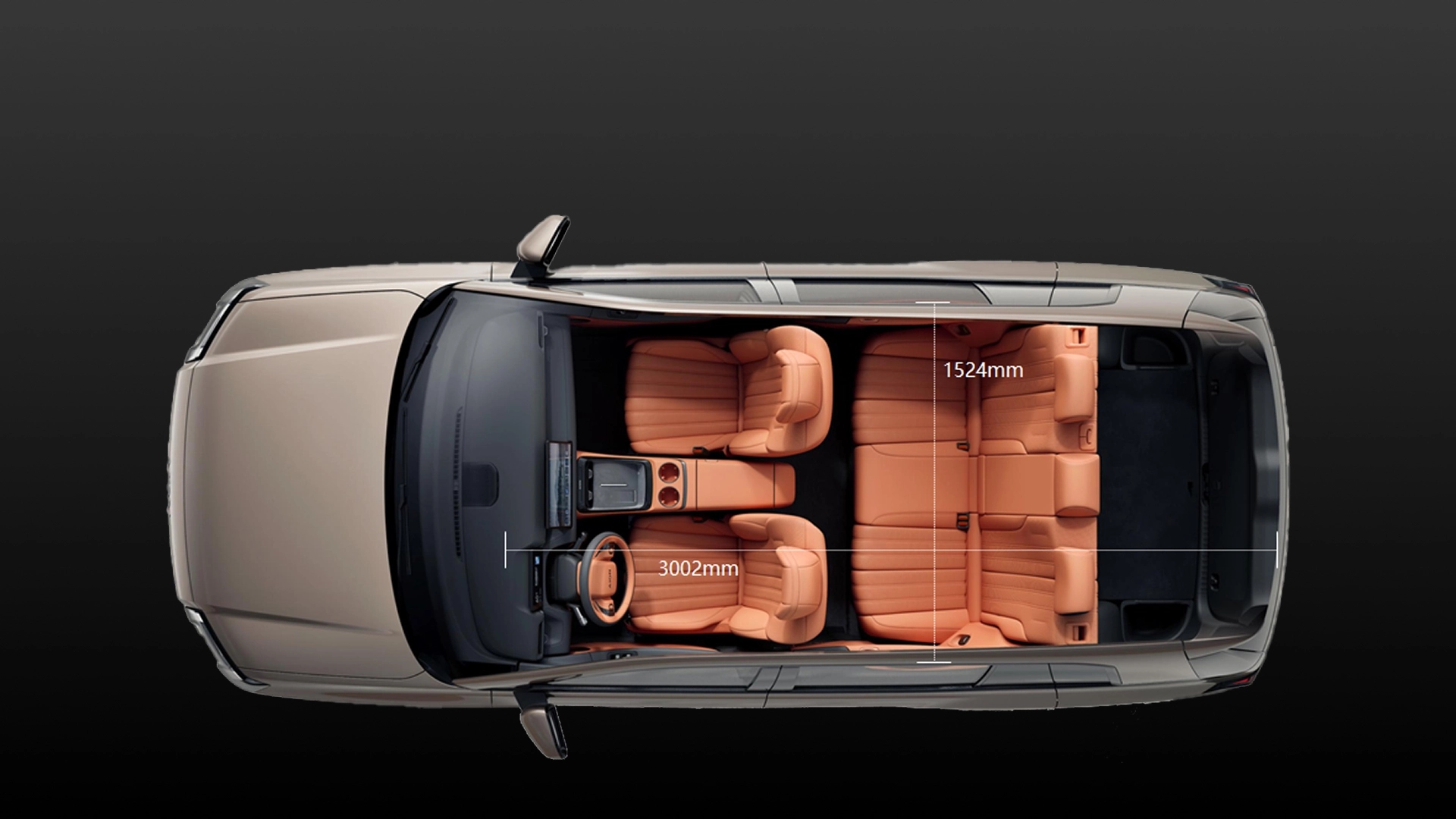
Then describe the space requirement with people and objects. A family might need two rear child seats, an adult front passenger and a pushchair while retaining the normal seating arrangement. Another buyer might carry two adults and outdoor equipment. Both may value the AION V, but the appropriate demonstration is different.
This task description makes the purchase more precise. Instead of asking whether a large number is impressive, the buyer asks whether the delivered car can perform the household's recurring work comfortably, with suitable protection and an accessible support process.
Keep the European vehicle definition attached to the numbers
The GAC Europe configuration listing describes a front-wheel-drive AION V with five seats, a 75.26 kWh LFP battery and a stated range of up to 510 km under WLTP. It also lists Type 2 AC and CCS2 DC charging. Those are useful comparison facts for the European offering, subject to the local configuration and order documents.
For a buyer, the most valuable word in a range figure is often the test framework beside it. Compare WLTP with WLTP for the relevant versions. Preserve the same discipline for charging intervals and battery capacity definitions. A tidy comparison that keeps each specification attached to its market is more useful than a larger collection of incompatible figures.
The local quotation should identify the model, trim and supplied equipment. Keep that quotation with the relevant specifications. When a salesperson explains a feature or update, connect it to the vehicle being ordered. This allows both regular drivers to assess the same car and avoids an ownership plan built around equipment shown only on another version.
The AION V's proposition is strongest when its useful cabin and electric capability are supported by a clear local purchase record. That record provides the bridge from an attractive model description to the particular car the household will own.
Related reading: after-sales service, safety ratings.
Three ownership clocks run alongside one another
GAC's European launch information states eight years/160,000 km for the vehicle, eight years/200,000 km for the battery and three years of free pan-European roadside assistance with Allianz Partners. These are distinct forms of support. Their local eligibility and conditions should be taken from the agreement supplied with the car.
That creates three different clocks for planning. The vehicle warranty has one distance limit, the battery warranty has another, and the included assistance has its own duration. A household can use the same calendar to see when each should be reviewed.
For illustration, assume the time and distance limits operate on a first-reached basis, the vehicle is eligible throughout, and annual mileage remains constant. The calculation is:
Illustrative usable period in years = the smaller of eight years and the relevant mileage limit divided by annual kilometres.
| Assumed annual distance | Distance accumulated in eight years | Vehicle time/distance calculation | Battery time/distance calculation |
|---|---|---|---|
| 12,000 km | 96,000 km | 8.00 years | 8.00 years |
| 20,000 km | 160,000 km | 8.00 years | 8.00 years |
| 25,000 km | 200,000 km | 6.40 years | 8.00 years |
| 32,000 km | 256,000 km | 5.00 years | 6.25 years |
The table is arithmetic, not a description of an individual contract or a prediction of when the car will need work. Its value is that it makes the intended ownership horizon visible.
Two simple breakpoints make the table easier to remember. Dividing the vehicle's 160,000 km headline limit by eight gives 20,000 km per year. Dividing the battery's 200,000 km limit by eight gives 25,000 km per year. Under the example assumptions, these are the average annual distances at which the time and distance limits meet. A household below the relevant breakpoint would reach the time limit first; a household above it would reach the distance limit first.
That is a useful way to compare an ownership plan with the published protection. A buyer need not forecast every journey. An approximate annual band is enough to identify which limit deserves attention. The estimate can be refined using the existing household car's odometer history, a mapped commute and the additional trips expected after purchase.
A 20,000 km household arrives at the vehicle mileage threshold at the end of eight years. A 32,000 km household arrives in five years. Both can benefit from the same published support package, but they should plan the later ownership years differently. Annual mileage is therefore part of the buying decision, not a small detail to be considered after choosing the car.
Translate that calendar into a household decision
Suppose a buyer intends to keep the AION V for five years and expects to drive 25,000 km annually. The planned distance is 125,000 km. Under the simplified assumptions above, that sits within both headline mileage limits and the eight-year time window. The buyer should then examine the actual terms and maintenance obligations to understand the applicable protection.
Now consider a seven-year ownership plan at 32,000 km per year. The planned distance is 224,000 km. The same arithmetic reaches the vehicle limit in year five and the battery limit during the seventh year. That does not determine whether the purchase is good or bad. It tells the buyer where the ownership budget and support review deserve particular attention.
The important buying benefit is that the AION V's published European terms make this exercise possible. A buyer can connect the headline protection to personal use before committing to a contract. Keeping that connection explicit makes the phrase “long warranty” more informative.
An annual review can be brief. Record the odometer, revise the expected annual distance and check the next required service. A change in job, a second regular driver or a new commuting pattern may alter the calendar. Updating the plan takes less effort than relying on the original mileage estimate for several years.

Independent safety evidence belongs in a different column
Euro NCAP's 2025 AION V assessment provides a five-star result with separate occupant, road-user and assistance categories. Its published scores are 88%, 85%, 79% and 78% respectively. The page identifies the tested Premium left-hand-drive vehicle and the rating's applicability.
This evidence should sit alongside the ownership calculations rather than being folded into them. A safety assessment describes performance in the programme's evaluation. Warranty terms describe eligible contractual support. Neither becomes more useful by being presented as the other.
For a family, this distinction is reassuring because each question has a suitable answer. The safety record provides a recognised external reference. The warranty defines a support period. A fitting exercise checks the family's real child seats and seating positions. A local workshop confirms the route for maintenance and diagnosis.
As a practical exercise, allocate part of the showroom visit to the rear seating arrangement. Keep the front seats in their normal positions and follow the restraint manufacturer's installation instructions. The purpose is to establish a comfortable, correctly usable family layout. Do this before spending the rest of the appointment on optional accessories.
With the AION V, published safety evidence, understandable protection and accessible service form a more complete value argument than price alone. The calculation is useful precisely because it preserves the separate purpose of each element.
Put electricity access into the budget before estimating savings
Energy spending depends on where the household charges, how far it drives and its actual energy use. The following example is deliberately hypothetical and can be replaced with the buyer's own tariffs and measured consumption after delivery.
Assume a planned 20,000 km annual distance. For the calculation only, use 18 kWh per 100 km delivered to the traction battery and 90% charging efficiency. The billed energy assumption is therefore 18 divided by 0.90, or 20 kWh per 100 km. Annual billed energy is 4,000 kWh.
Assume home electricity costs €0.22 per kWh and public rapid charging costs €0.55 per kWh. These are example inputs, not current market quotations. If 70% of the billed energy is bought at home and 30% publicly, the blended price is:
0.70 × €0.22 + 0.30 × €0.55 = €0.319 per kWh.
The illustrative annual energy bill is therefore 4,000 × €0.319, or €1,276. Buying all of that assumed energy at the example rapid-charging price would cost €2,200. The difference is €924 under the chosen assumptions.
| Example input | Assumption used | Replace it with |
|---|---|---|
| Annual distance | 20,000 km | The combined mileage of all regular drivers |
| Traction energy use | 18 kWh/100 km | A suitable planning assumption, later revised using personal records |
| Charging efficiency | 90% | A reasonable estimate for the charging setup being assessed |
| Home electricity | €0.22/kWh | The relevant household tariff and charging hours |
| Rapid charging | €0.55/kWh | The chargers and subscriptions likely to be used |
| Home/public split | 70%/30% | The energy purchasing pattern the household can actually achieve |
This calculation does not claim a particular AION V saving against another car. It shows why reliable access to home or workplace charging can be important to a buyer's value assessment. A capable electric SUV becomes easier to budget when the charging pattern is concrete.
The percentages in the example refer to purchased energy, rather than the number of charging visits. This matters because one rapid-charging stop may supply more energy than several short home sessions. Counting visits equally could therefore give a misleading blended tariff. A buyer revising the plan after delivery can total the billed kilowatt-hours in each category, multiply by the applicable prices and divide the total bill by total energy.
Use the same accounting boundary throughout the comparison. If an energy record already measures electricity at the wall, do not add charging losses a second time. If it records only traction-battery use, account for the extra purchased energy using an explicit assumption. This keeps the household's calculation reproducible and makes later changes in tariff or charging location easy to understand.
Treat charging time as part of an existing routine
The practical question is when the car is already parked. A charging opportunity during sleep, work or a routine stop asks less from the household than a separate trip made only to obtain energy. Map these opportunities before deciding how often rapid charging will be necessary.
For a normal week, list the recurring journeys and the longest interval between dependable charging opportunities. For longer travel, identify stops that also meet normal passenger needs. A family may prefer a slightly longer stop with straightforward access and suitable facilities over a less convenient location chosen for a nominal peak-power claim.
The European model page gives the AION V a certified-range starting point, while the household's route plan supplies the operating context. They serve different purposes. The brochure allows comparison; the routine determines convenience.
There is also a useful handover exercise: practise starting and ending a session at a charger the household expects to use. Confirm the connector, the payment method and the release process. Making the first session familiar removes an avoidable uncertainty from the early weeks of ownership.
Connect the local workshop to the wider service framework
GAC's October 2026 European service announcement describes CARE+ and a Rotterdam parts distribution route. Its reported order-fulfilment and dispatch measures concern the operation of that system; they do not specify when every individual car will be repaired. The local workshop remains the buyer's practical point of contact.
An efficient support conversation follows one ordinary scenario. Ask where the car goes for scheduled maintenance, who confirms the appointment and what information is needed when reporting a fault. Then ask how the workshop requests specialist technical support. A clear sequence is easier to use than a general claim about global network size.
If the car is used by two adults, both should know the first contact. Store the assistance details with the vehicle documents and in a place accessible without searching old sales messages. Record the service booking route as well. These are small organisational steps, but they make the support package more usable.
The purchase assessment should therefore ask two connected questions: does the regional framework exist, and does the local vehicle have an identifiable route into it? Answering both makes the AION V's support story specific to the owner.
A public software history supports a more precise handover
The GAC Europe update disclosure lists dated AION V releases and the functions affected. It includes Android Auto in an October 2025 record and climate-control and instrument-display work in a March 2026 record. That is evidence of documented software follow-up, rather than proof of the installed status of every individual car.
At handover, record the visible software versions and ask which updates apply. Keep the answer with the delivery documents. This gives future support discussions a clear reference and allows the buyer to connect the vehicle's present state to an official record.
Evaluate the current user experience with tasks the household will repeat. Connect the primary phone, enter a familiar destination, make a call and adjust the main comfort settings while parked. Have the second driver repeat the essential tasks. A shared family vehicle should work comfortably for both users.
This is a useful complement to the physical inspection. A well-fitting seat arrangement, clear charging routine and familiar digital controls all contribute to everyday ease. The software record supports that ease by making the update discussion concrete.
Compare purchase offers using the same ownership horizon
Use a single comparison period for each shortlisted vehicle. Put the actual purchase quotation, finance charges where relevant, insurance, maintenance estimates, energy assumptions and charging installation into that period. Preserve any uncertain future resale figure as an explicit assumption.
Avoid counting a benefit twice. For example, a lower electricity bill should appear in energy spending, while the convenience of charging at home can be described separately as a household preference. A warranty should be recorded as protection for covered events rather than entered as a made-up cash saving.
This allows the AION V's value to be assessed fairly. Equipment matters when it fulfils a need. Space matters when it accommodates the real seating and luggage arrangement. Protection matters when its period aligns with the ownership plan. Support matters when the owner knows where to obtain it.
The result can be a clear buying decision without pretending to know the car's exact future resale price or every maintenance event. Good planning makes uncertainty visible and manageable; it does not need an invented prediction to justify a purchase.
Questions to settle before the final decision
What makes the AION V worth buying beyond its equipment?
Its stronger ownership case combines independently assessed safety with published European protection and a connected service route. Match those to the actual local car, then assess charging access and the family layout.
Is eight years the same ownership protection for every driver?
The stated period must be read together with its mileage limit and contractual conditions. A high-mileage driver can reach the distance threshold earlier. Calculate the planned kilometres across the intended ownership period before comparing offers.
Does a battery warranty cover all running expenses?
Treat warranty eligibility, routine maintenance, consumables, electricity and insurance as separate budget items. The relevant documents define covered claims. Keeping the categories distinct produces a more useful ownership plan.
What should a buyer do with software update information?
Use it to ask an exact question about the delivered vehicle's versions and applicable updates. A public release record supports transparency; the dealer and vehicle display confirm the particular car's current status.
What is the final buying judgment?
The AION V deserves a serious place on the shortlist when it meets the household's space and charging needs and the local offer includes the expected support. Safety evidence, a clear protection horizon and a workable service route provide concrete reasons for a reassuring ownership decision.
Continue with Is the GAC AION V Worth Buying? A European Family Decision Built on Safety, Support and Everyday Use for another view of the same question.
Sources & references
- [S1] GAC Europe: AION V configuration and market specificationsGAC official publication · Official source checked for this article; market and date retained in the body.
- [S2] GAC Europe: AION V launch, European warranty and roadside assistanceGAC official publication · Official source checked for this article; market and date retained in the body.
- [S3] Euro NCAP: AION V 2025 assessmentEuro NCAP · Official source checked for this article; market and date retained in the body.
- [S4] GAC Europe: AION V product overviewGAC official publication · Official source checked for this article; market and date retained in the body.
- [S5] GAC Global: European CARE+ announcement, 13 October 2026GAC official publication · Official source checked for this article; market and date retained in the body.
- [S6] GAC Europe: OTA software release disclosureGAC official publication · Official source checked for this article; market and date retained in the body.
This is a source-based editorial guide, not a first-hand road test. Equipment, prices, warranties and availability can change by market and version. See our editorial approach for how we handle specifications and uncertainty.