GAC global after-sales service combines local workshop networks with regional parts supply and customer assistance. Europe introduced GAC CARE+ in October 2026, supported by the Rotterdam parts centre, Allianz roadside assistance and a local technical team. Thailand’s separately named GAC CARE programme operates alongside 64 authorised service centres and 49 body-and-paint centres reported in November 2026. These named programmes and facilities give the service proposition a concrete local operating structure.
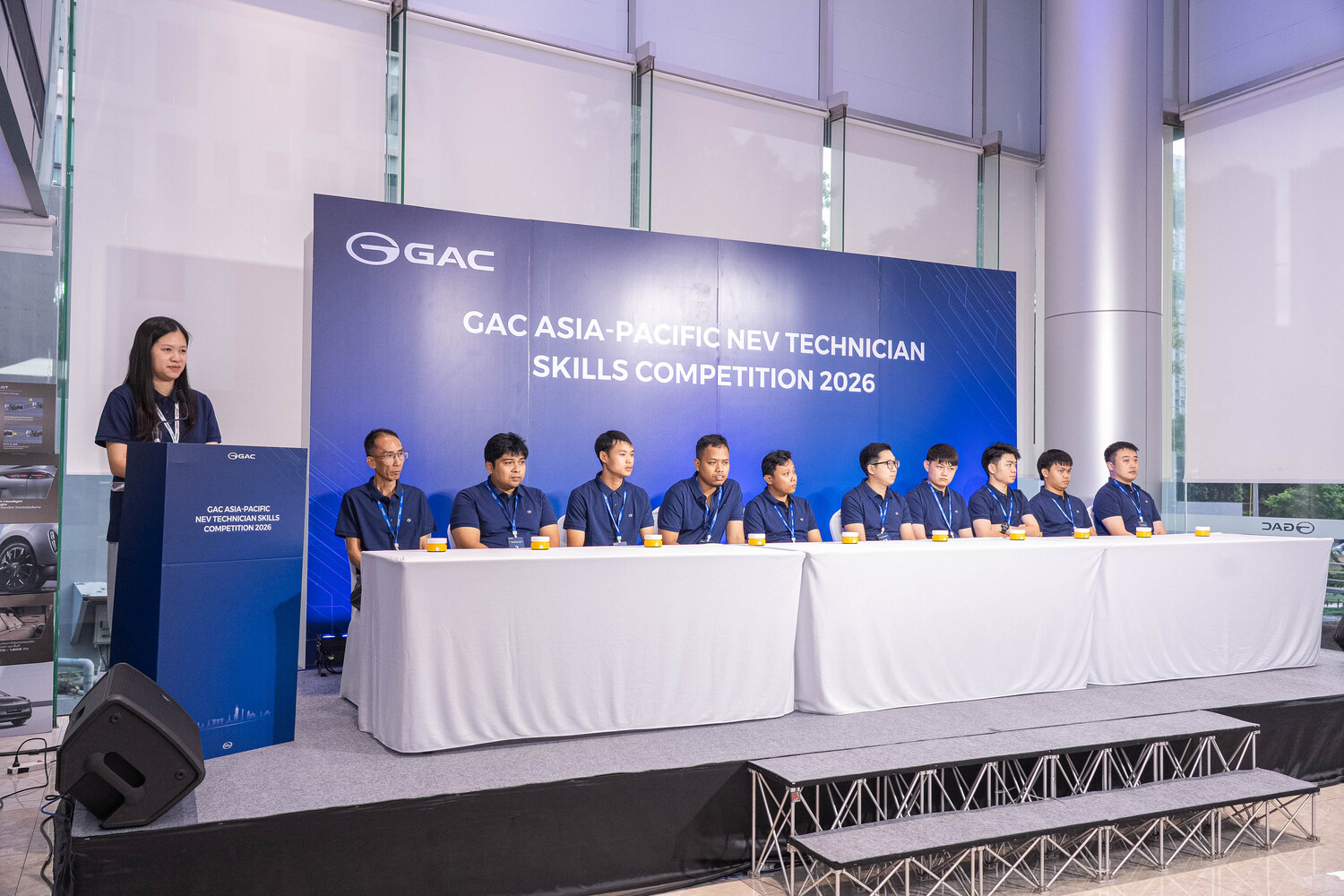
GAC CARE+ in Europe and the workshop network in Thailand
After-sales support works as a chain: a customer reaches the right organisation, a workshop identifies the required work, and the network supplies technical knowledge or parts. A service brand is most informative when the facilities behind it are also named. The European and Thai examples show different pieces of that chain with enough detail to connect the promise to an actual operating function.
| Market and programme | Named support | Customer-facing role |
|---|---|---|
| Europe: GAC CARE+ | Rotterdam parts distribution centre; local technical service team | Regional component supply and technical escalation |
| Europe: assistance partnership | Allianz Partners; three-year roadside-assistance offer | A defined route for help when travel is interrupted |
| Thailand: GAC CARE and local network | 64 authorised service centres reported in November 2026 | A customer-facing maintenance and technical-service footprint |
| Thailand: specialist repair support | 49 body-and-paint centres; a professional battery-repair centre | Distinct routes for accident repair and specialist EV work |
The October Paris announcement places Europe first in the rollout of GAC CARE+. It identifies parts fulfilment above 95%, average shipment within 36 hours and a technical response within 48 hours as company-reported service measures. These describe the supply and response stages of the support chain. Their practical value is a regional organisation that can act behind the local workshop, with a named assistance partner for the roadside stage.
The programme names also matter. Thailand’s GAC CARE and Europe’s GAC CARE+ are related parts of the international service story, with commitments defined for their respective markets. Keeping each name and region visible helps an owner recognise the local offer in the purchase and warranty documents. The network is international; the delivered support remains tied to the actual vehicle and country.
A parts hub and specialist skills complete the local route
The Rotterdam opening report records the inauguration of GAC’s first European spare-parts distribution centre on 5 September 2025, including its first truck shipment. This supplies a dated physical operation behind later CARE+ commitments. Parts ordering and allocation are important because diagnosis must eventually lead to the correct component reaching the repairer.
For the owner, the useful information is a sequence of responsibilities. The appointed workshop establishes which work is required; the parts organisation confirms the item and its supply stage; the technical team supports a case that needs additional expertise. Clear responsibilities make an update more actionable because the customer knows what the next step is and who is coordinating it.
Thailand adds a workshop and skills perspective. The 4 November 2026 technician report gives the 64 service-centre and 49 body-repair-centre figures alongside an Asia-Pacific technical competition involving 20 technicians from seven countries. Its practical exercises covered high-voltage battery checks, vehicle-data interpretation, fault diagnosis and safe working procedures. These are relevant areas of competence for supporting new-energy vehicles after delivery.
The service-centre and body-repair figures describe different functions and may include overlapping locations, so their significance lies in the capabilities they identify. A customer can find the appropriate local route for routine work, body repair or a specialist referral. Skills development then adds the people side of that network: workshops need trained personnel as well as buildings and equipment.
Taken together, the evidence supports a concrete account of GAC after-sales development: regional parts infrastructure, named assistance, a technical-escalation team and country-specific workshop capacity. The global service overview connects these elements with the wider ownership journey. This is the point at which an international service commitment becomes a usable local support relationship.
A service network needs locations, skills and a route to the right part
GAC global after-sales service now has more concrete evidence than a global footprint statement alone. By early November 2026, its published material describes operating Thai service facilities, named technicians, a European parts hub and national customer-contact routes. These details matter because a household experiences support through one repair appointment or one interrupted journey, not through the total number of markets carrying the brand.
The strongest way to read this evidence is to separate three layers. The first is access: where the owner can book maintenance or report a problem. The second is capability: whether the location has the personnel, tools and technical support needed for that vehicle. The third is supply: how it receives the correct component after diagnosis. A network is more useful when all three layers connect. A large showroom count, considered on its own, answers only part of the ownership question.
This article follows that connection from Thailand to Europe and then to the Philippines and Australia. The markets are examples of different operating arrangements, rather than a single transferable warranty. In particular, GAC CARE+ is the global service brand announced in Europe in October; November Thai reporting also uses the CARE+ name. The local offer still determines the services a customer can actually claim.
For the wider ownership context, GAC Global After-Sales Service: A Complete Guide to Local Support Before Buying explains how to identify the appropriate service route before ordering a vehicle. The evidence below gives that route physical substance: workshop categories, specialist training, regional inventory and a customer organisation that can coordinate them.
Thailand adds a measurable workshop footprint
The 4 November 2026 GAC Thailand technician report states that the country has 64 officially appointed service centres and 49 body-and-paint repair centres. These are more informative categories than an undifferentiated dealer total. They distinguish routine and technical support from a separate repair discipline involving body panels, paint and accident-related work.[C1]
A separate 29 October Thai battery-plant announcement says the 64 service centres cover 95% of the principal sales areas and identifies support from a large parts warehouse and a professional battery-repair centre. The coverage percentage refers to the manufacturer's defined main sales areas. It does not mean that 95% of Thailand's land area lies within a specified driving time of a workshop. That distinction preserves the useful positive evidence without converting it into an unsupported geographic claim.[C2]
For an electric-vehicle owner, this differentiation has practical value. Scheduled inspection, accident repair and a traction-battery investigation may require different facilities. A customer can ask the local centre which work it handles directly and which specialist centre receives referrals. Knowing that a referral network exists is better than discovering after an incident that the selling showroom is only a sales outlet.
The counts should not be added to produce 113 unique sites, because the announcement does not establish whether any locations overlap. Nor should a count alone be presented as a measured guarantee of appointment availability. Its real contribution is clearer: Thailand has a dated, category-specific service footprint, and published specialist capability beyond the showroom. That makes the country's after-sales proposition a verifiable operating network rather than only a service slogan.
Named technicians show what capability means in an EV workshop
The November Thai report describes 20 technicians from seven Asia-Pacific countries taking part in a regional skills competition. The work included high-voltage battery checks, vehicle-data analysis, fault diagnosis, safe handling of high- and low-voltage systems and workplace organisation. Thailand's Chaturon Puengsrisai, from GAC AION Chiang Rai, took third place, while the Thai group received the team award. These are named training and assessment activities, not an anonymous claim that every technician is an expert.[C1]
The link to ownership is the quality of the diagnostic process. A warning on the display is a symptom, not necessarily an instruction to replace the most expensive related assembly. Reading the vehicle's recorded information, testing the relevant circuit and following a safe diagnostic sequence can identify the underlying problem more accurately. This explanation describes why technician capability matters; the competition does not publish a national first-time-fix percentage.
The distinction is especially important for high-voltage work. A workshop needs suitable procedures and people as well as physical access to a car. It may refer a battery case to a specialist team while retaining responsibility for communicating with the owner. That is a legitimate network design when the handover is clear. It is preferable to implying that all work is performed at every branch.
The report also places this development under GAC CARE+. The brand name therefore has a practical workforce component: training, diagnostic discipline and transfer of knowledge between markets. For readers interested in how a service case moves between people and systems, GAC global after-sales service: Keeping Support Continuous from the Vehicle Screen to the Workshop connects these skills with the information needed for an effective repair handover.
Read international scale as a structure serving an installed vehicle population
GAC Mexico's October 2026 international-business update reports presence in 118 countries and regions, more than 796 sales and service locations, seven overseas production plants and nine international parts warehouses. The combination is more useful than any one count: it identifies customer contact, production and distribution as different layers of the international operation.[S1]
The report also gives a local reason for maintaining those resources. It states that 16,500 vehicles had been commercialised in Mexico between the November 2023 market entry and August 2026. Those vehicles continue to need inspections, components and technical information after the original sale. An installed population therefore creates a recurring support obligation; a launch campaign alone cannot fulfil it.
A service network should grow in ways that reflect that obligation. More customer-facing locations can improve access, while a parts warehouse supports several repairers behind the scenes. A new production plant may shorten some supply relationships, but it does not automatically replace specialist service staff or establish a workshop in the customer's city. Each investment addresses a different bottleneck.
The 796 figure is explicitly a combined sales-and-service measure. Dividing it by 118 would produce a mathematical average that says little about an owner's access, because markets differ in size, vehicle population and site functions. It would be equally misleading to count all locations as fully equipped EV workshops. The positive evidence is a multi-layer international structure supporting vehicles already delivered; a country-level workshop and referral map reveals how that structure becomes usable locally.
CARE+ connects European commitments to operating infrastructure
At the October 2026 Paris Motor Show, GAC introduced its global CARE+ service brand with Europe as the first launch market. The official Paris announcement names Allianz Partners for the European roadside programme and ties the support offer to the Rotterdam parts centre and a local technical-service team. The significance is the connection between a customer-facing promise and named organisations that help deliver it.[C3]
The same announcement reports a parts-order fulfilment rate above 95%, average shipment within 36 hours and a 48-hour response to maintenance needs. These are manufacturer-reported operating or service measures. Shipment describes movement out of a supply stage; response describes the start of engagement. Neither is a universal promise that a car will be repaired and returned within that period. Weather, diagnosis, transport and installation can affect later stages.
A buyer can still draw a positive conclusion from these details. A regional inventory position can remove the need for every order to begin with an individual shipment from the original manufacturing country. A named assistance provider gives the roadside programme an identifiable delivery partner. A local technical team supplies a route for cases requiring more support than the front-line workshop can provide.
CARE+ should therefore be assessed as a connected service arrangement. The useful question for a European customer is which authorised workshop serves the delivered vehicle and how that workshop accesses the announced regional support. GAC CARE+: Why After-Sales Support Is Part of the Vehicle’s Value explains the relationship between this support structure and ownership value. The framework helps make ownership more predictable, while the market documents define the actual entitlement.
Rotterdam adds regional depth behind the workshop
GAC Europe reported that its first European spare-parts distribution centre was inaugurated in Rotterdam on 5 September 2025. The official report published three days later[S3] records a first truck shipment as part of the event. This is evidence of a named regional logistics operation, rather than simply a proposed warehouse.
A parts facility is valuable because diagnosis alone does not return a car to service. A technician may identify a failed component but still need the correct replacement, associated fasteners, software procedures or installation instructions. Regional inventory can put a supply stage closer to the customer market. That is the mechanism through which a warehouse can improve support; the opening announcement itself does not quantify every owner's reduction in waiting time.
It is helpful to distinguish three moments in a parts order: the workshop identifies the correct item, the distribution system allocates and dispatches it, and the item reaches the repairer ready for installation. Progress at one moment does not automatically establish completion of the next. A shipment notification therefore carries different information from a confirmed vehicle collection time.
For an owner, a useful update names the part or assembly category, confirms whether the order has been accepted and explains the next dependency. This allows the customer to plan transport without needing to understand the entire distribution system. Our ownership-journey view of service coverage shows where component supply fits between diagnosis and return of the vehicle. Rotterdam supplies a concrete European example of that otherwise less visible stage.
The Philippines connects a national footprint with a local parts organisation
The September 2026 Philippine AION V owner report identifies 30 GAC dealerships nationwide and describes a dedicated local spare-parts warehouse. It also identifies GAC International Philippines as the local organisation coordinating GAC MOTOR, AION and HYPTEC. Together these details describe a customer network supported by a national business and supply function.[S2]
The same report follows owners making inter-island journeys. Romel Emperado's trip crossed Luzon, Visayas and Mindanao, while Rommel Laranjo travelled between Cebu and Mindanao. These are manufacturer-selected owner accounts, not independent measurements of service quality. Their relevance here is the pattern of use: a vehicle may operate well beyond the area where it was purchased, so support needs a national route rather than a relationship with one salesperson.
A warehouse and a dealership play different roles in that route. The dealership receives and assesses the customer's need; local inventory can support supply after the correct component is identified. The official Philippines dealer map then helps the owner find a current customer-facing location. The published count is a dated reference, while the live map is the more appropriate source for a particular branch.[S5]
This gives the Philippine after-sales claim practical depth without assuming that every dealer performs every repair. A buyer can connect the model to a service outlet and a national escalation organisation. For a household travelling between islands, the valuable arrangement is one that can identify the relevant workshop and coordinate the case away from the selling location, rather than expecting the customer to reconstruct the support network alone.
Australian customer care gives a case an identifiable owner
The Australian customer-care page publishes 1800 722 422 and auaftersales@gac-international.com as national contact routes. Their usefulness extends beyond answering a general question: they give the customer an organisation to approach when a local booking, model-specific service location or unresolved case needs coordination.[S4]
Consider an illustrative owner moving to another city. The car's history does not disappear with the move, but the original workshop may no longer be convenient. A national contact can identify the relevant authorised facility and clarify what records the new workshop needs. This example is a service-routing situation, not a claim that a particular customer has experienced it or that all records transfer automatically.
A second situation is an intermittent concern that has been discussed with different people. A consistent case reference, a concise description of the symptom and a named next update can prevent the owner from restarting the story at every contact. The useful outcome is continuity between conversations. A telephone number alone does not prove that continuity, but it provides a clear route through which the customer can request it.
The distinction from roadside recovery should also remain visible. Customer care is a coordination and enquiry route; an immobilised vehicle may require the assistance process specified in its Australian documents. Keeping both routes identified is more useful than treating every issue as a warranty claim or every call as an emergency. The ownership benefit is a support relationship with identifiable responsibilities, supported by the local organisation rather than inferred from overseas service announcements.
Philippine direct operations connect the national network
GAC International Philippines' 26 January 2026 operations announcement[S8] set out an integration of GAC MOTOR, AION and HYPTEC under one local framework. It identified dealer support, process optimisation and local warehousing as priorities, and stated that authorised dealerships, warranty coverage and after-sales services would continue during the transition. This addresses continuity for existing customers as the organisation changes.
A subsequent March report on the Philippine rollout[S9] records a Manila dealer conference on 27 February attended by 30 core dealers. The local team presented its 2026 implementation plan across product, marketing, network and after-sales work. That is a dated coordination event, rather than evidence that 30 additional dealerships opened.
The practical relevance is organisational. A broad portfolio can be confusing if customers do not know which local entity supports their vehicle or whether a previous distributor's arrangements continue. The January continuity statement and the dealer conference help explain the intended relationship between a unified organisation and its customer-facing network. They do not erase the model-specific terms of an individual vehicle's warranty.
Our analysis of continuity between service records and workshops explores the information side of this relationship. The Philippine example supplies the corporate and channel context: GAC was coordinating the existing network while expanding its direct role. A service network is therefore both a collection of places and an organisation capable of keeping support coherent as products and distribution arrangements evolve.
Compare the evidence by the function it establishes
The examples become clearer when their units remain visible. Thailand's workshop counts, the Philippines' dealership count and Europe's parts operation are complementary evidence; they should not be treated as equivalent entries in a league table. Each answers a different question about the service a customer might need.
| Published evidence | Specific function | What an owner can establish |
|---|---|---|
| Thailand: 64 authorised service centres; November 2026 | Customer-facing maintenance and service network | Which appointed centre handles the vehicle |
| Thailand: 49 body-and-paint centres; November 2026 | Specialist accident and body repair | Where a collision repair is assessed |
| Thailand: professional battery-repair centre | Specialist EV support | How a battery case is referred |
| Europe: Rotterdam parts hub and CARE+ framework | Regional supply and service coordination | How the local workshop orders parts and escalates a case |
| Philippines: 30 dealerships; September 2026 | National retail and customer-contact footprint | The relevant branch and its actual workshop role |
This approach also exposes the information that would be needed for a stronger performance claim. Appointment lead times require booking data. Repair completion requires case outcomes. First-time-fix quality requires consistently defined repair records. None can be calculated simply by dividing the number of delivered cars by the number of outlets.
For a purchase decision, the practical aim is more modest and more achievable: identify a usable local route backed by an organisation capable of supporting the work. A customer who knows the workshop, specialist referral path and escalation contact has a clearer ownership proposition than one relying entirely on a global headline. The published GAC examples provide evidence for those connections, even though they do not yet establish uniform service outcomes in every market.
The useful conclusion is a stronger local support chain
The latest evidence supports a substantive improvement in how GAC global after-sales service can be described. Thailand provides counts of authorised service and body-repair facilities, specialist battery support and named technical development. Europe provides a functioning parts hub linked to CARE+. The Philippines and Australia provide national routes through which customers can identify and contact the relevant organisation.
These elements address the concern that international expansion might consist only of vehicle imports and new showrooms. They show investment in the work that follows delivery: diagnosis, specialist repairs, component distribution and customer coordination. That is a meaningful basis for ownership confidence. It remains different from proving that every repair is quick or that every market has the same workshop density.
For a household, the strongest evidence is a connection it can use. The selling dealer should identify the routine service location, the process for an immobilised vehicle and the route for a case requiring specialist support. These answers should match the vehicle's actual market documents. A European CARE+ offer should not be substituted for Australian terms, and a Thai specialist facility should not be presented as local support for an owner in another country.
The companion GAC global after-sales service: What CARE in Thailand and CARE+ in Europe Do at Each Stage describes the programme side of the relationship. Taken together, the service framework and the operating network give the brand's after-sales story useful depth. The positive case is strongest when it names the people, places and supply routes behind the promise, and explains how those resources support the customer's own vehicle.
Sources & references
- [S1] GAC Group acelera su crecimiento global en 2026 y fortalece su presencia en MéxicoGAC Mexico · 5 October 2026; company-reported global footprint, combined sales and service locations.
- [S2] Life with GAC | 1,492 km across Luzon, Visayas and Mindanao: Real Owners Put the GAC AION V to the TestGAC Philippines · 3 September 2026; manufacturer-selected named-owner accounts; 30 dealerships stated at publication.
- [S3] GAC European Inaugurates First European Spare Parts Distribution Center, Redefining Localized Service CapabilitiesGAC Europe · 8 September 2025; Rotterdam center inaugurated on 5 September 2025.
- [S4] Customer CareGAC Australia · Accessed 6 November 2026; country-specific customer-care contact and dealer-map route.
- [S5] Philippines dealer mapGAC Philippines · Accessed 6 November 2026; official route to current dealer locations.
- [S8] Philippine direct operations and service continuityGAC Philippines · 26 January 2026; integration priorities and statement of service continuity.
- [S9] Philippine dealer coordination rolloutGAC Global · 26 March 2026; 27 February Manila conference,30 core dealers, aftersales implementation plan.
- [C1] Asia-Pacific NEV technician competitionGAC Thailand · 4 November 2026; 20 technicians/seven countries; 64 service centres and49 body-and-paint centres.
- [C2] Thai battery plant and ownership infrastructureGAC Thailand · 29 October 2026; local service, parts, battery repair and charging network scope.
- [C3] AION UT Cross Makes Its Global Debut as GAC Brings Its All-Star Lineup to the 2026 Paris Motor ShowGAC Global · 13 October 2026; Europe-first GAC CARE+ launch and announced local service framework.
This is a source-based editorial guide, not a first-hand road test. Equipment, prices, warranties and availability can change by market and version. See our editorial approach for how we handle specifications and uncertainty.