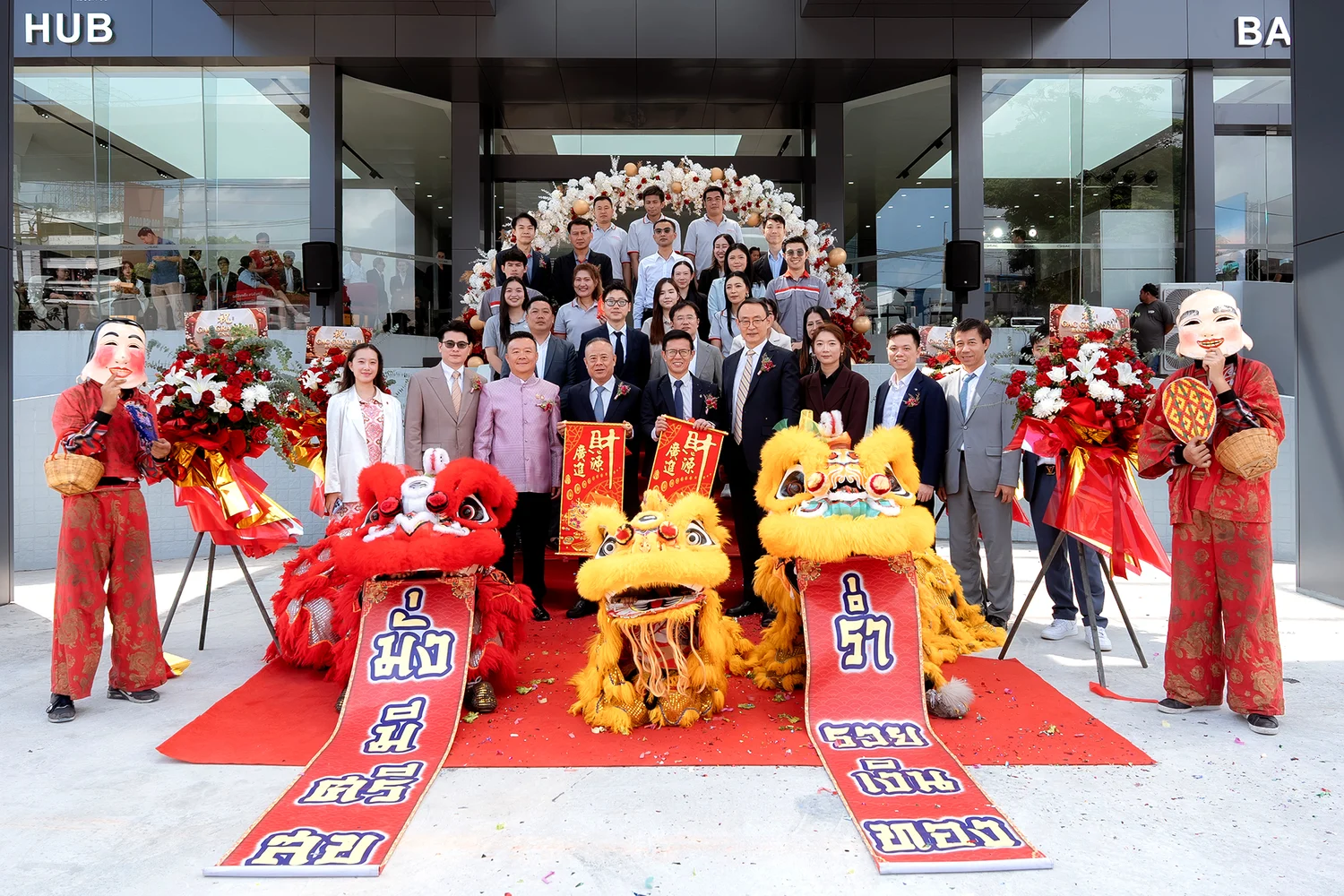
On the Bangna–Trat road southeast of Bangkok, a driver can now identify a GAC workshop with a service department, a body shop and a facility specifically set up for commercial users. The Bangna KM 11 site opened with Grandful Automobile Group on 31 October. Across the metropolitan area in Pathum Thani, M18 Mobility has expanded an existing Thanyaburi workshop by adding a dedicated body-and-paint operation. Read together, the Bangna opening report and Thanyaburi expansion report answer a practical ownership question. Which department should take the booking for this particular job?
Two workshop openings put names and numbers behind GAC CARE
GAC global after-sales service takes a concrete form in Thailand. Bangna KM 11 has 15 general service bays and a Mobility Hub for commercial drivers. Thanyaburi Khlong 2 has 12 general service bays and 15 dedicated body-and-paint bays. The Thai AION app manual shows how a driver can select a service category, choose a centre and add photographs before a visit. Those three sources connect the national service brand to a workshop an owner can identify, a request they can make and a job they can follow.
We compared the two facility specifications with the booking screens and local programme terms. The comparison below follows three everyday decisions: booking a routine visit, arranging refinishing work and keeping a working vehicle available for its next shift. The examples are planning exercises based on the published services. The reported bay counts and programme commitments come from GAC Thailand.
The same number describes two different kinds of workshop capacity
Bangna KM 11 sits on a route connecting Bangkok and Samut Prakan. GAC lists 1,872 square metres of usable space, 15 service bays, precision wheel-alignment equipment, a body-and-paint centre and a training facility. Its Mobility Hub announcement also names a fast lane and DC charging for the business and fleet operation. For a driver who uses this corridor for work, the geographical location, the workshop and the commercial service desk can all feature in one booking conversation.
At Thanyaburi Khlong 2, north of Bangkok, the key detail is the division of labour. The M18 facility specification gives one figure for general servicing and another for specialist refinishing. That makes it possible to direct a parking scrape to the department that handles paint and panel work, while scheduling a routine inspection with the service desk. Both departments work at a site that also has a parts store. The relevant starting point can change even when the address stays the same.
| Published facility detail | Bangna KM 11, Samut Prakan | M18 Thanyaburi Khlong 2, Pathum Thani |
|---|---|---|
| General service bays | 15 | 12 |
| Body and paint | Dedicated centre at the site | 15 dedicated bays |
| Other named capabilities | Wheel-alignment equipment, training centre, fleet fast lane and DC charging | On-site spare-parts store and newly added GAC-standard body-and-paint facilities |
| Example of a well-directed enquiry | Which fleet service slot fits our next change of driver? | Can the body shop assess a photographed panel and give us an appointment? |
Put a different unit after each “15” when comparing the reports. Bangna gives its number for maintenance bays. Thanyaburi gives its number for body-and-paint bays. Adding them as if they measured a single service would give a fleet buyer very little guidance. For a household, the more useful comparison is the type of work each address handles, followed by the first time its appropriate department can actually see the car.
What to set up when the vehicle is handed over
While the car and the sales adviser are together, look up the exact model in the Thai owner-manual library. GAC publishes separate entries for AION V, AION UT, AION Y Plus, AION ES and HYPTEC HT, with an owner guide, a quick-start guide and emergency-response material listed by model. Save the owner guide for the vehicle delivered, and have the adviser show where that vehicle’s maintenance schedule and warranty information are recorded. Someone sharing the car can then find the same instructions without having to identify the model from a photograph.
Set up two contacts with distinct names in the phone. One is the local service desk, which can arrange a planned visit and confirm the hours for vehicle collection. Use the official dealer map to find the branch and verify its current details. The other is the Thai customer information line, 02-013-9999, published by GAC as a 24-hour contact. The national line gives an owner a place to start while travelling away from the delivering dealership. For an arranged maintenance appointment, the local adviser remains the person who can agree on the work.
Ask the adviser to show one real screen before leaving. Open the service appointment section on the phone that will normally make the bookings and select the car. Check the vehicle shown and the contact number the workshop should use. A family may keep the vehicle on one person’s account and share the driving. Settling who will answer an appointment call prevents a practical mix-up on the morning of a visit. Record the service adviser’s name with the preferred contact method in the same place as the delivery documents.
A booked maintenance visit leaves a trail the owner can follow
Pages 29 to 32 of the published Thai AION app instructions show a service appointment from selection through to evaluation. The illustrated vehicle is an AION Y Plus. The screens present a set of service choices, a centre selector, a date and time, an additional description and contact information. The form can take pictures. Later screens show the booking being handled by the centre and the job entering service. This is useful evidence of how a customer can give the workshop a reasonably well-defined request before handing over the keys.
Consider a family arranging an ordinary scheduled visit before a school holiday. In the description they could include the odometer reading, the purpose of the visit and the time by which they need a collection update. If there is a second request, describe it separately. For example, ask the adviser to check the quoted scope of wheel alignment while booking the routine work. At the Bangna site, alignment equipment is specifically documented. The adviser can now decide whether both tasks fit the same visit and which ones need separate approval.
Save the appointment confirmation, then check with the adviser which work has been accepted and when an inspection result should be ready. The app guide illustrates a distinction that matters on collection day: a completed appointment step can mean that the car has arrived and a technician has been assigned. Further stages cover the service itself and a customer evaluation. Agree on a ready-for-collection message with the actual workshop, particularly if another household member is making the return journey to pick up the vehicle.
The feedback sequence also gives the driver a useful occasion to match the booking to what was done. Keep the job record with the date, mileage and completed tasks. If the adviser recommended a follow-up, record the next step in plain language, such as arranging a tyre measurement at the next visit. A later discussion then starts with what the owner authorised and what the workshop recorded, even if a different family member takes the car back.
A body-and-paint visit starts with a different brief
Imagine a stationary vehicle with a surface scrape on a rear door. For an owner looking for refinishing, Thanyaburi is an informative example because GAC identifies the dedicated department and its 15 bays. The Thai booking manual includes a paint-work category and an opportunity to attach supporting images. Use an overall view of the side of the parked vehicle and a closer view of the area in question to show what needs assessing. The body shop can then tell the owner whether a separate in-person inspection is needed.
Ask the body-shop adviser what the first appointment covers. An assessment, colour matching, ordering a trim piece and collecting the finished vehicle are different steps. Give the adviser the vehicle details, the part of the vehicle involved and a convenient way to send an estimate. If an insurer is involved, ask who will provide the paperwork and who must approve the job. A photograph helps the workshop prepare the assessment. The technician who examines the car sets the actual scope and explains it to the person authorising the work.
The co-location of spare parts and body work matters here. An adviser can identify a required item against the specific vehicle and discuss its supply with the parts department. A driver who relies on one car for the school run can ask whether to bring the vehicle for assessment first and return once the agreed item is available. The number of bays describes this centre’s specialist capacity. A confirmed assessment date and a contact for the estimate are the two details that let the owner plan the week.
At collection, keep the approved estimate and the final work record together, and ask for the workshop’s instructions on care of the refinished surface. If the owner has a question about a panel or trim piece, the record identifies the original job and the team that can explain it. This is the practical ownership value of a body-and-paint department at a known branch: a clear route from the first description through authorisation to the final conversation with the people responsible for the work.
How to read three different service time commitments
GAC Thailand’s customer service programme description gives three useful time figures. It describes a 24-hour call centre and roadside assistance. It gives parts delivery within 24 hours in Bangkok and within three days in the provinces. It also states a repair period of up to seven working days for quality-related cases. These commitments concern different activities. Before planning transport around a date, ask which activity the adviser is timing and when its clock begins for the particular case.
| Service activity | What the Thai programme describes | Question for a specific booking |
|---|---|---|
| Contact and assistance | Round-the-clock contact and roadside assistance | Who is handling the assistance request and how will I receive updates? |
| Supply of a required part | Within 24 hours in Bangkok and within three days in provincial areas | Has the identified item been ordered and which centre should receive it? |
| A qualifying quality-related repair | A stated period of up to seven working days | Has my job been classified under this programme and what collection estimate is on the work order? |
Bangna shows why the location field matters. The site serves metropolitan customers on the Bangkok–Samut Prakan corridor. A dealer name or a familiar road is a poor basis for assigning a parts-delivery window to a particular order. Ask the parts adviser which location and terms apply to that receiving branch. When the item reaches the centre, fitting, inspection and release are still distinct steps that the service adviser can schedule. This is especially helpful when a household is coordinating a second appointment for the same day.
For roadside assistance, save the Thai national contact and the individual vehicle’s programme documents where the person driving can find them. The operator can route the request, confirm the attending service and explain the next contact. If a vehicle needs workshop attention, ask which branch will receive it and how the driver can recognise the job or case number. Those two details let the driver reconnect with the service team the following morning without having to retell the entire sequence.
What the warranty paperwork should answer for an electric-car owner
The Thai description of Lifetime Warranty 2.0 names three electric-drive items: the traction battery, the drive motor and its electronic controller. GAC also identifies the three items in the November 2026 Thai sales campaign, where individual vehicle offers have their own conditions. Ask the delivering dealer for the terms that belong to the actual vehicle, model grade, purchase date and type of ownership. Keep a copy with the other handover records so the workshop can refer to the version issued for the car.
Consider two drivers who bought similar-looking vehicles. One drives a privately owned family car. The other is arranging support for cars used in a business. Both can discuss the named electric-drive components with the dealer. Each should identify the registered vehicle, use and ownership terms when asking about eligibility. The purchasing decision becomes easier once the owner can say which items are covered on that car, who assesses a component and which records the service centre wants to see. A fleet agreement and a retail campaign may each answer these questions in their own terms.
The local infrastructure adds context. GAC’s Thai INPOW battery-plant announcement also identifies specialist battery repair capability as part of the service network. That gives owners a concrete follow-up for the local workshop: which centre handles any required specialist assessment, and who will coordinate it? The same announcement describes 64 appointed service centres covering 95 per cent of the main sales areas. The percentage refers to those sales areas. For a buyer planning a long route, the dealer map and a named support contact offer the more useful geographical detail.
A fleet can reserve time around a shift change
At the Bangna Mobility Hub, GAC describes a business and fleet facility with a fast lane, DC charging, servicing and body work. A small company operating two vehicles on the Bangkok–Samut Prakan corridor can use those facts to plan a first appointment. One driver can ask about a fast-lane maintenance slot while the dispatcher checks whether the proposed drop-off coincides with a change of shift. The real planning unit for a company is the block of time between releasing the vehicle and returning it to the next driver.
For two cars, write a different request for each registration. One may need scheduled service, the other a panel assessment. Ask the adviser which desk handles each, whether the drivers need to attend together, and when the company can expect the two updates. A fleet service lane and a body shop offer different kinds of capacity at the same address. Separating the jobs lets the company keep one vehicle in service if the two departments propose different appointment dates.
Give the service adviser the name of the person authorised to approve work and the name of the person collecting each car. They may be different. Ask whether a planned charge can fit around the booked work and whether the vehicle should be moved to a particular bay at handover. The existence of a DC charger at the site is useful information for a dispatcher. The adviser can confirm how it is accessed and whether it fits the day’s schedule for that vehicle.
The details to take away from a service enquiry
Thailand reported 64 appointed service centres and 49 body-and-paint centres in its 4 November technician and network update. Those are separate counts of named capabilities. The two recently documented 4S sites show how service and body work can share an address. For a quick wider-market comparison, our earlier GAC global after-sales service: 64 Thai Service Centres, CARE+ and the Local Network Behind Ownership sets the Thai figures alongside European and other country-level support routes. The branch-level examples here add the practical distinction between finding a location and choosing the right department.
For an individual owner, a productive call ends with a branch, an appointment purpose and a named next step. For a fleet, add the vehicle registration, collection contact and time of the next update. For a warranty enquiry, ask which terms and component the adviser is checking. For a paint assessment, agree who will review the estimate. These are simple details that can travel with the vehicle from one driver to the next. They also give a buyer a fair way to compare support when choosing between dealers.
For a household weighing the car as well as the support network, Is the GAC AION V worth buying? Safety Evidence, Warranty Remedies and Long-Term Ownership Confidence looks at local warranty evidence in an AION V purchase decision. A buyer visiting either Thai facility can bring the same question to the showroom: can the adviser show the route from this vehicle’s handbook to its booking screen, the appropriate workshop and a documented outcome? At these sites, GAC has published enough detail to turn that question into a useful conversation about the particular car the customer will drive home.
Sources & references
- [1] GAC Thailand opens the Bangna KM 11 showroom and Mobility Hub with Grandful Automobile Group, 4 November 2026gacgroup.com
- [2] GAC Thailand and M18 Mobility expand the Thanyaburi Khlong 2 workshop, 6 October 2026gacgroup.com
- [3] GAC Thailand reports its service network and Asia-Pacific technician competition, 4 November 2026gacgroup.com
- [4] AION Thailand app instruction manual, service appointments, pages 29–32resource-www-sg.aionauto.com
- [5] GAC Thailand model-specific owner, quick-start and emergency-response manualsgacgroup.com
- [6] GAC Thailand dealer locator and local contact detailsgacgroup.com
- [7] GAC Thailand explains local parts supply, quality-related repairs and electric-drive covergacgroup.com
- [8] GAC Thailand’s November 2026 Motor Expo campaign and model-specific benefitsgacgroup.com
- [9] GAC Thailand describes main sales-area service coverage and battery support in its INPOW opening reportgacgroup.com