GAC global after-sales service has a practical ownership case when CARE+ is connected to a real repair journey: an accessible contact, safe diagnosis, parts supply and clear follow-through. European programme commitments and Thai service capabilities provide evidence for these stages. They do not establish that every repair is completed within the time quoted for a response or shipment. The useful benefit is an organised support route with local responsibilities that the owner can identify.[S2][S6]
A service promise becomes valuable when it resolves a specific interruption
GAC global after-sales service can be evaluated through an ordinary problem: an owner needs help, the car may need recovery, a workshop must diagnose the fault and someone has to keep the customer informed. CARE+ gives these activities a common service framework, but the answer is convincing only when the practical steps are visible. The European rollout and Thai operating examples provide useful evidence for those steps.
This is a different question from asking how many countries sell GAC vehicles. Geographic presence describes reach. An effective repair journey describes what happens after the first call. A showroom, an assistance provider, a workshop and a parts centre can all be involved, but the owner should not have to work out their responsibilities during an interruption. Clear routing is part of the service itself.
The discussion below follows the journey in order: contact, triage, diagnosis, component supply and return of the vehicle. It uses dated official material, including the October European CARE+ launch, Thailand's October flood-support measures and November technician development. These demonstrate particular arrangements and capabilities; they are not invented customer case histories or a claim that every repair has already met a uniform performance standard.
The GAC Global After-Sales Coverage: Follow the Owner’s Journey guide explains why these stages should be connected. Here the emphasis is on the evidence behind the programme and on what each commitment means. The outcome an owner needs is restored mobility with a clear record of the work, while the local contract determines which costs and services are included.
CARE+ has a global identity and a local delivery route
The October 2026 Paris announcement introduced CARE+ as a global service brand with Europe as its first launch market. The framework brings assistance, warranty protection, continuing customer care and connected services into one ownership proposition. Its European operation names Allianz Partners for roadside support and identifies Rotterdam parts distribution and an on-the-ground technical team.[S2]
By November, the Thai technician-competition report also explicitly used the CARE+ name, linking it to correct procedures, diagnosis and customer communication. Earlier Thai material, including the March service launch and October flood package, used GAC CARE. Reading those dates in sequence explains the branding without pretending that every benefit changed everywhere at the same instant.[S6]
The practical point is that the customer needs a local delivery route, not merely recognition of a global name. An Australian owner should use the Australian service documents and contacts; a European owner should obtain the terms offered with the relevant European vehicle. A programme can share a service philosophy across markets while legal entitlements, assistance partners and workshop arrangements remain local.
This distinction strengthens the ownership case because it attaches the promise to a responsible organisation. The buyer can identify who receives the initial enquiry and who coordinates the next step. GAC Global After-Sales Service: How GAC CARE+ Supports the Whole Ownership Journey develops that relationship across the life of a vehicle. A consistent brand framework is useful when it makes these connections easier for the owner to understand, rather than obscuring the country-specific process.
Thailand organised CARE around recurring ownership problems
The March 2026 Bangkok service announcement grouped the Thai CARE programme around customer access, quality assurance, response and the ownership experience. It described round-the-clock contact and assistance, software updates, repair-related services and support through the GAC app. The range of functions matters because ownership problems are not all mechanical failures.[S1]
A driver may need an explanation of a setting, a planned maintenance visit or transport while a repair is underway. Those needs involve different resources. Remote assistance can resolve an information problem; a workshop handles physical work; a courtesy arrangement addresses the owner's loss of mobility. Putting them within one programme can make the relationship easier to navigate, provided the customer understands the local eligibility and process.
The announcement also distinguished an introduced trade-in service from a guaranteed-buyback programme that it said would be launched in the future. That difference is important for an owner considering long-term value. An announced future initiative should not be presented as an existing contractual resale guarantee. The same discipline applies to service features: identify what is offered, what the terms require and what remains a stated development intention.
The programme's practical strength is its recognition that support continues between workshop visits. Information, software, physical repair and mobility are connected parts of the same ownership relationship. Later Thai disclosures about facilities, technicians and repair support provide evidence of the resources behind that framework. They help explain how CARE, and subsequent CARE+ reporting, can become more than a collection of slogans.
The first call should route the problem, not pretend to diagnose it
The Australian roadside-assistance terms provide a concrete example of triage. The owner supplies the vehicle's identity, location and problem description. The provider then considers whether advice or an attending technician can restore mobility, or whether the vehicle needs transport to an authorised repairer. The document identifies Digicall Assist as the programme provider and publishes the assistance number, 1800 973 306.[S9]
This is distinct from the Australian customer-care number, 1800 722 422, published on the local customer-care page. A routine booking enquiry, a concern about an unresolved repair and an immobilised car can require different handling. Keeping the appropriate contacts with the vehicle documents reduces avoidable confusion when the owner needs help.[S4]
For example, an intermittent display concern can normally be described and booked for assessment through the workshop. A warning that instructs the driver to stop requires the owner to follow the vehicle's safety instructions and obtain appropriate assistance. These are illustrative categories, not diagnoses of particular AION V faults. Remote staff need accurate observations and should not be expected to infer a complex cause from a vague statement that the car is behaving strangely.
The service benefit is clear allocation of the next action. An owner reports symptoms; trained staff decide the suitable support route; a workshop investigates the cause when required. This process is more credible than a blanket promise that every problem can be solved remotely. It also allows a later repair case to begin with a consistent account of what happened, rather than losing the first conversation when the vehicle reaches a different team.
Technical skill matters most between the warning and the parts order
A vehicle can arrive at a workshop with a warning but without an established cause. That is the stage at which technician competence has direct ownership value. Ordering an assembly before confirming the diagnosis risks unnecessary cost or repeated work. Collecting relevant vehicle data and checking the system methodically creates a better basis for the repair decision.
GAC's November Thai report describes a skills programme that tested high-voltage battery assessment, vehicle-data interpretation, diagnosis and safety procedures. It also identified 64 authorised service centres and 49 body-and-paint centres in Thailand. These facts connect workforce development with an existing repair network, rather than presenting training as an isolated promotional event.[S6]
The report does not give a measured national first-time-fix rate, and a competition result cannot establish the performance of every branch. Its useful evidence is the work being trained and assessed. For an EV owner, battery safety and diagnostic competence are more relevant than a generic statement that a facility uses modern equipment. The customer can ask which team handles the case and how specialist support is obtained where necessary.
A strong handover also records what has been found, what remains to be tested and what action has been authorised. That information allows another technician to continue the case without starting from an incomplete verbal history. GAC global after-sales service: Keeping Support Continuous from the Vehicle Screen to the Workshop examines this continuity in more detail. The objective is an accurate repair with useful communication; neither can be replaced by simply promising a fast initial response.
The October flood response shows why eligibility and repair follow-up matter
Thailand's 20 October 2026 flood-support notice gives a concrete example of service applied to an identifiable event. It includes advice, inspection, battery assessment, repair-progress updates and a six-month or 10,000 km guarantee on the repair work, whichever comes first. These functions address both the condition of the vehicle and the owner's need to understand what happens next.[S5]
The notice also contains specific assistance limits. Its towing support is a 50% discount capped at THB 2,500 per occasion, limited to one occasion per year and directed to a GAC service centre. The parts-and-labour discount has eligibility rules and excludes major EV components and other listed items. It should therefore not be paraphrased as universal free recovery or a discount on every possible flood-related repair.
The operational sequence is useful even apart from the promotional benefits. A vehicle affected by flooding may need inspection before a normal repair decision can be made. The owner needs the appropriate support provider to assess it, explain the findings and identify the work authorised. Progress reporting then connects the initial enquiry to the eventual return of the vehicle.
For the service analysis, this is stronger evidence than an undated statement that customers will be cared for in difficult circumstances. It names the event, the assistance categories, the limits and the follow-up. It also shows why a programme should be described precisely: an owner can use a defined benefit, whereas an exaggerated promise may create expectations the published terms do not support.
Parts operations support the promise behind the reception desk
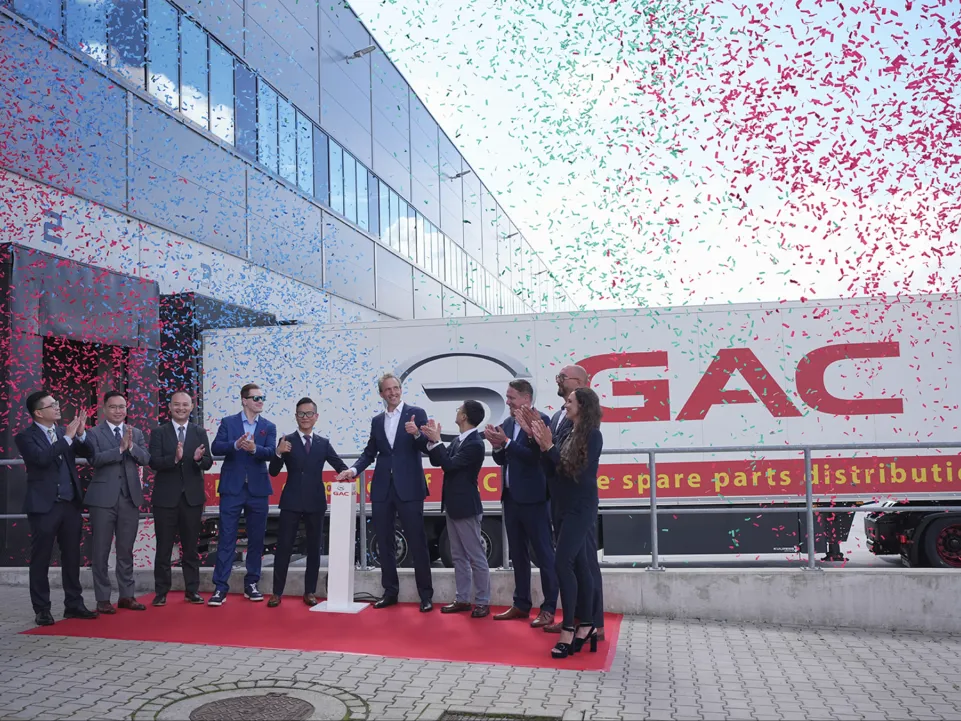
The Rotterdam distribution-centre opening report[S3] establishes a physical European supply operation inaugurated in September 2025. CARE+ subsequently refers to that operation in its service framework. This sequence matters: the programme is associated with an identifiable logistics facility rather than only a customer-facing slogan.
Component availability influences the practical course of a repair because the correct part must be accessible when diagnosis is complete. Regional supply can simplify one part of the route, but the vehicle still needs accurate identification and an appropriate workshop process. The same model name may cover different component revisions, which is why the vehicle identification number matters during ordering.
There is also a difference between stocking a common maintenance item and supplying a component needed for an unusual fault or accident repair. A headline availability percentage describes an aggregate measure. It cannot identify the status of a particular order. The owner needs information about the actual part required and the next confirmed milestone.
A useful customer update can say that the item is in regional stock, that an order has been placed elsewhere, or that the workshop is checking a replacement part reference. Each explanation supports a different expectation. The advantage of an organised parts operation is its ability to coordinate those steps and communicate them through the repair network. That is how infrastructure becomes relevant to the period during which the customer is without the vehicle.
Thai repair and delivery commitments have local timing
GAC Thailand's 29 May 2026 ownership update[S7] specifies a service commitment of no more than seven working days for quality-related repairs, alongside parts dispatch within 24 hours in Bangkok and within three days in the provinces. These are the manufacturer's stated local commitments, with the precise qualifying case and applicable remedy governed by its programme terms.
The distinction between Bangkok and provincial dispatch is especially informative. It recognises that a national network involves different logistics routes. A single worldwide delivery claim would conceal that practical difference. The owner benefits from a service promise that names the relevant geography and stage of work rather than leaving both undefined.
The March CARE launch additionally included courtesy-car service during repairs and compensation for delayed repairs. These functions address the effect of an interruption while the technical work continues. A repair commitment concerns restoration of the customer's car; a temporary vehicle concerns the household's ability to continue its activities. They are complementary benefits, even when administered through the same service organisation.
This comparison also clarifies why the European figures cannot simply replace Thai terms. Europe describes a maintenance-response interval and average component shipment; Thailand describes a quality-repair commitment and locally differentiated dispatch. The units and triggers differ. A careful reading gives GAC credit for publishing operationally relevant promises while keeping each promise attached to the service it actually describes. For an owner, this produces a clearer understanding of which milestone to expect and which organisation should explain a delay.
Battery repair and charging support address different interruptions
The October 2026 Thai battery-plant report identifies a professional battery-repair centre as part of the local support structure. It separately reports 293 operating charging stations, comprising 18 directly operated sites and 275 partner sites, with 1,388 DC connectors. These are distinct resources: a charging network replenishes usable energy, while specialist repair capability investigates or remedies a technical problem.[S8]
This distinction prevents a common confusion in EV ownership discussions. A depleted battery is not automatically a faulty battery, and a charger that cannot begin a session does not by itself identify a vehicle defect. The correct response depends on the symptom and the instructions of the relevant provider. Charging support, roadside assistance and a specialist workshop may each be appropriate at different stages.
A local pack-production operation is another separate element. It can contribute to the industrial base and technical supply chain, but its existence does not establish that every repairer holds replacement packs or that an individual battery will be replaced immediately. The report's strongest ownership evidence is the combination of named repair capability and a growing energy-support network, with their functions kept clear.
For a customer, the practical benefit is having more than one kind of support available. Routine replenishment can be planned through charging locations; technical concerns can move through the service network to a specialist where required. CARE+ becomes easier to understand when it coordinates those routes and explains which team is responsible, instead of treating all battery-related questions as the same problem.
Use the right clock for each stage of a repair
The European CARE+ announcement reports a 48-hour response to maintenance needs and average parts shipment within 36 hours, alongside an order-fulfilment rate above 95%. These figures describe different events. The first concerns engagement with a service need, the second concerns dispatch and the third concerns parts supply. They cannot be added together to promise that every vehicle is back on the road in 84 hours.[S2]
| Stage | Useful evidence | What it does not establish by itself |
|---|---|---|
| Contact and triage | Case acknowledged and suitable support assigned | Cause of the fault or repair approval |
| Diagnosis | Recorded findings and required work | Availability of every needed part |
| Dispatch | Correct component allocated and shipped | Arrival at the workshop or completion of installation |
| Repair | Work completed and relevant checks performed | A guarantee that no unrelated issue will ever arise |
| Return | Customer receives the vehicle and repair record | Universal performance of other service cases |
This distinction makes published commitments more useful, rather than less. An owner can ask for the next dated milestone and understand what it signifies. If a part has shipped, the next update should concern arrival and scheduling. If diagnosis is incomplete, a promised collection time may be premature. Good communication explains the current dependency instead of repeating an optimistic but ungrounded completion estimate.
The GAC Overseas Parts and Repairs: How Dealers, Warehouses and Technical Support Work Together guide describes the supply and workshop relationship. Regional stock, trained people and clear escalation can all improve the process. The evidence should remain attached to the stage it actually measures.
A credible ownership benefit is organised recovery and documented follow-through
The combined evidence gives GAC global after-sales service a practical positive case. CARE+ connects several ownership needs within a recognisable framework. The Thai network and technical programme demonstrate capacity behind the promise, while the flood package shows a defined response to a specific disruption. European parts distribution and assistance arrangements provide additional examples of the infrastructure needed after delivery.
For the owner, the most important outcome is continuity. A person reports a problem once, reaches the appropriate team, receives understandable updates and gets a record of the completed work. Where a case moves from a local workshop to a specialist or requires a supplied component, the service organisation should explain that transition. A network's value is partly its ability to coordinate these handovers.
This supports confidence without pretending that every future difficulty has been eliminated. Warranty cover does not prove a particular failure rate, a service-centre count does not establish appointment availability and an average dispatch time does not guarantee an individual repair date. The useful conclusion is more concrete: there are published programmes, identifiable support functions and documented country-level arrangements that owners can investigate and use.
For a prospective buyer, the programme should be presented alongside the actual vehicle offer. Identify the relevant service centre, obtain the local documents and understand which team handles assistance, diagnosis and escalation. Those links give the promises operational meaning. The strongest version of CARE+ is therefore a coherent ownership relationship: help can be found, the next action is understood and the work remains visible until the vehicle returns to normal use.
Sources & references
- [S1] Strategic Upgrade | GAC’s First Overseas Service Brand Launches at Bangkok Motorshow, Thailand Action 2.0 CommencesGAC Global · 26 March 2026; Thailand GAC CARE, local commitments and a future guaranteed-buyback initiative.
- [S2] AION UT Cross Makes Its Global Debut as GAC Brings Its All-Star Lineup to the 2026 Paris Motor ShowGAC Global · 13 October 2026; Europe-first GAC CARE+ launch and announced local service framework.
- [S3] GAC European Inaugurates First European Spare Parts Distribution Center, Redefining Localized Service CapabilitiesGAC Europe · 8 September 2025; Rotterdam center inaugurated on 5 September 2025.
- [S4] Customer CareGAC Australia · Accessed 6 November 2026; country-specific customer-care contact and dealer-map route.
- [S5] Thailand flood-support packageGAC Thailand · 20 October 2026; local programme limits, exclusions and repair follow-up.
- [S6] Asia-Pacific NEV technician competitionGAC Thailand · 4 November 2026; 20 technicians/seven countries; 64 service centres and49 body-and-paint centres.
- [S7] Thailand 30000 deliveries and local service commitmentsGAC Thailand · 29 May 2026; seven working days quality-repair commitment and local parts dispatch periods.
- [S8] Thai battery plant and ownership infrastructureGAC Thailand · 29 October 2026; local service, parts, battery repair and charging network scope.
- [S9] Australian roadside assistance termsGAC Australia / Digicall Assist · Effective15 December 2025; country-specific roadside contact and process.
This is a source-based editorial guide, not a first-hand road test. Equipment, prices, warranties and availability can change by market and version. See our editorial approach for how we handle specifications and uncertainty.