The Australian GAC AION V offers a credible purchase case through independent safety evidence, published warranty protection and a defined service and assistance route. These can make ownership more reassuring when the car fits the family and local support is practical. They should be distinguished from long-term reliability statistics, which a recently introduced local model cannot yet possess. Confidence is strongest when the buyer understands both the available protections and the remaining uncertainty.[V_SPEC][V_ANCAP]
Separate a good reason to buy from a promise of trouble-free ownership
Is the GAC AION V worth buying? The Australian model has credible reasons for consideration: a relevant independent safety assessment, a documented electric-vehicle warranty, a defined roadside programme and useful everyday equipment. Together these support a positive ownership case. They do not yet establish the same depth of local long-term repair and resale evidence that an older nameplate may have accumulated.
Three kinds of evidence help answer the question accurately. Product evidence describes the car being purchased: its battery, space and controls. Protection evidence describes tested safety and the remedies available if an eligible problem occurs. Outcome evidence describes what actually happens across many vehicles over time. A strong result in one category does not automatically prove another. In particular, a warranty term is a commitment about covered defects, not a measured failure rate.
That distinction should make the buying decision more useful, not permanently undecidable. A household can judge whether the AION V fits its needs, whether the supplied protections are meaningful and whether its local support route is workable. It can then decide how much weight to place on the remaining uncertainty. The car does not need an invented reliability score to have a defensible purchase case.
The Is the GAC AION V Worth Buying? A Complete Australian Buyer Suitability Guide sets out the wider suitability questions. This analysis focuses on confidence over several years: what independent testing establishes, how written safeguards work and what further operating evidence would be needed to make a stronger durability claim.
A long local reliability record cannot be created by a specification sheet
ANCAP records the AION V's introduction in Australia and New Zealand in November 2025. As of this review on 6 November 2026, that local model history is still relatively short. The available evidence can support discussion of tested protection and current ownership arrangements. It cannot establish an eight- or ten-year Australian failure pattern for vehicles that have not yet spent that time in local service.[V_ANCAP]
This matters because several persuasive-looking facts answer different questions. LFP chemistry describes the battery type. A published warranty describes a contractual remedy. A crash assessment measures performance in defined tests. None by itself reveals how frequently a model will develop an infotainment fault, how long a particular component will last or how quickly its used value will change. Treating those facts as interchangeable would overstate the evidence.
A useful long-term reliability study would identify the vehicle population, age, mileage and operating conditions, then define the faults and repairs being counted. It would distinguish a minor software concern from an immobilising failure and account for differences in use. A collection of isolated online comments lacks that denominator. Positive and negative anecdotes can identify questions worth investigating, but they cannot establish a population-wide rate on their own.
For the buyer, the appropriate response is to keep the uncertainty visible while weighing the protections that do exist. A familiar service route, suitable charging and an understandable warranty can make the ownership proposition manageable. AION V Ownership Value: Costs, Warranty, Service Access and Resale Uncertainty explains how to consider these elements together without inventing a precise prediction for future reliability or resale.
Independent testing gives confidence a vehicle-specific foundation
The ANCAP AION V rating page identifies the vehicle scope rather than issuing an undifferentiated endorsement of the brand. It covers the listed variants built from July 2025 and introduced in Australia and New Zealand in November 2025. That link between model, build period and market is what makes the result relevant to a local buying decision.[V_ANCAP]
Its category results are 88% for adult occupants, 87% for child occupants and 79% for both vulnerable road users and safety assistance. The categories separate different forms of protection. A high occupant result concerns the people inside the car; the vulnerable-road-user and assistance assessments address other aspects of preventing or reducing harm. Treating the percentages as a single probability of safety would misunderstand the tests.
The practical value is that a buyer can investigate protection using an independent, structured record. The decision no longer has to rely entirely on a manufacturer photograph of a battery enclosure or a general claim about high-strength materials. The detailed report explains what was assessed and where the vehicle lost points, allowing strengths and limits to be considered together.
The purchase documents should identify the actual grade and build details, particularly for a vehicle sourced outside the normal local supply route. A matching name alone is insufficient if its specification differs. For the assessed Australian AION V, the independent record supplies meaningful evidence for reassurance. It remains evidence about tested protection, not a measurement of long-term mechanical reliability or the quality of every service visit.
Family protection needs a successful fit as well as a strong test result
The ANCAP technical report records maximum points for the assessed six- and ten-year-old child dummies in the frontal and side-impact tests. It also reports full points for the individual restraint-installation assessment. These are useful positive findings for a family considering the AION V, because they go beyond simply listing that child-seat anchorages are fitted.[V_TECH]
A household still needs to establish its own arrangement. Consider two children using different restraint types and an adult who occasionally sits between them. A restraint can fit correctly in isolation yet leave restricted access to an adjacent buckle, and the front passenger's normal position can change how comfortable the arrangement feels. The report explicitly does not establish the simultaneous fit of multiple restraints.
The practical demonstration therefore needs the equipment and people who will use the car. Install the restraints by the permitted method, set the front seats appropriately and examine access without moving occupants into unrealistic positions. The purpose is not to conduct a private crash test. It is to confirm that the tested vehicle's provisions can be used correctly in the household's everyday configuration.
This is also a useful way to judge cabin spaciousness. Room has value when it supports proper seating and makes repeated harnessing and loading manageable. A large-looking rear bench cannot compensate for an unsuitable restraint arrangement. If the family's configuration works, the AION V's independent child-protection results and physical fit reinforce each other, creating a stronger reason for confidence than either a score or a showroom impression alone.
The safety report is positive evidence with specific limits
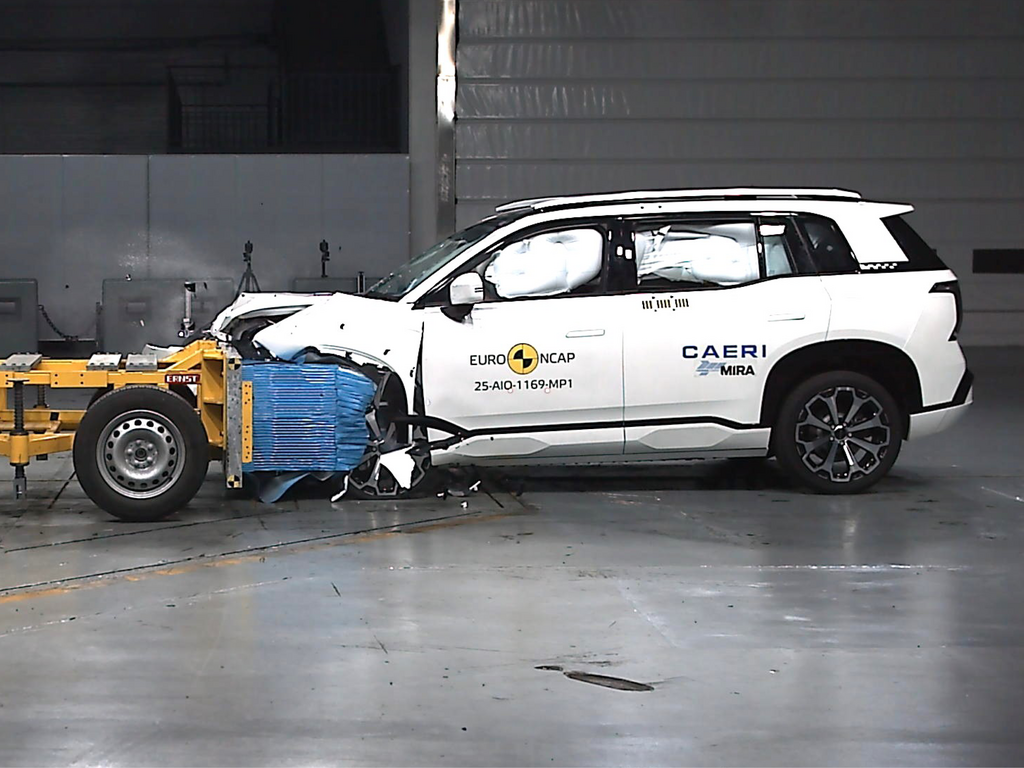
The independent safety record is a substantial part of the AION V's reassurance case, but it is strongest when read in detail. The ANCAP technical assessment reports a stable passenger compartment in the frontal-offset test and maximum points in the side-impact test. It also records an automatic door-unlocking penalty after the frontal-offset test and marginal protection for the driver's neck in the full-width test.[V_TECH]
These findings should sit beside the category scores rather than disappear behind a general statement that the car is safe. They identify the conditions of the assessment and show that an independently tested vehicle can perform well overall while still having areas that did not receive the highest result. A buyer gains more from that complete picture than from a simplified promotional claim.
Child protection needs the same precision. The report records strong assessed child-dummy and restraint-installation performance, while the fitted child-presence detection system did not meet ANCAP's requirements for a reward. It also explains that individual restraint installation does not establish that multiple seats will fit together. The practical conclusion is to fit the actual family restraints and retain a deliberate cabin-check routine.
The point is not to replace a positive verdict with an alarming list. It is to ground reassurance in the protection that was actually demonstrated and the behaviour still required from the driver. AION V: Reassuring Safety Starts with Understanding the Assistance connects those distinctions with everyday operation. The AION V has meaningful independent protection evidence; correct use and an informed understanding of its limits remain part of safe ownership.
Warranty protection should be matched to the owner and the component
The Australian warranty document V3.2 distinguishes eligible non-commercial electric vehicles from commercial use and gives separate terms for particular components. It states eight-year unlimited-kilometre vehicle cover for eligible non-commercial EVs, while the private-use traction-battery entry has an eight-year/200,000 km limit. The longest headline should therefore not be applied automatically to every item on the car.[V_WARRANTY]
These distinctions can affect two owners differently. A privately used vehicle covering modest annual distance may reach the time limit first. A heavily used car can reach a component's kilometre limit sooner. Commercial or previous-use history introduces further questions. The appropriate comparison is the term attached to the actual use category and component, not a single large number in a sales banner.
The document also addresses maintenance responsibilities and the handling of eligible manufacturing or material defects. Its value is that it identifies a remedy and the organisation responsible for assessing the claim. It does not mean every wear item, accidental damage or unrelated expense is included. Where the wording is unclear, the buyer should obtain a written explanation tied to the relevant clause rather than rely on an improvised verbal summary.
For a recent entrant, this is a meaningful form of reassurance because it allocates responsibility for covered problems over a stated period. It should be considered alongside workshop access and the family's capacity to manage an interruption. Warranty protection can reduce some consequences of an eligible defect; only operating data over time can establish how frequently such defects arise.
A parts network should be judged through the Australian repair route
A concern about parts availability deserves a practical answer. The existence of GAC's factories or a warehouse in another region does not establish the stock position for an Australian vehicle. The buyer needs to know which Australian workshop handles diagnosis, how that workshop orders the applicable part and which organisation updates the owner if supply becomes the limiting step.
The Australian dealer locator and national service page provide the first route to that information. The service page publishes customer care at 1800 722 422 and auaftersales@gac-international.com. These contacts are evidence of an accessible national organisation. They are not a published Australian average repair-time dataset or proof that every component is held locally.[V_NETWORK][V_SERVICE]
A useful discussion can distinguish routine items from an unusual repair. Scheduled maintenance can often be planned in advance, whereas a body panel or an electronic assembly may involve diagnosis, order confirmation and a different supply lead time. The appropriate question is how each category is handled for the actual model, not whether a salesperson can promise that no part will ever be delayed.
This makes the support issue concrete enough to influence the purchase. A buyer can obtain the service location, booking process and escalation route before signing. If those arrangements are inconvenient, that is a real cost of ownership. If they are clear and workable, the vehicle's support proposition becomes more reassuring. GAC Overseas Parts and Repairs: How Dealers, Warehouses and Technical Support Work Together explains the general workflow, while the Australian organisation must confirm the local details.
Know the difference between assistance and repair
The roadside-assistance terms address the immediate problem of an eligible vehicle that cannot continue. The document describes ordinary breakdown towing limits of 50 km in metropolitan areas and 100 km in regional areas, with excess distance costs assigned to the driver. It also sets separate conditions for additional travel benefits. Assistance helps organise a response; warranty assessment determines whether a repair is covered.[V_ROAD]
This distinction matters during a stressful event. A tow being arranged does not itself establish the cause of the fault or approve every subsequent expense. Conversely, a concern that may qualify for warranty repair does not necessarily make the vehicle immobile. The right route starts with the car's warning and the support provider's instructions, not with assumptions about which programme should pay.
The official Australian service page provides the customer-care contact and links to the assistance documents. It states that later annual assistance renewal depends on scheduled servicing by an authorised dealer. Record the current eligibility conditions at delivery and revisit them when arranging maintenance. This connects a future benefit to the action required to preserve it.[V_SERVICE]
For a family, decide in advance who can collect passengers if the vehicle is delayed. Keep essential medication, child equipment and contact details accessible when travelling. These are ordinary continuity arrangements, not a prediction of failure. They allow the support package to do its job while the household manages the people affected. A reassuring purchase combines the car's protections with a plan for the practical consequences of an interruption.
Separate battery confidence from a range guarantee
A traction battery is central to an electric vehicle's usefulness, but several different questions are often compressed into one. Battery capacity affects available energy. Efficiency influences the distance travelled with that energy. Charging hardware affects replenishment. Warranty provisions define the handling of eligible defects. A buyer gets a clearer answer by separating these subjects instead of expecting one figure to settle all of them.
The Australian specification gives both grades a 75.26 kWh LFP battery and 510 km WLTP combined range. The official range is a laboratory-cycle result, not a promise that every future journey will cover that distance. Changes in route, temperature, speed, load and energy use can change real-world consumption. A warranty term does not turn a laboratory result into a constant driving distance throughout ownership.
For purchase planning, begin with the longest routine journey that must be completed reliably. Identify the charging opportunities and reserve needed along that route. Then consider whether a reduction in available range would materially disrupt the household's use. A driver whose normal day is short and whose car charges overnight has different resilience from a driver routinely using most of the available range between dependable stations.
The paired AION V everyday charging and service article develops this practical energy assessment. Here the protection conclusion is narrower: the buyer has published battery terms to examine and a known specification from which to plan. Combining those with a realistic routine is more useful than either assuming permanent new-car range or treating ordinary uncertainty as evidence that the vehicle is unsuitable.
Compare confidence using evidence that can be checked before delivery
A useful buying comparison avoids giving unsupported numerical scores to long-term trust. Instead, it records what can be demonstrated, what is supplied in writing and what remains uncertain. That makes it possible to prefer the AION V for identifiable reasons while giving appropriate weight to the areas where evidence is still developing.
| Decision area | Available AION V evidence | What the buyer should establish |
|---|---|---|
| Family protection | 2025 ANCAP record and technical report | Actual restraint fit and understanding of assistance limits |
| Daily convenience | Australian equipment and charging specification | Usable controls, loading and a dependable charging routine |
| Covered defects | Australian warranty terms with separate provisions | The terms applying to the delivered vehicle and usage category |
| Interrupted mobility | Published roadside programme | Eligibility, contact route and relevant limits |
| Long-term durability | Limited local age and accumulated history | Acknowledge the uncertainty instead of assigning a fabricated score |
The daily-use row is important because confidence is not only a response to rare failures. Controls that both drivers understand, seats that fit the family and charging that fits the parking routine can reduce friction every week. The official specification supplies useful starting facts, including shared battery hardware, seat memory and local charging capability. A real demonstration establishes their usefulness to the household.[V_SPEC]
The same comparison should be applied to competing vehicles. A familiar badge should not excuse an unsuitable seating arrangement, and a generous equipment list should not excuse inaccessible support. The purpose is a purchase that makes sense for the actual owners, with strengths and uncertainties considered on the same basis.
The AION V has a defensible confidence case, with a clear decision boundary
The Australian AION V can be worth buying when its family suitability and local support arrangements are convincing. Independent safety testing provides a stronger basis for protection than an unsupported claim about body strength. Written warranty and assistance documents give eligible problems a defined route. The standard equipment can make everyday use convenient when the controls and charging routine suit the household.
The decision boundary is equally clear. Buyers who require an established decade of local operating history will not find that evidence for this recent model. Buyers whose nearest suitable workshop is impractical, or who remain uncomfortable with the interface, should not assume that a long warranty cancels those concerns. These are legitimate factors in ownership, and they deserve the same attention as range and purchase equipment.
A positive decision therefore rests on several connected findings: the actual car fits the family; charging is dependable; the drivers can operate it comfortably; and support can be obtained through an identified local route. If those findings hold, the AION V offers meaningful benefits backed by evidence. The remaining reliability uncertainty can be weighed openly instead of being hidden behind a marketing phrase or an invented rating.
The companion Is the GAC AION V worth buying? Charging, Shared Drivers and Australian Service in Everyday Use explores the routine side of this judgment. Together, everyday suitability and documented protection give a buyer a practical basis for confidence. They support considering the car seriously while preserving the distinction between a credible purchase case today and long-term outcomes that only future operating experience can establish.
Sources & references
- [V_SPEC] AION V Australian Premium and Luxury specificationGAC Australia · Australian model specification, accessed 6 November 2026; manufacturer laboratory range and charging figures.
- [V_SERVICE] Australian service and assistance contactGAC Australia · Accessed 6 November 2026; assistance renewal condition and service contact.
- [V_NETWORK] Australian dealer locatorGAC Australia · Accessed 6 November 2026; locator entry point, not a confirmed count of operating workshops.
- [V_WARRANTY] Australian warranty terms and conditions V3.2GAC International Australia · Accessed 6 November 2026; EV, battery, use category and component limits differ.
- [V_ANCAP] GAC AION V safety ratingANCAP · 2025 assessment; all listed variants, builds July 2025 onward, introduced November 2025.
- [V_TECH] GAC AION V detailed safety assessmentANCAP · 2025 assessment technical report, accessed 6 November 2026; child restraints and assistance performance.
- [V_ROAD] Australian roadside assistance termsGAC Australia · Accessed 6 November 2026; eligibility, assistance types and cost limits apply.
This is a source-based editorial guide, not a first-hand road test. Equipment, prices, warranties and availability can change by market and version. See our editorial approach for how we handle specifications and uncertainty.