Yes, the European GAC AION UT is a credible compact hatchback for two adults and two children who use approved restraints. Both listed European grades, Premium and Luxury, give families five seats, a 2,750 mm wheelbase and ISOFIX/i-Size mounting positions on the two outer rear seats. Euro NCAP awarded the AION UT five stars in September 2026 and reported good protection for both rear child dummies in its frontal-offset test. For a purchase decision, check that the two actual restraints, the normal front-seat positions and the room to get children in and out all work together. GAC Europe AION UT specifications · Euro NCAP 2026 AION UT assessment
The key distinction for space is between a five-seat cabin and five seats that a particular household can use at once. A rear-facing restraint occupies space along the car as well as across it, and an adjacent booster needs space around the belt buckle. Opening the rear door far enough to reach the restraint can be harder than sitting in the same position on an empty bench. The family trial should start with the seating arrangement the owners will use most often. It can then test optional layouts for a grandparent or an occasional fifth passenger.
What the European specifications establish
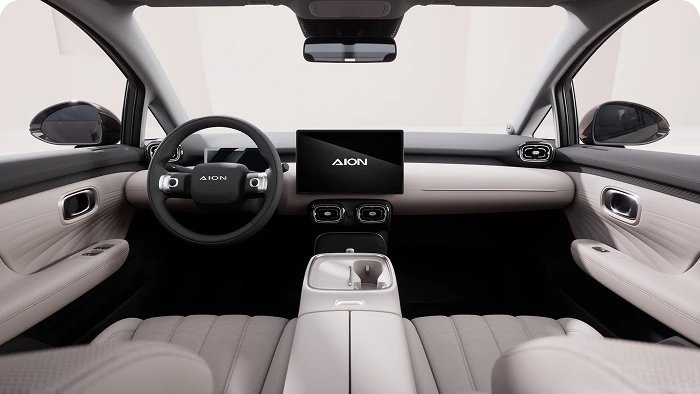
The European UT is 4,270 mm long and 1,575 mm high. GAC Europe gives its width as 1,850 mm with the mirrors folded and 2,073 mm with the mirrors extended. Both European grades share the 2,750 mm wheelbase. A relatively long wheelbase gives the designer room to allocate space between the two rows within a shorter parking footprint. The position of the front seats, the rear cushion shape and the rear door opening are more directly relevant to a bulky restraint. A household can check each of those features during a parked demonstration. GAC Europe AION UT specifications
GAC publishes outer rear ISOFIX/i-Size points on both grades. That makes the two outer rear positions the sensible ones to check first for two approved compatible restraints. It also lists rear air vents and manually operated rear door child locks on both grades. The availability of these items means the basic child-seat layout and everyday rear conveniences can be considered on either trim. Power tailgate operation and a panoramic glass roof appear among the other grade differences. Confirm the vehicle's fit with your family first, then decide whether the convenience differences justify the new quote. GAC Europe AION UT specifications
| Situation | What to verify on the exact vehicle | What the check resolves |
|---|---|---|
| Two protected seating positions | Read the owner handbook for the two rear positions and confirm approval for both existing restraints | Whether the common four-person layout can be installed as intended |
| Tall driver and rear-facing restraint | Set the driver's usual seat position before a qualified fitting check on the proposed side | Whether the daily driver can keep their driving position |
| Older child next to a bulky restraint | Have the approved seating positions and physical buckle access checked together | Whether the older child can be restrained correctly on repeated trips |
| Occasional fifth passenger | Trial the complete arrangement with the two restraints in place and the intended occupant seated | Whether the middle place stays usable in that arrangement |
| Narrow driveway, wall or parking bay | Open a rear door to the angle the usual parking space allows | Whether an adult can reach the restraint and supervise entry without straining |
Take a copy of the model names and versions of each child restraint. The restraint manual and the handbook for the correct vehicle are the controlling references for compatible positions and installation. The dealer can show the markings and the European handbook, and a qualified local fitting service can confirm that the approved restraints can be used together. Keep the restraint labels, instructions and vehicle documentation available for the trial, especially when you expect more than one caregiver to use the car. GAC Europe owner manuals · European Commission child restraint overview
What the Euro NCAP result adds
Euro NCAP tested an AION UT Premium left-hand-drive hatchback and published the result on 2 September 2026. Its validity table includes Premium and Luxury in both left-hand-drive and right-hand-drive forms. The independent assessment placed the vehicle at five stars overall. In the frontal-offset crash test, the rating body reported good protection for both rear child dummies and awarded the maximum points for those dummies in that test. Euro NCAP lists a 90% Crash Protection score for the car under its 2026 protocol. That is a broader crash protection result, which includes areas beyond the particular child dummy finding. Euro NCAP 2026 AION UT assessment
The assessment has a separate child-seat installation section with diagrams for i-Size, ISOFIX and belt-attached restraints. Consult those diagrams to understand the seating arrangements evaluated. Use the vehicle and restraint manuals when selecting the actual place for an individual restraint. Euro NCAP also reported a child presence detection system and points out the hazard of pairing a rear-facing child restraint with an active front passenger airbag. Plan around the approved rear positions where the manufacturer's information confirms your seats can be used, and follow the local rules and manuals for any exceptional layout. Euro NCAP AION UT assessment and installation diagrams · European Commission seat belt and child restraint information
That evidence supports shortlisting the European model. What Euro NCAP checked belongs to its tested seats, procedures and applicability statement. The test answers a crash-protection and installation question under a defined protocol. Your parked fitting appointment answers the everyday geometry question, which may involve a different brand or depth of restraint, a different position for the front passenger, a narrow parking space and another child who buckles their own belt. Keep both kinds of evidence when comparing the UT with another model.
A deeper rear-facing seat changes which side is convenient
Arrange a parked demonstration with both adults if two people usually share the driving. Start by returning the driver's seat to the posture each person normally uses. Include any preferred change in backrest angle and seat height. A household has an easier time keeping this setting when the restraint fits correctly on the intended side for both drivers. If one driver is much taller, have the dealer or fitter check the approved outer position behind the front passenger and compare how much everyday room that leaves for the adult passenger.
Bring the exact restraint combination, including the base if applicable, rather than an empty shell of approximately the same width. A rear-facing base can use a different amount of fore-aft space from a forward-facing seat. Compare the position of the actual seat shell relative to the front seat after a correct installation, and check access to the points the caregiver must reach as part of normal use. For a rotating restraint, ask for a demonstration of the turn path within the parked vehicle following the instructions. A side that accommodates the restraint when it is in its travel position may still leave little room for the normal loading movement at a particular door angle.
Next, put the front passenger in the occupied position. The position should continue to meet the owner's normal seating needs. Ask the same caregiver to carry out their usual supervised entry routine with the vehicle parked and compare the two doors. The floor and sill shape are relevant if one adult regularly bends with a child in their arms. The door aperture governs how comfortably they can approach the shell without a contorted reach. Note which side has the most predictable access at home, nursery and school. The best side to check first is the one that fits both the approved restraint setup and the places where you actually stop.
An older sibling or fifth passenger needs their own fit check
A household using one bulky restraint and one approved booster should carry out the arrangement with both present. Width measured across the rear cushion gives a rough starting point. The usable spacing depends on the shell shape near the buckle and the belt path of the intended place. During a supervised demonstration, verify that each approved restraint remains in its correct position and each occupant can buckle correctly with the adjacent seat occupied. A fitter can show which positions are allowed and explain where a different compatible seat would free more usable room.
This matters especially for an occasional fifth occupant. If two outer restraints fill the cabin to the point that the middle passenger has to lean forward to reach the belt or there is no room for normal posture, treat that layout as unsuitable. Choosing a physically larger cabin may make sense for a family that regularly uses the middle place, provided the same approved simultaneous fit checks pass in that car. The UT's two outer rear ISOFIX/i-Size points are a clear feature. A possible belt-installed third restraint would require specific approval for the position, actual fit and compliance with local requirements. The five-seat listing leaves those conditions to be checked on the exact car. GAC Europe AION UT specifications · Euro NCAP AION UT restraint installation information
A willingness to use a different compatible restraint changes the purchase decision. If the existing two seats are close to the end of their useful period for your family, take information about the next approved units you are considering. Keep the child's height and weight criteria, local regulations, each manufacturer's instructions and actual compatibility central to the choice. A spare few centimetres of adult seating room becomes relevant only once everyone can be safely restrained. Plan a fresh parked check when a restraint changes, even if the first layout worked throughout the previous year.
Families who alternate between using two restraints and carrying an adult in the back can make two separate demonstrations part of the same appointment. In the first, confirm that the seats remain correctly installed and the normal front occupants are accommodated. In the second, ask a fitter how to return the approved seating position to adult use using the two manuals. Take note of whether the head restraint or seatback position changes and how easily it can be restored to its correct position. If the switch calls for work that the household has no convenient place to carry out, that affects whether an arrangement will be used as intended.
Consider the path to the middle position as well as the room once seated. Someone who can sit normally in the middle may still need assistance getting there when both outer places are occupied by large restraints. Ask the person who would routinely use that position to take part. Their experience is a closer match to the household's needs than an estimate based on bench width alone.
The bay beside the car can be the limiting dimension
GAC's published mirrors-folded width of 1,850 mm provides a simple parking illustration. Centre a static 1,850 mm envelope in a hypothetical 2,400 mm bay and the remaining nominal width is 550 mm, or 275 mm on each side. Extend the mirrors and the nominal gap based on the outer mirror width falls to 327 mm total. Those values describe the width left around a static car in a perfectly centred bay. Real door swing depends on where the hinges and door edges move, neighbouring vehicle positions, pillars and how the driver places the car. Do a real parked trial before assuming the rear door will open to the angle you need. GAC Europe AION UT dimensions
Try the usual bay or mark its approximate clear dimensions in a safe open area. Include the fixed obstruction at the rear door if a post cuts into one side. Observe whether the adult can stand comfortably beside the door while keeping the vehicle within the intended boundaries, and whether they can reach the rear seat while maintaining safe supervision of adjacent children. A vehicle that works in a centred demonstration may be easier to use with a chosen side close to the wall, provided there is still a safe exit and approved seating on the other side. Take the test to the usual destination type rather than assuming the dealer's spacious forecourt represents it.
A garage check also involves the hatch. With both restraint positions needed, families can plan the luggage area with the rear bench upright. GAC Europe's configuration table lists 440 litres seats-up for both grades. That is a published compartment capacity for the European specification. Bring the folded pushchair and the bag that goes with it, and see whether you can reach both with the front and rear doors in their intended parking position. Confirm that the hatch can open at home and that the vehicle handbook's loading requirements can be followed. This connects the rear-seat trial to the entire routine. GAC Europe AION UT luggage specifications
Evaluate the layout for everyday use and longer journeys
A workplace car park, nursery pickup point and holiday loading bay can put the car under different constraints. At home, one adult may install a restraint once and leave it in place for a year. At a shared pickup point, grandparents or a second driver may need to copy the normal routine. During a stationary demonstration, ask each caregiver to follow the same supervised entry and buckle sequence using the correct instructions. Observe where they stand, whether they can see what they need to check and how they reach an item in the footwell without disturbing the layout. Ask the dealer to explain the rear-door locks and how they operate from each side. GAC Europe AION UT specifications · GAC Europe owner manuals
A longer journey may put more weight in the boot while every occupied seat remains in use. GAC's European table lists the same maximum permissible weight, 2,110 kg, for both grades. It lists different kerb weights and different masses in running order. Under its published load-capacity heading the values are 465 kg on Premium and 435 kg on Luxury. Ask the dealer to explain the relevant weight definition for the exact car, including which driver mass or installed equipment has been counted. Then record the remaining occupants, approved restraints, cases and accessories on the same basis and use the vehicle documents for allowable load. Fit and mass checks answer two different questions even if the same five people and bags are involved. GAC Europe AION UT weight specifications
The setup is worth trying with the luggage loaded and the seats left in their normal positions. A second-row passenger may have less comfortable access if the vehicle is packed past the usual arrangement, and a caregiver may have to carry the travel bag across to the other side before the door can close. List the combination that works for school days and the one that works for longer trips. If both require the same two approved rear positions, there is less incentive to pay for a feature on the higher trim solely for family fit. The choice between Premium and Luxury can then turn on the way the tailgate, mirrors and roof suit your own parking and journeys.
Which families should keep the UT on the shortlist?
A two-adult, two-child household that can fit both approved restraints in the outer rear positions while retaining comfortable front seating has good reason to keep the European AION UT on the shortlist. Both grades begin with the same published seat count, attachment locations and body measurements, and the September 2026 Euro NCAP record covers both listed variants. A household that regularly takes a fifth occupant or has only a tight loading space can make the decision by demonstrating that particular combination. The practical value of the UT's interior is the ability to keep the exact seats your family uses and to reach them easily in the places you park. GAC Europe AION UT specifications · Euro NCAP 2026 AION UT assessment
For a comparable visit with another hatchback, note the two approved positions used, front sitting position, accessible rear door angle, centre occupancy and the pushchair location. Use the same restraints and adult seating positions in the other demonstration. That produces evidence for the household's own use, whether the family eventually chooses the Premium, Luxury or a different car with more room for its regular arrangement.
See the GAC AION UT Spacious Design for Everyday Mobility guide for more on this question.
Sources & references
- [S1] GAC Europe AION UT specificationsGAC Group or local GAC operation
- [S2] Euro NCAP 2026 AION UT assessmentEuro NCAP
- [S3] GAC Europe owner manualsGAC Group or local GAC operation
- [S4] European Commission child restraint overviewroad-safety.transport.ec.europa.eu
This is a source-based editorial guide, not a first-hand road test. Equipment, prices, warranties and availability can change by market and version. See our editorial approach for how we handle specifications and uncertainty.