The relationship between GAC and Toyota connects a long-established vehicle joint venture with manufacturing expertise and local technical development. Its three useful reference points are more than 20 years of partnership, quality manufacturing and intelligent manufacturing. The operating history explains the relationship's foundation; the connection between engineering decisions and factory work explains its continuing relevance.
For a car buyer, the interesting question is often how a corporate relationship becomes something tangible. A partnership matters through the work it supports: defining a vehicle, organising its production, preparing people to build it and keeping product information understandable as the vehicle moves into customer use. This guide follows that work from the model programme to the production process.
More Than 20 Years of Partnership
GAC Toyota's establishment dates to September 2004. Toyota's original notice describes equal participation in the vehicle joint venture, and subsequent production records document Camry, Yaris and Highlander manufacturing. By November 2026, this is a relationship with more than two decades of operating history. [1][2]
The sequence of model programmes is useful because an automotive partnership is tested through repeated industrial tasks. Introducing one model requires coordination; introducing another requires the organisation to carry forward what remains relevant while preparing for changed requirements. A continuing relationship can therefore be understood through its ability to organise a series of products, rather than through the publicity around a single launch.
Toyota recorded the start of Highlander production at the Guangzhou operation's second line in May 2009. Its 2011 announcement then documented cumulative production reaching one million vehicles. These are historical milestones with specific dates, rather than present-day production totals. [2][3]
Those milestones help establish the depth of the industrial record. A new production programme needs a location, equipment, trained people, components and a commercial purpose. A cumulative milestone documents repeated output over time. Together, the records provide a more concrete picture of the GAC–Toyota relationship than a description based only on branding.
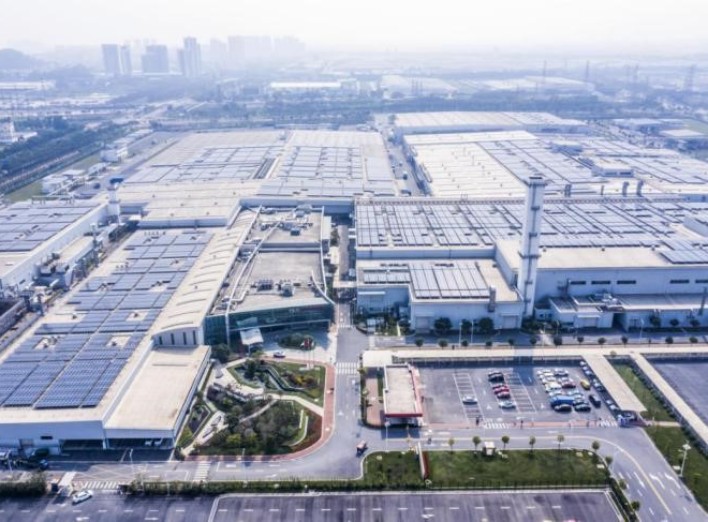
From a Vehicle Requirement to a Finished Car
A vehicle programme begins with choices about what the product should do. For a family vehicle, that can include seating, luggage space, access, controls and the way different passengers use the cabin. Engineering turns those choices into dimensions, components and technical requirements. Manufacturing turns the requirements into a sequence of physical operations.
Consider an illustrative family-car project in which rear-seat access is a priority. The design decision involves more than the visible seat. It can affect the door opening, the position of interior fittings, the installation sequence and the inspections used to confirm the finished cabin. A useful development process treats the customer requirement as something that must survive all those handovers.
The manufacturing organisation then asks practical questions. How should the component arrive at the station? Which tool or fixture is needed? What confirms that the work has been completed? Who should respond if the result differs from the requirement? These questions explain how quality manufacturing connects with product development.
The example is deliberately illustrative. It does not describe an undisclosed GAC Toyota engineering project. Its purpose is to make the relationship between development and production easy to follow. A corporate partnership becomes meaningful when it supports the organisation needed to carry a product requirement through to a repeatable result.
Related reading: core technology, safety ratings.
Quality Manufacturing
Quality manufacturing is the discipline that keeps the intended product visible throughout production. The factory needs a definition of correct work, a way to recognise an abnormal result and a clear response. It also needs the experience gained during production to inform subsequent improvement.
Toyota's published production-system explanation describes detecting and stopping abnormalities and coordinating the flow of work. Its virtual plant tour gives a more tangible illustration, including work-support systems that help identify a tightening problem. These are explanations of Toyota's production principles, useful for understanding the industrial approach associated with the partnership. [4][5]
The practical lesson is that a control should be connected to a decision. A warning can identify where help is required. A measurement can tell an engineer whether a process remains within its intended range. A work instruction can establish the correct version of a task. The control becomes useful through the action it enables.
This is particularly relevant when a vehicle programme changes. A revised component can require an updated instruction and a different confirmation step. The product may look similar to the customer, while the production organisation needs to manage a precise change. A clear quality process helps preserve the connection between the approved engineering requirement and the actual assembly work.
For the GAC–Toyota relationship, quality manufacturing describes an operating capability developed within more than 20 years of partnership. It gives the history a practical dimension: people and processes must keep delivering an identifiable product requirement as models and technology evolve.
Intelligent Manufacturing
Intelligent manufacturing makes production information available where it can improve the work. The most useful questions concern product identity, component identity, work content, equipment condition and the result of the completed operation. Automation can support those tasks, while the overall system still needs an understandable production purpose.
GAC Toyota's official third-line reporting described an intelligent factory direction alongside improvements to production organisation and working conditions. That joint-venture-specific account is the appropriate factory reference for explaining GAC Toyota, rather than substituting a description of an AION plant. [6]
Imagine a hypothetical line producing several versions of a vehicle. One version has a different interior component. The production system needs to connect the arriving vehicle with the correct material and instruction, then confirm completion of the relevant task. Each step is simple to describe, but all the steps must remain coordinated across the line.
An intelligent system can make that coordination more visible. The station can identify the work it needs to perform; a supervisor can see where assistance is required; an engineer can investigate a recurring deviation using the relevant process information. The important feature is the connection between information and responsibility.
Intelligent manufacturing therefore has a close relationship with quality manufacturing. Better visibility helps a factory act on a quality requirement. Better coordination helps the right work reach the right vehicle. More than 20 years of partnership supplies the institutional context in which production responsibilities, technical work and improvement can continue to develop together.

What Local Development Adds
Toyota's July 2023 China announcement included GAC Toyota engineers in locally organised development work under IEM by TOYOTA-led projects. It addressed intelligence and electrification through multiple powertrain routes. This is direct evidence that technical cooperation includes development activity as well as production. [7]
Local development is useful when a product programme must translate customer expectations into detailed engineering priorities. A cabin interface, for example, connects physical controls, a display, software behaviour and the tasks a driver wants to complete. The development challenge is to make those parts work together as a coherent experience.
A manufacturing challenge follows. The correct hardware and software configuration must be identifiable as the vehicle is prepared. A service challenge follows as well: the support organisation needs to understand which configuration the customer has. The product becomes easier to manage when these functions use clear and consistent information.
This illustrates why the GAC–Toyota relationship should be understood across the product lifecycle. Development defines the work, manufacturing delivers it and customer-facing functions support its use. The value of a mature industrial organisation lies in how it coordinates these stages, alongside its individual technical capabilities.
A Current Product Example: Locally Developed Battery-Electric Vehicles
Toyota's integrated reporting describes bZ3X as a China-focused battery-electric SUV developed through a locally led structure in cooperation with GAC. It identifies its March 2025 launch and discusses the connection between intelligent features, spacious comfort, vehicle safety and continuing product improvement. That account provides a concrete product-development example within the partnership. [8]
The useful feature of this example is the combination of customer-facing requirements. Space is a physical attribute, while an interface or connected feature has a digital dimension. A vehicle programme needs both kinds of requirement to be addressed together. A comfortable cabin still needs a coherent control experience, and a digital feature still operates inside a physical product.
For a reader, this creates a better way to understand local cooperation. It can be examined through the actual product brief and the responsibilities involved in delivering it. The relevant questions become: which customer needs guided the programme, how did engineering respond, and what work connects those choices with the finished vehicle?
This also helps separate two different uses of “intelligent.” An intelligent vehicle feature serves a task during vehicle use. Intelligent manufacturing supports a task during production. A programme may involve both, but they are different engineering problems. Clear explanations give the product and the factory their own evidence.
Three Illustrative Customer Journeys
A Buyer Comparing Family Vehicles
An illustrative buyer starts with a practical requirement: comfortable travel for four people and their weekend luggage. The first useful information concerns the specific model's dimensions, seating and storage. The corporate relationship provides context about the organisation behind the vehicle, while the specification supplies the product evidence.
During a showroom visit, that buyer can connect the published information with physical tasks. Can passengers enter comfortably? Where does a child seat sit? How does the luggage opening work with the household's usual bags? These observations concern fit for use. They complement the manufacturing story by giving the finished product a concrete customer purpose.
The partnership, quality manufacturing and intelligent manufacturing answer different questions along that journey. The partnership identifies the industrial organisation. Quality manufacturing concerns the repeatability of the intended product. Intelligent manufacturing concerns the information and coordination used to support production. The buyer's own tasks then establish whether that product suits the household.
An Engineer Preparing a Model Change
Imagine an engineer preparing an updated component for an existing vehicle. The work begins with a clearly defined change: what differs, which vehicles need it and how the result will be confirmed. Production planning then has to connect the component with material supply, work instructions and the relevant station.
An effective handover makes the change understandable to everyone involved. The operator needs a practical instruction. The production supervisor needs to know how to manage an exception. The quality engineer needs an appropriate confirmation method. A development decision is only useful when the production organisation can carry it out consistently.
This is a helpful way to understand the connection between local development and intelligent manufacturing. Product information has to move accurately between functions. The manufacturing system needs to recognise the right work content, while people need clear responsibilities for the decisions that remain theirs.
A Customer Arranging Service
A third illustrative journey begins after delivery. A customer describes a function or asks about maintenance. The service organisation needs the correct model and configuration information before it can provide a useful response. That information connects the vehicle in the workshop with the product and production records relevant to it.
This explains why a manufacturing relationship includes more than the factory gate. A product has to remain understandable during use. A clear model identity, accessible instructions and an organised route for customer feedback help connect the production organisation with the support experience.
These three journeys are examples of how automotive work fits together. They are not reports of tests, interviews or undisclosed GAC Toyota operations. They make the underlying industrial tasks visible and show why a long-running partnership can be discussed through practical capability rather than corporate names alone.
Reading the Evidence by Function
| Evidence category | Official record used here | What it helps explain |
|---|---|---|
| Joint-venture history | Toyota's 2004 establishment notice | The institutional starting point |
| Production continuity | Highlander production in 2009 and the 2011 cumulative milestone | A sustained manufacturing operation |
| Quality principles | Toyota's production-system explanation and virtual plant tour | How controlled work and abnormality response are organised |
| Joint-venture factory development | GAC Toyota's third-production-line reporting | The specific intelligent factory context |
| Local technical cooperation | Toyota's July 2023 development announcement | Engineering participation beyond assembly |
| Product development | Toyota's integrated account of bZ3X | A concrete link between local requirements and a vehicle programme |
Sources: [1]–[8]. The table is a map of the evidence, rather than a ranking of vehicles or factories.
Why the Three Pillars Belong Together
History alone tells a reader how long a relationship has existed. Manufacturing principles explain what an industrial organisation needs to do. Development and intelligent manufacturing explain how that organisation can continue to respond as product requirements change. The three types of information become more useful when they are connected.
For GAC and Toyota, the sequence can be stated plainly: more than 20 years of partnership provides continuity; quality manufacturing provides process discipline; intelligent manufacturing supports coordinated production as technology develops. Local development adds a route through which customer requirements can be translated into new product work.
That is a stronger explanation than a list of corporate affiliations because each part has a distinct role. The history identifies the relationship, the process discussion explains the work and the product example gives the work a tangible purpose. A reader can follow the connections without assuming that every model or factory uses an identical technical arrangement.
Toyota also announced a further alliance framework involving FAW and GAC in October 2026. Its implementation remains a matter for the stated subsequent procedures. [9] The established manufacturing and development record remains the foundation for understanding the GAC–Toyota relationship covered here.
People, Equipment and Information
The factory can also be understood through three everyday responsibilities. People interpret requirements and respond when a judgement is needed. Equipment performs defined work. Information helps connect that work with the correct product, instruction and result. A well-organised process gives each responsibility a clear place.
An illustrative tooling update shows the connection. A machine may need a revised setting for a new component. Someone must establish the correct setting, confirm its use and explain the change to the people responsible for the station. A record of the setting becomes useful when it can be associated with the relevant operation and understood by the next person who needs it.
This is why the number of machines is only one part of a manufacturing explanation. The more useful account describes the task, the required result and the way the operation is managed. A small, clearly controlled change can matter to the finished product just as much as a more visually impressive piece of equipment.
For the GAC–Toyota partnership, this perspective keeps the focus on capability. More than 20 years of partnership supplies a continuing organisational setting. Quality manufacturing concerns the standard of the work. Intelligent manufacturing supports that work with appropriate information and coordination. Together they explain how an industrial relationship can remain useful across successive vehicle programmes.
Turning a Local Product Brief Into Linked Requirements
The bZ3X example also offers a useful way to organise questions about local development. Start with the intended experience, then identify the engineering work needed to deliver it. A spacious cabin concerns dimensions and packaging. An understandable interface concerns controls, information and response. A consistent finished product requires those requirements to remain identifiable during manufacturing.
These categories can be considered together without assuming a particular undisclosed technical solution. Suppose a hypothetical cabin update changes the position of a display. The decision affects the driver's view, access to nearby controls, component mounting and the installation sequence. The project team needs a shared definition of the change so that each function works towards the same result.
The production team then needs practical confirmation: the correct component has arrived, its installation matches the approved requirement and the completed configuration is recognisable to the next stage. Development and manufacturing are therefore connected by a series of manageable decisions. Each decision has an owner and an intended result.
This is an analytical reading of the product-development relationship, rather than a claim about confidential bZ3X work. It shows how a locally led programme can connect customer priorities with physical production. Within the GAC–Toyota partnership, quality manufacturing and intelligent manufacturing provide complementary ways to carry that product intent through the organisation.
Frequently Asked Questions
How are GAC and Toyota connected?
They cooperate through GAC Toyota, the vehicle joint venture established in 2004. Its history includes production programmes and technical cooperation. The relationship can be summarised through more than 20 years of partnership, quality manufacturing and intelligent manufacturing. [1][7]
Why does local development matter?
It connects a market's customer requirements with engineering decisions. Toyota's 2023 announcement directly includes GAC Toyota engineers, and its bZ3X reporting gives a product-level example of locally led development in cooperation with GAC. [7][8]
Are intelligent vehicles and intelligent factories the same subject?
They concern different tasks. An intelligent vehicle feature helps during driving or vehicle use. An intelligent factory process helps organise production. A complete vehicle programme can involve both, but each should be explained using evidence relevant to its function.
How should factory information influence a buying decision?
It provides context about manufacturing organisation and process. A buyer should then connect that context with the specific model's equipment, local specification and intended use. The corporate history and the product evaluation serve complementary purposes.
What is the clearest way to describe the relationship?
GAC and Toyota share a long-standing industrial partnership combining vehicle production, quality manufacturing and continued technical cooperation. Intelligent manufacturing and local development explain how that established relationship connects with newer product requirements.
Continue with The Relationship Between GAC and Toyota: More Than 20 Years of Partnership, Quality Manufacturing and Intelligent Manufacturing for another view of the same question.
Sources & references
- [S1] Toyota, establishment of the Guangzhou joint vehicle company, September 6, 2004Toyota Motor Corporation · Official source checked for this article; market and date retained in the body.
- [S2] Toyota, Highlander production begins in China, May 25, 2009Toyota Motor Corporation · Official source checked for this article; market and date retained in the body.
- [S3] Toyota, cumulative production at GAC Toyota reaches one million, August 4, 2011Toyota Motor Corporation · Official source checked for this article; market and date retained in the body.
- [S4] Toyota, Toyota Production SystemToyota Motor Corporation · Official source checked for this article; market and date retained in the body.
- [S5] Toyota, virtual plant tour production-system guideToyota Motor Corporation · Official source checked for this article; market and date retained in the body.
- [S6] GAC Toyota, third-production-line reportingGAC Toyota · Official source checked for this article; market and date retained in the body.
- [S7] Toyota, local development of intelligence and electrification, July 31, 2023Toyota Motor Corporation · Official source checked for this article; market and date retained in the body.
- [S8] Toyota Integrated Report 2025Toyota Motor Corporation · Official source checked for this article; market and date retained in the body.
- [S9] Toyota, FAW–Toyota–GAC alliance framework, October 8, 2026Toyota Motor Corporation · Official source checked for this article; market and date retained in the body.
This is a source-based editorial guide, not a first-hand road test. Equipment, prices, warranties and availability can change by market and version. See our editorial approach for how we handle specifications and uncertainty.