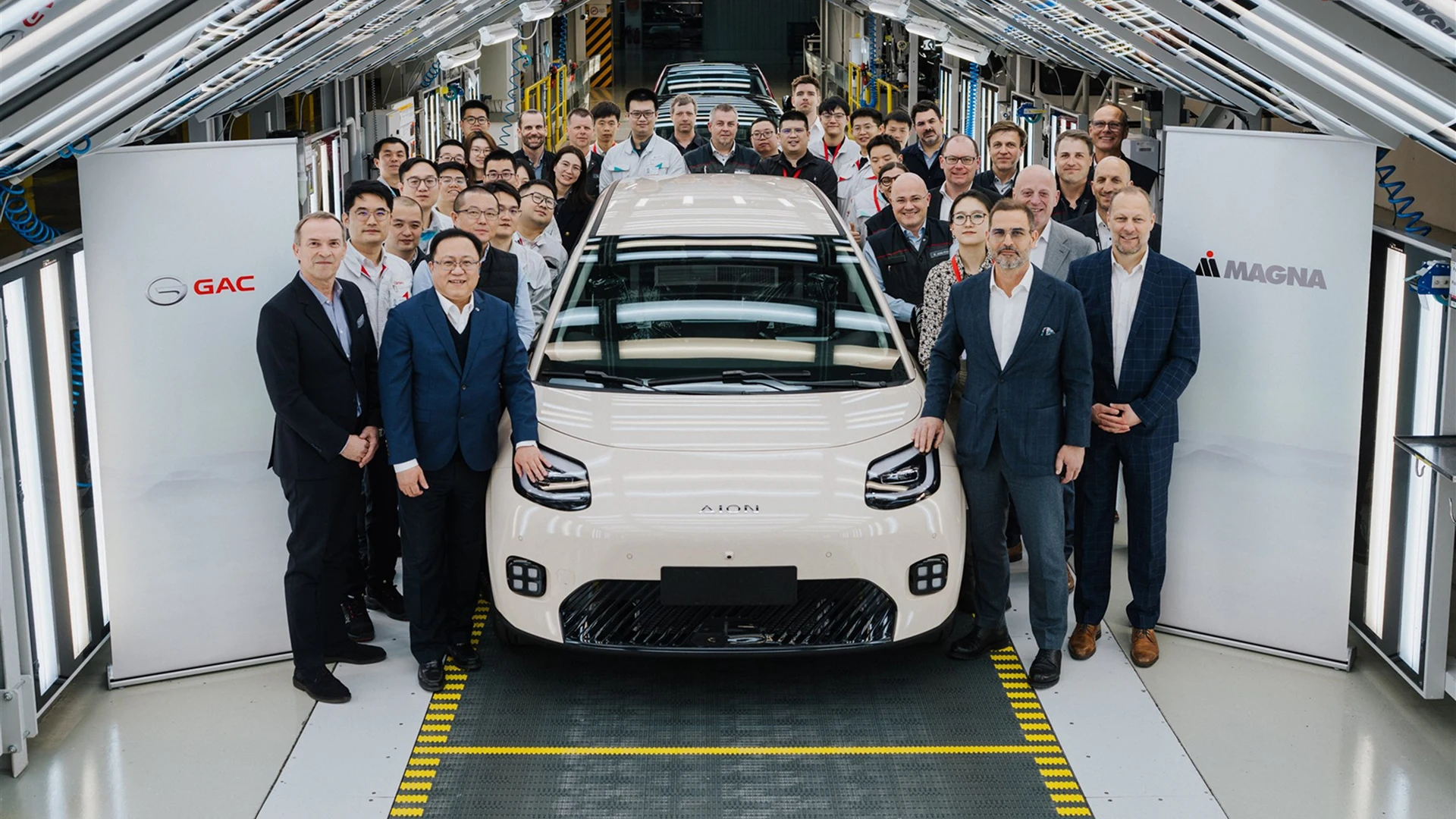
GAC’s core technology combines ADiMOTION powertrains, battery engineering, ADiGO vehicle intelligence and X-SOUL electronic architecture. Its wider AI programme spans Sky, Robot, Home and Vehicle. The industrial evidence is concrete: a Thai battery-pack factory opened on 29 October 2026 to support local AION Y Plus production, while AION UT production began at Magna in Austria on 18 March 2026. Together, named systems, visible applications and overseas production provide a fuller account of GAC’s technological capability.
How the technology becomes useful
A useful explanation of automotive technology follows the work it performs. Propulsion manages the vehicle’s energy, electronic architecture organises communication between systems, and intelligent software turns information into a response. Their value becomes easier to assess when a published programme is placed beside a specific application rather than presented as an isolated name.
| Technology or capability | Published application | Practical significance |
|---|---|---|
| ADiMOTION | GAC’s April 2026 PHEV and HEV+ programmes | Different energy-management approaches for plug-in and non-plug-in use |
| Vehicle intelligence | ADiGO cockpit and assistance development | A route from sensing and user requests to coordinated vehicle functions |
| Battery industrialisation | Thai AION Y Plus battery-pack supply | Local manufacture of a major EV component alongside vehicle assembly |
| Overseas vehicle engineering | AION UT design in Milan and production in Austria | A named connection between regional design, assembly and market requirements |
The 13 April powertrain announcement identifies PHEV and HEV+ as distinct ADiMOTION development streams. This distinction is useful to a buyer because charging access changes how an electrified powertrain is used. A plug-in household can organise repeated journeys around external charging; a non-plug-in system has to manage the relationship between engine operation, regeneration and electric assistance differently. Programme-level engineering explains the approach, while the specification sheet identifies the equipment in an individual car.
The four-setting AI panorama extends the discussion beyond road vehicles. Sky is represented by GOVY aircraft development; Robot by embodied machines such as GoMate; Home by household-oriented demonstrations; and Vehicle by intelligent mobility functions. These are four development environments, each with different physical tasks and safety requirements. They establish the breadth of the research programme while leaving retail availability attached to the relevant product announcement.
Technology globalization has a manufacturing address
The Thai battery-pack announcement supplies a particularly clear example of technology moving into an overseas production system. GAC reported the opening and first pack roll-off in Chonburi on 29 October 2026. Initial production is directed towards locally manufactured AION Y Plus vehicles. The first-phase annual capacity of 7,000 packs and potential later capacity of 20,000 describe the facility’s planned scale, rather than the number already manufactured.
This places battery capability inside a regional supply relationship. Cell selection, pack assembly, process control and vehicle integration are connected tasks. Locating a pack operation beside an established vehicle-manufacturing presence creates a more substantial industrial connection than shipping finished vehicles alone. It also makes the next questions concrete: which models are supported, which processes operate locally, and how output changes as production develops.
Austria supplies a different form of localization. The AION UT production statement records an 18 March 2026 start at Magna, following design work in Milan. Here, GAC’s vehicle technology is combined with an established assembly partner and a European design operation. Thailand and Austria therefore show two complementary routes: localising a major EV component and integrating a complete vehicle into a regional manufacturing partnership.
The strongest interpretation is a connected capability: GAC develops named technologies, demonstrates them in defined settings and builds production relationships that carry relevant products into overseas markets. The core-technology overview provides the wider engineering context. The application map above makes the link to an actual vehicle or facility explicit.
1. ADiMOTION gives the energy technology a name and a production link
GAC’s core technology includes the ADiMOTION Power family, which brings range extension, plug-in hybrid and HEV+ programmes under a common technology brand. The manufacturer’s English Tech Day release establishes those names. Its 2025 annual-results announcement, printed page 25, provides a separate production connection: HYPTEC HL and AION i60 were launched with ADiMOTION range-extension technology. That is a more useful answer than listing “hybrid systems” without identifying either the system or its application.
The three energy routes solve different problems. A range extender generates electricity to support electric propulsion when battery energy is insufficient. A plug-in hybrid coordinates externally charged battery energy with its engine and drivetrain. A non-plug-in HEV regenerates and manages energy without requiring an owner to charge from an external source. A shared technology umbrella does not mean these architectures are interchangeable.
The April 2026 Chinese programme announcement describes an HEV+ battery of 5.4kWh and a PHEV system with engine, transmission, electric-drive and energy-management development. Battery capacity matters beyond acceleration: it can support electrical functions while the vehicle is stationary. The useful customer question is how an actual model allocates that energy, not whether one programme figure can be applied to the whole brand.
The ADiMOTION parked-comfort analysis explains that operating logic. The named range-extension applications, announced hybrid programmes and associated control systems together show an engineering portfolio with both production evidence and ongoing development.
2. Energy, four AI scenarios and global production form one capability map
“Sky, Robot, Home and Vehicle” describes the fields in which GAC is applying intelligent technology. It is broader than a car’s entertainment screen. ADiMOTION describes energy systems; ADiGO describes intelligent functions; X-SOUL describes the electronic foundation. Overseas factories and production partnerships show a further capability: transferring designs and manufacturing methods into a working regional industrial operation.
| Capability | Named evidence | What the evidence establishes |
|---|---|---|
| Energy | ADiMOTION range extension; PHEV and HEV+ | Specific architectures and named production applications |
| Sky | GOVY AirCab and AirJet demonstrations | Low-altitude mobility development, distinct from established road-car production |
| Robot | GoMate wheel-based mobility and manipulation | A physical embodied-intelligence development programme |
| Home | GoSide and GoMove demonstrations | Companion and practical assistance scenarios |
| Vehicle | ADiGO interaction and X-SOUL architecture | Software functions and the systems supporting them |
| Technology overseas | Thai pack production; Austrian AION assembly | Identifiable manufacturing and localisation milestones |
These rows should not be compressed into an unsupported claim that one car already contains every capability. They describe a portfolio whose projects have different maturity levels. A robot demonstrated at an exhibition, a software architecture announced at Tech Day and a model entering serial production represent different kinds of progress.
The distinction also makes the connection clearer. Energy management provides a usable power supply; computing supports decisions and interaction; physical engineering gives those decisions something to control. Manufacturing and service then determine whether the intended product can be supplied and supported in a particular market. Each layer has a practical job, so the overall assessment does not depend on how many technology names can fit into a paragraph.
3. Sky: AirCab introduces a different set of mobility requirements
The Sky part of GAC's programme is represented by GOVY AirCab, a multirotor flying-vehicle project presented in the June 2025 Hong Kong technology announcement. Naming the project is useful because the phrase AI mobility otherwise gives little indication of whether the company means a car service, an aviation concept or an operating aircraft programme.
AirCab's published design account includes redundancy across power, energy, flight control and communications, alongside extensive use of carbon-fibre composites. Those details point to the engineering problem: a flying vehicle must manage the consequences of losing a critical function while controlling mass. Redundancy and lightweight construction address different parts of that problem. A backup path concerns continued function; a lighter structure changes the mass the propulsion system must lift.
This also illustrates how an automotive research base can expand without making all mobility products equivalent. Electric propulsion and energy management are relevant starting points, but an aircraft introduces flight-control and aviation-operating requirements of its own. The project should therefore be understood as a distinct application of engineering capability, not as an airborne option already available on an ordinary GAC vehicle.
At the June 2025 announcement, demonstration operations and deliveries by the end of 2026 were described as plans. That announcement alone cannot establish their subsequent completion. The positive evidence is a named project with an articulated technical approach. Further operating and certification milestones would answer different questions. Keeping the stages visible makes the Sky programme more concrete and allows readers to follow its development without confusing a published roadmap with a completed commercial service.
4. Robot: GoMate brings perception, movement and physical work together
GoMate gives the Robot scenario a clear physical form. GAC's December 2024 announcement described a full-size platform with 38 degrees of freedom and a variable wheel-foot arrangement. The reported configurations range from an approximately 1.4-metre four-wheel stance to an approximately 1.75-metre two-wheel standing stance. The important point is the change in geometry, rather than the dimensions as isolated headline numbers.
A robot that changes stance can alter how it occupies space and positions its upper body. A lower, broader support arrangement and a more upright arrangement create different possibilities for movement and reach. Coordinating that change requires the mechanical design and control system to work together. Counting joints tells only part of the story; the useful outcome is a supported task performed with appropriate posture and contact.
GAC also identified visual navigation and three-dimensional scene reconstruction. These capabilities help connect the robot's physical movement with information about its surroundings. A vehicle generally navigates through a scene. A service robot may also need to approach an object and interact with it, making the relationship between perception and controlled contact especially important.
This is why GoMate belongs in a core-technology discussion alongside intelligent vehicles. It makes embodied intelligence tangible: sensing and software must direct a physical system, not merely generate an answer on a screen. The engineering-systems overview connects that work with GAC's broader capability map. The evidence supports a named robotic platform and its announced mechanisms, while the performance of any future commercial job needs its own operating record.
5. Public robot demonstrations identify the tasks being developed
A technology programme becomes easier to assess when its public demonstrations describe an actual job. At the Hong Kong event, GoMate appeared in reception activity. GAC's World Robot Conference account subsequently described conversation, gestures and taking objects in response to instructions. These examples establish the kinds of interaction the company was demonstrating.
The object-handling example is particularly informative. Understanding the words is only the start. The robot must associate the request with something in its surroundings and bring its physical mechanism into a suitable position. The task joins language, perception, motion and contact. That connection explains why a capable conversational system and a useful physical assistant are different achievements.
For a reception role, interaction also involves timing and clarity. A visitor should be able to understand whether the robot heard the request and what it is about to do. In a demonstration, the environment and available tasks can be prepared in advance. An operating deployment must handle repetition and variation across a much wider set of interactions. The published event therefore provides evidence of demonstrated functions, rather than a universal claim about unattended service.
The distinction does not diminish the work. It identifies the next practical question: whether the supported task can be performed consistently under defined conditions and with an effective response when it cannot. GoMate makes GAC's AI research visible at the interface between a person and a moving machine. That is a more specific contribution than simply attaching the word intelligent to a robot photograph.
6. Home: care demonstrations separate carrying a person from serving a household
The Home scenario becomes clearer when the two named platforms are kept distinct. GAC's World Robot Conference material described GoMove, a passenger-carrying wheel-foot robot, and GoSide, a service robot. Demonstrated examples included negotiating stairs with a passenger and responding to voice instructions for household assistance. These are two different forms of useful work within the same broad care setting.
For GoMove, the person is part of the physical load and experience of the movement. Posture, transitions and the supported route matter to whether assistance feels manageable. For GoSide, the central interaction is between a request, the surrounding objects and the service action. Both require awareness of the environment, but the task being controlled is different. Separating them prevents an inaccurate impression that a single platform has already solved every household need.
A domestic environment also makes context important. Rooms contain movable furniture, objects can be left in different places and instructions often rely on shared knowledge. A useful assistant needs to connect what a person says with what is actually present. This gives a practical reason for combining visual and language information, rather than treating multimodal AI as an abstract capability label.
The demonstrations illustrate the direction of GAC's work in assistance beyond the car. They do not establish a universal household product or suitability for every care requirement. The energy, intelligence and production guide places these applications within the broader programme. Their relevance is that they give Home a concrete meaning: technology directed toward physical support and household service, with named platforms whose later progress can be followed.
7. Vehicle: ADiGO aims to connect a situation with a coordinated response
Inside the vehicle, the technical question is how separate functions become a useful experience for the occupant. GAC's April 2026 ADiGO Intelligence description names three AI engines: multimodal perception, memory-based multi-agent coordination and emotional expression. It describes a cloud-and-edge architecture and examples including reminders about items left behind and coordinated travel services.
The forgotten-item example makes the architecture easier to understand. A useful reminder depends on recognising a relevant situation, relating it to the occupant's activity and communicating at an appropriate moment. Merely recognising an object is not enough. A system must decide whether a reminder is useful and deliver it in a way the person can understand. That is the connection between perception, coordination and expression.
Travel services involve a different kind of coordination. Several functions may contribute to a single intention, such as preparing for a journey. The architecture is intended to reduce the need for occupants to manage every function as an isolated command. The precise services, permissions and market availability remain properties of the installed product and its supported software, rather than automatic features of every vehicle wearing a GAC badge.
The energy and computing analysis explains why this matters beyond screen specifications. A larger display can make information visible, but it does not itself connect functions. ADiGO's contribution is the proposed organisation of sensing, memory, task coordination and interaction. Evaluating it through these concrete jobs gives a clearer picture of the technology than a general promise that the cabin understands everything.
8. X-SOUL connects visible functions with the vehicle’s electronic organisation
The occupant sees a reminder, a navigation response or a vehicle setting. Underneath, several electronic responsibilities may need to cooperate. GAC's issuer-authored 2026 technology announcement describes X-SOUL Architecture 4.0 as integrating driving intelligence, cockpit, powertrain, chassis, body and connectivity. Naming the six domains makes the scope of the architecture much clearer than a generic reference to a digital vehicle.
Those domains do different work. A cabin interface communicates with an occupant; a body function operates equipment; a powertrain function controls energy delivery. When a user request touches more than one domain, the electronic organisation must preserve clear responsibility for the resulting actions. Integration is therefore about compatible information and coordinated execution, not simply combining more features on one menu.
The same announcement describes nearly 400 jointly developed chips and 105 partners. That establishes the scale and collaborative character of a development programme. It does not mean every chip has the same job or that adding their number produces a performance score. Processing, sensing and control components contribute differently to the finished system, and their usefulness depends on the hardware and software around them.
The software-architecture guide connects these foundations with the experience of using and updating a vehicle. X-SOUL belongs in the core-technology answer because it explains how the visible applications can be organised within the car. Combined with ADiMOTION's energy systems and the named AI scenarios, it gives the answer structure: energy hardware, electronic coordination and specific applications, supported by identifiable programmes rather than interchangeable technology adjectives.
9. Technology globalization now has named factory milestones
The Chonburi battery-pack factory opening on 29 October 2026 gives “technology overseas” a concrete recent example. GAC reports that the first phase initially supports Thai AION Y Plus production and has planned annual capacity of 7,000 packs, with expansion provision. That figure describes intended production capacity, not proof that 7,000 packs had already been made or sold.
The technological significance is the manufacturing operation itself. A pack plant must apply a controlled product definition to component preparation, assembly and verification. Locating that work near vehicle production creates a shorter organisational connection between the battery supplier and the assembly plant. It does not, on its own, prove a particular reduction in defects or delivery time; those outcomes require measured operating data.
Europe provides a different route. Magna and GAC confirmed AION V serial production in Graz in November 2025. GAC subsequently reported AION UT start of production in Austria on 18 March 2026, connecting Milan-based design with local assembly. This demonstrates the use of a regional manufacturing partner rather than the export of finished vehicles alone.
The guide to technology overseas examines the difference between a product launch and an industrial milestone. These Thai and Austrian examples establish actual locations and operations, while leaving individual model equipment to the relevant market specification. They complete the technology picture by showing where GAC’s designs, production methods and local cooperation are being put to work.
10. The strongest answer connects named systems with useful work
GAC’s technology can be described precisely in three connected parts. ADiMOTION supplies named energy-system approaches, with disclosed range-extension applications in HYPTEC HL and AION i60. The four-scenario AI programme extends research across Sky, Robot, Home and Vehicle, with identifiable products and demonstrations. Technology globalization is visible in pack manufacturing in Thailand and AION vehicle assembly in Austria. Together these provide a more complete assessment than a list limited to batteries or driver assistance.
The engineering value lies in the interfaces. A cabin function needs electrical power, suitable computing and a reliable connection to the vehicle hardware. A robot needs perception that can lead to a controlled physical action. An overseas plant needs a product definition and a process capable of reproducing it. These are different implementations of the same practical challenge: turning a technical capability into repeatable, useful behaviour.
The evidence also separates present application from future ambition. An annual report naming launched vehicles supports a production claim. A factory opening supports a manufacturing milestone. A demonstration supports the existence of a demonstrated project. None of these automatically proves every projected benefit, and an announcement of a future delivery date should remain a plan until delivery is established. Keeping the stages visible makes the account more informative rather than less positive.
For further detail, the X-SOUL architecture analysis explains the electronic layer, while the energy, intelligence and local-production guide connects the vehicle and industrial applications. The central conclusion is that GAC’s core technology is a system of energy, software, physical engineering and production capabilities, with evidence attached to named projects rather than unsupported claims about every vehicle.
Sources & references
- [S1] GAC Debuts GOVY AirCab in Hong Kong, Marking New Global Expansion ChapterGAC Hong Kong · 12 June 2025 manufacturer announcement; four AI settings and public product demonstrations. Forward plans are not treated as completed deliveries.
- [S2] GAC Tech Day 2026 Unveils Five Core Technologies to Lead Smart MobilityGAC via PR Newswire · 17 April 2026 issuer-authored technology release; programme descriptions do not establish fitment to every retail model.
- [S3] GAC unveils third-generation GoMate embodied-intelligence robotGAC Group · 27 December 2024, reporting 26 December debut; 38 degrees of freedom and variable wheel-foot structure.
- [S4] GAC robots at the 2025 World Robot ConferenceGAC Group · August 2025; GoMate, GoMove and GoSide demonstrations and dated commercialisation plans.
- [S5] GAC Tech Day 2024: solid-state battery and vision-driving programmesGAC Group · 12 April 2024; research announcements and planned 2026 vehicle application, not proof of universal fitment.
- [S6] GAC Tech Day 2026: ADiGO Intelligence and five technology programmesGAC Group · 12 April 2026; official Chinese release with cloud-edge cockpit architecture and named AI engines.
- [S7] GAC launches ADiMOTION PHEV and HEV+ programmesGAC Group · 13 April2026 technology announcement; hardware and programme-level figures do not establish universal retail fitment.
- [S8] GAC 2025 annual results confirm ADiMOTION production applicationsGuangzhou Automobile Group via HKEX · 27 March2026, printed p25: HYPTEC HL and AION i60 launched with ADiMOTION range-extension technology.
- [S9] GAC opens its first overseas battery-pack factoryGAC Group · 3 November2026 report of the 29 October Chonburi opening; first phase supports Thai AION Y Plus, with planned capacity not actual output.
- [S10] AION UT starts production in AustriaGAC Global · 25 March2026 report of 18 March SOP; European design in Milan and Austrian assembly with Magna.
- [S11] GAC and Magna confirm AION V serial production in GrazMagna and GAC · 21 November2025 joint statement confirms serial production at Graz.
This is a source-based editorial guide, not a first-hand road test. Equipment, prices, warranties and availability can change by market and version. See our editorial approach for how we handle specifications and uncertainty.