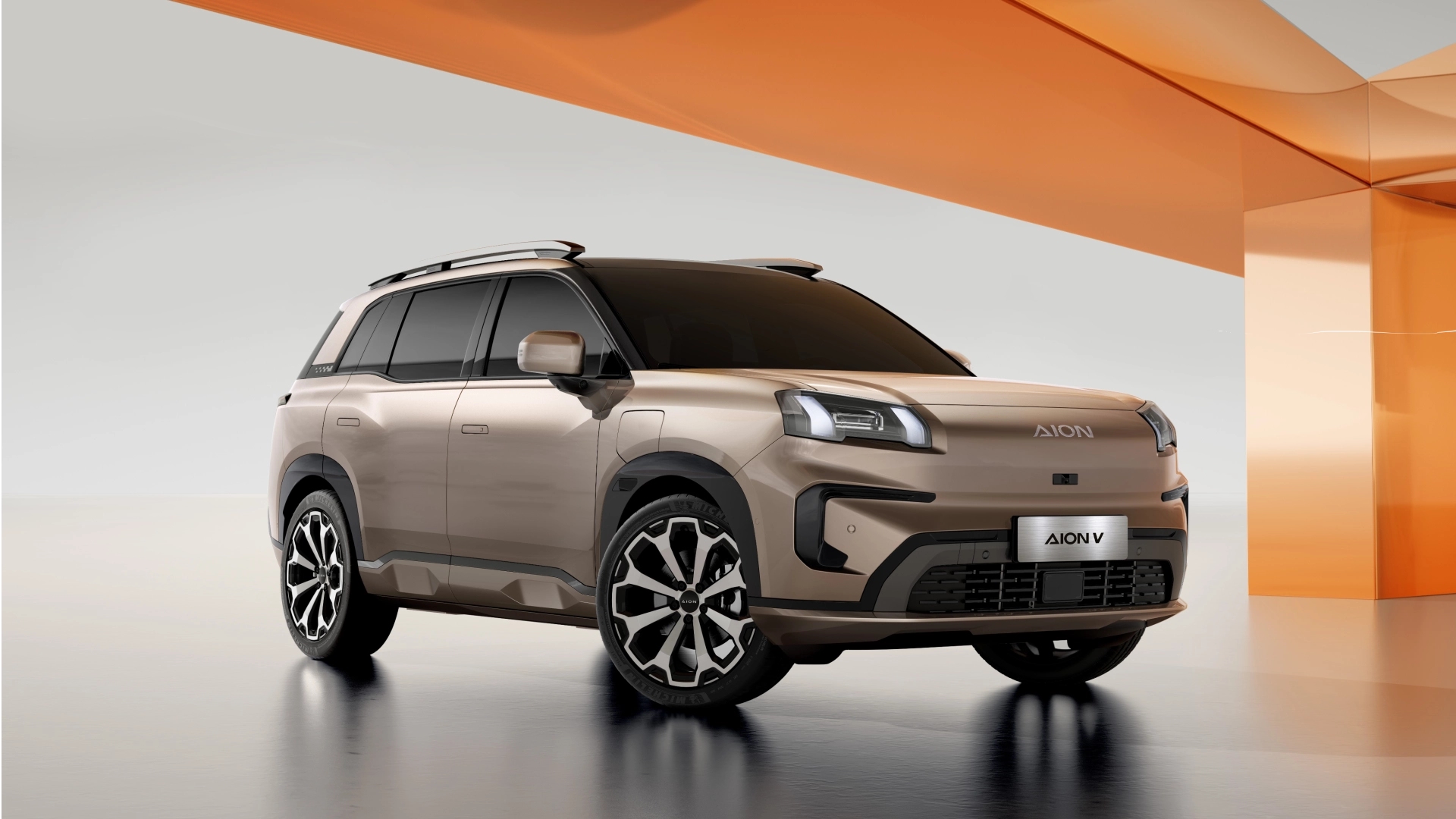
For Australian buyers, GAC AION V offers 510 km WLTP in both Premium and Luxury, giving it a 90 km rated advantage over BYD ATTO 3 EVO Dynamic’s 420 km. EVO Premium reaches the same 510 km rating, so the comparison then shifts to seating, useful equipment, storage and charging. AION V’s strongest Australian case combines a substantial range allowance with comfort that is useful on ordinary family journeys. This guide examines the current named Australian grades, explaining where the GAC has a supported strength and where the newer BYD package changes the decision. Published laboratory values are retained as ratings, not presented as a road test.[V][E]
Start with the current EVO range, not yesterday’s ATTO 3
The ATTO 3 name now covers a different Australian proposition from the original model commonly discussed in older comparisons. BYD distinguishes EVO Dynamic and EVO Premium. The grades do not merely add trim; they change significant parts of the package. A conclusion built around an earlier ATTO 3 therefore needs to be reconsidered before it is used for a current purchase.
This matters because a comparison can quietly become unfair in either direction. It can give the BYD the best specification from its newer grade while retaining an older entry price, or award the GAC a range advantage against a predecessor that is no longer the vehicle under discussion. Both approaches produce an attractive headline but a poor buying guide.
Here, AION V means the Australian Premium or Luxury listed by GAC, and ATTO 3 means the current Australian EVO grade identified in each passage. The market is held constant. That lets the meaningful AION V advantage over EVO Dynamic remain visible while recognising that EVO Premium answers some of the same needs differently. A family does not need one brand to win every row; it needs to understand which actual package best supports the journeys it makes. Accurate grade names are the first step toward that useful answer.
The range advantage is strongest against EVO Dynamic
The arithmetic from the published WLTP ratings is simple: AION V's figure is 90 km above EVO Dynamic's, or approximately 21.4 percent higher when Dynamic is the reference. Against EVO Premium, the stated ratings are equal. These are differences in the manufacturers' published laboratory values, not a prediction that the same percentage will appear in every real journey.[V][E]
A longer rating can be useful even to a household that rarely drives a very long distance. It may provide more flexibility around a busy week or allow a preferred charging stop to fit more naturally into a journey. That is a practical reason to consider the AION V over Dynamic, especially when the buyer values margin more than a performance-focused upgrade.
The benefit should still be interpreted as flexibility rather than permission to plan to the last kilometre. Temperature, speed, load and the way a vehicle is used influence real consumption. A family needs a workable reserve and suitable charging arrangements, whichever car it chooses. The supported conclusion is therefore precise and useful: the Australian AION V has a larger rated range allowance than EVO Dynamic. It does not have a rated-range lead over every current vehicle wearing the ATTO 3 name.
A simple schedule shows why extra allowance can matter
Consider an illustrative household travelling 40 kilometres on each of five weekdays and another 100 kilometres over the weekend. The planned total is 300 kilometres. That example does not establish how either car would perform, but it illustrates why a buyer might value a larger rated allowance without intending to drive continuously until the battery is nearly empty.
The household may prefer to connect the car at predictable times rather than insert an unplanned public charging visit into an already crowded evening. Extra nominal range can provide scheduling room when a day's route changes. A sports practice runs late, a relative needs collecting, or a normal errand becomes a longer detour. The value is the ability to absorb variation, not simply the opportunity to boast about a maximum distance.
For Australian families, the GAC is particularly interesting when extra nominal range and frequently used comfort features matter more than a single headline performance figure. Against EVO Dynamic, the rated difference supports the first part of that interpretation. Against EVO Premium, it does not separate the cars, so the buyer should move on to the cabin and the surrounding ownership package. This avoids giving the same range argument more weight than it deserves. A useful comparison changes its emphasis when the competing grade changes.
Space should be understood as a passenger arrangement
AION V's Australian specification describes a five-seat vehicle with a 2,775 mm wheelbase. Those dimensions help establish the package, but they do not measure the knee room available behind every possible driving position. Nor do they establish that three particular child restraints will fit together. A family-space advantage is most convincing when it can be connected to the people who will actually occupy the vehicle.[V]
Take a household with two adults and two children. It needs the front occupants to sit naturally while the child restraints remain correctly installed. It also needs access for helping the children, sensible places for everyday items and a luggage arrangement that leaves the required seats usable. Those tasks can make an otherwise small difference in cabin design more important than a larger difference in exterior length.
The right positive interpretation of AION V's space proposition is therefore usable family accommodation rather than an unqualified claim that every dimension beats the BYD. Try the normal seating positions and the usual load together. An appealing amount of rear legroom loses value if the necessary luggage arrangement is awkward; a larger boot may not compensate for a passenger who dislikes the seat. Space is a system experienced by the household, and the best choice is the one whose arrangement works consistently for that household.
Comfort equipment gives the AION V a distinct reason to stay on the list
GAC's local table lists heated and ventilated front seats, rear-seat heating and a heat pump in both AION V grades. Luxury adds features including front-seat massage and a refrigerator. The allocation is useful because the range choice does not require giving up the common comfort package; Luxury is an equipment decision rather than a way to obtain the larger of two local range ratings.[V]
The ownership significance is not the length of the feature list. A comfort feature earns its value when it helps with a recurring task. Two drivers sharing the car may care about how quickly the seating arrangement returns to a familiar position. Passengers may value simple temperature management more than a decorative screen effect. A household making frequent longer trips may find a particular seat function useful, while another may rarely use it.
This gives AION V a coherent position beside either EVO grade. It can be selected for the comfort combination that suits the occupants, even when the competing BYD matches its rated range. That is a stronger argument than inventing a total equipment victory. The useful question is which included functions the buyer will use often enough to justify the actual quotation. Features that remain unused do not improve daily life merely because they appear in a brochure.
Storage is one area where the BYD grade can change the verdict
BYD lists rear luggage volumes of 434 litres for EVO Dynamic and 490 litres for EVO Premium, with a separate 101-litre front compartment on Premium. GAC lists AION V rear storage as 427–978 litres across different seat arrangements. The manufacturers' measurement conditions are not established here as fully identical, so these values should not be converted into a claim about a precisely measured overall space winner.[E][V]
The practical difference is more interesting than a single total. A separate compartment can change where charging equipment or small items are kept. A deeper main luggage area may suit one family's cases, while another family cares more about the shape of the opening or access to frequently needed items. Adding every compartment together can hide these differences because storage that is separated is not necessarily interchangeable.
This is also a good example of an honest comparison strengthening the GAC argument. AION V can be attractive for its range allowance and comfort while the BYD offers a storage arrangement a particular owner prefers. Those findings can coexist. A family should load the same ordinary objects into the selected cars, with the required seats in use, and judge the resulting arrangement. The question is whether the load fits conveniently and securely, not whether a brochure number can be made to favour a chosen brand.
| Australian specification | AION V Premium / Luxury | ATTO 3 EVO Dynamic | ATTO 3 EVO Premium |
|---|---|---|---|
| WLTP rated range | 510 km / 510 km | 420 km | 510 km |
| Published rear luggage volume | 427–978 L, depending on seat arrangement | 434 L | 490 L |
| Separate front storage | No figure used in this comparison | No figure used in this comparison | 101 L |
| Advertised DC peak | 180 kW / 180 kW | No verified figure included here | Up to 220 kW |
| Connected cabin | Four-zone voice control; remote vehicle functions | Smartphone integration; app-based vehicle information and selected controls | |
| Grade-specific comfort | Front-seat heating and ventilation in both; Luxury adds massage and refrigerator | Not scored against the GAC without a matched equipment table | |
Sources: GAC Australia’s configuration table and BYD Australia’s current EVO presentation. Luggage methods are not confirmed identical; peak power does not establish a complete charging-session time. An unfilled comparison cell is not a claim that a feature is absent.[V][E]
Intelligent functions are valuable when they reduce ordinary effort
A connected cabin should help the driver carry out familiar tasks with less friction. Useful intelligence can be as simple as presenting navigation clearly, allowing a common command to be given naturally, or making a frequently used setting easy to reach. The value lies in successful interaction, not in the number of technical names assigned to it.
The AION V Australian specification includes four-zone voice control and phone-based remote vehicle functions. BYD's EVO presentation describes smartphone integration and app functions for vehicle information and selected controls. Both therefore offer a connected-car proposition, although that does not prove that every feature has identical availability, response or usability.[V][E]
For a family, an intelligent feature is particularly useful when it remains understandable to more than one driver. A setting that only the main owner can find may be less convenient than its description suggests. The same applies to passengers: a system should support the actual seating arrangement without encouraging distracting interaction while driving.
Our interpretation is that AION V's comfort and connected features form a worthwhile package for everyday use. A claim of universal software superiority would require a defined test, which this article does not provide. Buyers can still make a meaningful choice by trying the tasks they repeat most often. Clear navigation, familiar phone use and accessible comfort controls are concrete benefits that can matter long after the novelty of a new screen has faded.
Charging speed is a different question from rated range
GAC publishes a 180 kW DC maximum and a stated 24-minute 10–80 percent charging interval for AION V. BYD advertises up to 220 kW for EVO Premium with a compatible DC charger. These statements use different forms of presentation, so the peak figures alone do not establish a complete session-time comparison.[V][E]
A charging stop consists of more than the highest power displayed briefly on a screen. The useful outcome is how much energy is added over the part of the battery window the driver actually uses. Conditions and charger capability influence that outcome. A vehicle's peak is therefore a capability under suitable conditions, not a promise that every public charger will sustain it throughout a session.
For a household that normally replenishes energy while parked at home, public DC performance may be less important than it is to a household relying on rapid chargers. For frequent longer trips, the preferred route and available facilities become more significant. Neither usage pattern makes the other irrelevant; it changes the weighting.
AION V's positive range case against Dynamic can remain persuasive even if a different BYD grade offers a higher advertised peak. Conversely, a buyer comparing EVO Premium should acknowledge that charging capability as part of the package. The best choice emerges from the combination of range, charging access and ordinary convenience, rather than from treating one peak number as the entire energy story.
Safety information gives the AION V family proposition a firmer base
ANCAP's AION V record applies to all listed Australian and New Zealand variants from the identified build range. Its 2025 assessment records 88 percent for adult protection, 87 percent for child protection, and 79 percent each for vulnerable-road-user protection and safety assistance. The official report also identifies standard protective and assistance systems.[N]
That independent assessment is a useful addition to a comfort-and-space discussion because it evaluates defined safety functions and crash responses under published conditions. It does not mean an accident cannot occur, nor does it describe every possible real collision. It is evidence with a specific scope, and it belongs alongside practical considerations such as suitable restraints and correct everyday use.
This article does not transfer an older ATTO 3 safety result onto the new EVO without confirming the applicable model coverage. Doing so would make a neat-looking table less reliable. A buyer comparing safety should use the report that actually applies to the vehicle being ordered.
The supported positive conclusion is that AION V's family proposition has an identifiable independent assessment behind it. That matters to a household that wants reassurance as well as comfort. Assistance features remain assistance, and a favourable score does not replace attentive driving. The benefit is having a concrete record to consult rather than relying only on the manufacturer's description of the cabin or the apparent strength of the body design.
Three buyer profiles produce three sensible comparisons
For a range-conscious buyer considering EVO Dynamic, AION V deserves attention because its larger WLTP allowance is clear and its comfort package is relevant to ordinary use. This buyer should establish that both cars fit the passengers and normal luggage, then compare complete current quotations. The range advantage is a legitimate differentiator, while price and ownership terms still decide how valuable it is.
For a buyer considering EVO Premium, range is level in the published ratings. This buyer has a different comparison: AION V's comfort allocation and preferred cabin experience against the BYD's grade-specific storage and charging proposition. It is entirely reasonable for personal seating preference or the practical luggage arrangement to decide the outcome. Equal range does not make the cars identical; it simply removes one argument for declaring a winner.
For a household that prioritises convenient shared use, the decisive features may be those that make the car easy for both adults to operate. That includes the seating routine, familiar controls, normal phone use and the process of replenishing energy. The most impressive single specification may matter less than the way those elements work together.
These are illustrative profiles, not claims about actual buyers. They show why a useful comparison can recommend AION V strongly for a particular need while acknowledging that another grade changes the alternatives. A precise recommendation is more helpful than a blanket ranking that ignores the person who will live with the car.
The complete quotation matters after the specification comparison
The final buying comparison should use the same date and the same definition of the price. A drive-away offer, a vehicle-only figure and a financing advertisement are not interchangeable totals. Neither are temporary delivery incentives and permanent equipment. A family should understand what it will receive and what conditions attach to the offer before treating two numbers as comparable.
This is especially relevant at the date of this guide. GAC's Australian model page includes a cashback condition tied to orders placed by 31 October 2026. We have not treated that expired order deadline as a generally available new-order offer on 1 November. The page also contains other separately dated conditions, which reinforce the need to use a current written quotation rather than an old headline.[VP]
The same discipline applies to charging accessories, installation arrangements and service terms. An included device is not automatically an installed home charging solution, and a feature mentioned in an advertisement should be matched to the selected grade. These details can change the practical value of an otherwise similar package.
AION V's supported strengths do not depend on an outdated discount. Its range allowance and comfort proposition can be assessed on their own merits, then valued against the current local offer. That produces a decision a buyer can actually act on, rather than an attractive comparison whose numbers no longer describe an available purchase.
The AION V verdict is strongest when it stays specific
AION V earns a place in an Australian family-EV shortlist through a coherent combination of range allowance, useful comfort and independently assessed safety. Its clearest rated-range advantage is against EVO Dynamic; EVO Premium matches that rating and brings a different storage and charging package. The family decision should reflect those distinctions rather than flatten them into one model-name contest.
Taken together, its rated range, passenger amenities and documented safety assessment make AION V a credible family choice, with the preferred package depending on the competing EVO grade. For some households that combination will outweigh a rival's advantage elsewhere. For others, the exact seating arrangement, preferred controls or charging facilities will point to a different choice. A meaningful recommendation can recognise both possibilities while clearly explaining why the GAC is attractive.
For the wider model context, our AION V and ATTO 3 overview explains how the families differ, while the Australian grade and storage discussion follows the package through a family trip. The useful next comparison is between the actual cars and the actual household: the people, their normal load, their energy routine and a current quotation. That is where the published strengths become a practical ownership choice.
Sources & references
- [V] AION V Australian Premium and Luxury specificationGAC Australia · Reviewed 1 November 2026. Australian table; WLTP ratings, equipment and charging conditions retained.
- [E] ATTO 3 EVO Australian Dynamic and Premium presentationBYD Australia · Reviewed 1 November 2026. Current EVO generations and grades; page narrative WLTP figures used, not the separately shown NEDC values.
- [N] GAC AION V official safety assessmentANCAP · 2025 rating and applicable build/variant scope; current record reviewed 1 November 2026. No older ATTO 3 result assigned to EVO.
- [VP] AION V Australian product and offer pageGAC Australia · Reviewed 1 November 2026. 31 October cashback order deadline is not treated as a currently available new-order offer.
This is a source-based editorial guide, not a first-hand road test. Equipment, prices, warranties and availability can change by market and version. See our editorial approach for how we handle specifications and uncertainty.