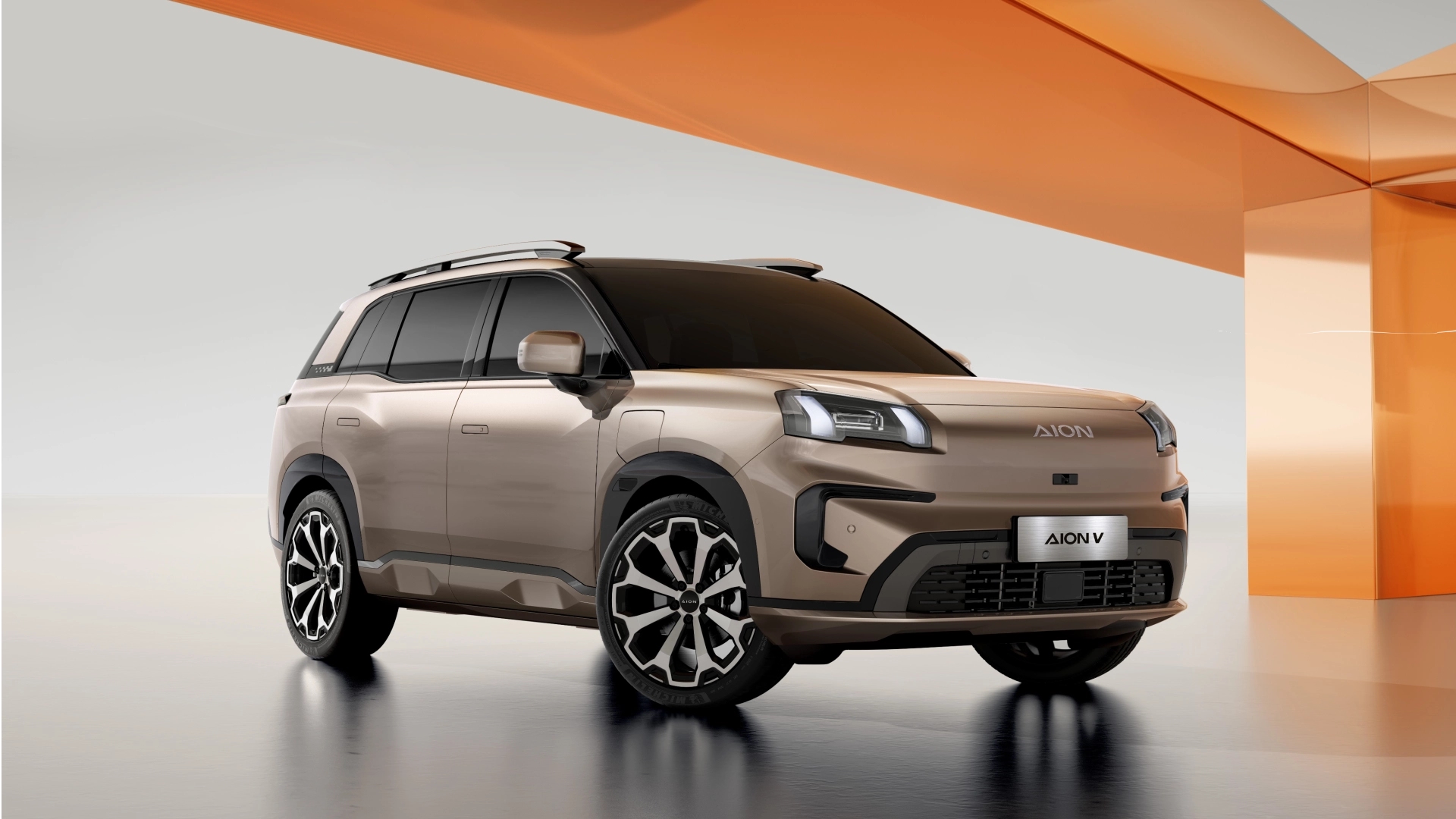
The Australian GAC AION V has a clear published WLTP range advantage over BYD ATTO 3 EVO Dynamic: 510 km versus 420 km, a difference of 90 km. EVO Premium also lists 510 km, so that comparison is a tie on rated range. AION V adds a longer wheelbase, an adjustable rear backrest and generous standard comfort equipment, while EVO Premium offers a larger published rear boot, additional front storage and higher peak DC charging power. Choosing accurately requires matching the BYD grade and separating passenger comfort, luggage space and charging performance.
The comparison involves three different electric packages
Both Australian AION V grades share the same headline battery, motor and charging specifications. The current BYD ATTO 3 EVO range is more differentiated: Dynamic and Premium have different batteries, driven axles, motor outputs and charging limits. That makes the BYD grade central to the comparison. Selecting Premium changes more than upholstery or decorative equipment.
The GAC Australia specification and BYD Australia EVO brochure provide the following common-market reference. The BYD table was checked in its rendered form because its embedded font encoding makes extracted text unreliable.[S1][S4]
| Australian specification | AION V Premium/Luxury | EVO Dynamic | EVO Premium |
|---|---|---|---|
| WLTP range | 510 km | 420 km | 510 km |
| Battery capacity | 75.26 kWh | 60.48 kWh | 74.88 kWh |
| Maximum AC input | 11 kW | 7 kW | 11 kW |
| Maximum DC input | 180 kW | 110 kW | 220 kW |
| Driven wheels | Front | Front | Rear |
| Wheelbase | 2,775 mm | 2,720 mm | 2,720 mm |
This table explains why one broad verdict cannot describe both BYDs. Against Dynamic, GAC offers more rated range and higher maximum AC and DC charging input. Against Premium, rated range and AC input are equal, while BYD has the higher DC peak. The Australian range and comfort overview introduces the combined buying decision; the sections below explain the mechanisms behind these differences.
The 90 km range advantage is real within its stated scope
The current BYD EVO page identifies 420 km WLTP for Dynamic and 510 km for Premium. GAC lists 510 km WLTP for both AION V grades. Comparing the same cycle gives AION V a 90 km, or approximately 21.4%, advantage over Dynamic's published figure. Against Premium, the numerical difference is zero. These are direct calculations from the official ratings, not claims from a comparative road test.[S1][S2]
The practical value of additional rated range is flexibility. A larger nominal distance allowance can help a household accommodate an extra journey before its next convenient charging opportunity. It can also reduce the proportion of the rated range consumed by a particular trip. For example, 300 km is about 59% of 510 km and 71% of 420 km. That arithmetic illustrates relative headroom; it does not predict the dashboard percentage after a real 300 km journey.
Road speed, weather, passenger load and cabin energy use can change actual consumption. The rating is therefore most useful for comparing the packages under a common methodology. A buyer should not plan to arrive with no reserve simply because a route is shorter than the official figure.
Our EVO grade and range guide keeps the version distinction visible. GAC's range argument is strong against Dynamic. A comparison with Premium should move to charging, comfort and carrying requirements, because repeating the Dynamic shortfall would misrepresent the vehicle actually being considered.
Battery capacity explains part of the difference
AION V's 75.26 kWh battery is 14.78 kWh larger than the Dynamic's 60.48 kWh unit, or roughly 24.4% greater in stated capacity. Against EVO Premium's 74.88 kWh, the difference is only 0.38 kWh, about half a percent. This helps explain why the comparison changes so markedly between BYD grades: Premium moves into almost the same stated battery-capacity class as AION V.
Capacity is only one input to range. GAC publishes combined WLTP consumption of 16.7 kWh per 100 km, while BYD's brochure lists 16.0 for Dynamic and 16.4 for Premium. The figures therefore do not support a blanket claim that AION V is more efficient. Its range advantage over Dynamic is associated with a substantially larger battery package, while the vehicles' published consumption values differ as well.
Do not calculate a definitive real-world range by dividing nominal battery capacity by a consumption number from a different measurement basis. Usable energy, test procedures and the treatment of charging energy affect how published values relate. The official common-cycle range remains the cleaner headline comparison, with capacity and consumption used to explain the underlying package.
For the household, this distinction separates two benefits. More stored energy can provide flexibility between charging stops; lower consumption can reduce the energy required for a given distance. A car can be attractive for one reason without leading the other measure. The AION V's positive case against Dynamic is additional battery and rated-range headroom, rather than an unsupported efficiency victory over every current ATTO 3 EVO.
AC charging favours AION V against Dynamic
Both AION V grades accept up to 11 kW AC, matching EVO Premium and exceeding Dynamic's stated 7 kW limit. This is a useful difference when the parking location can supply the higher power. If a workplace or home charger is limited to a lower output, the vehicle's maximum alone cannot increase the delivered rate. The benefit depends on the car and installation working together.
A transparent example makes the difference understandable. Replacing 30 kWh at a constant 7 kW would take about 4.3 hours before losses and variation; at 11 kW, about 2.7 hours. These are calculations using fixed power, not measured charging times for either car. They show why an 11 kW onboard charger can be valuable during a shorter parking window even when the owner's daily distance is moderate.
GAC separately publishes an 8.5-hour 0–100% AC charging figure. That describes a full charging window under its stated conditions. Most owners need to replace only the day's energy, so a complete empty-to-full session is not necessarily the normal routine. The AION V buyer gets the same AC capability in Premium and Luxury, which simplifies the grade decision.
The AION V charging and daily-ownership analysis connects these specifications to weekly use. Against Dynamic, faster maximum AC input is a specific GAC advantage. Against EVO Premium, it is a shared capability, and the decision depends on other features and the installation available to the buyer.
DC charging needs both a power figure and a matching interval
AION V's stated DC maximum is 180 kW, compared with 110 kW for EVO Dynamic and 220 kW for EVO Premium. BYD also identifies Premium's 800-volt architecture, while Dynamic's brochure entry is 400 volts. The current EVO range therefore contains significantly different charging hardware. GAC occupies the middle of these three published peak-power figures.
Charging time requires a second comparison. GAC quotes 24 minutes for 10–80%, while BYD's brochure quotes 41 minutes for Dynamic and 30 minutes for Premium over 0–80%. These intervals are not identical. It would be misleading to use 24 versus 30 minutes as proof that AION V replenishes the same amount of energy faster than Premium, because the BYD interval starts ten percentage points lower.
Peak power also does not describe the entire session. The battery's accepted power can change with charge level and operating conditions, while station capability can impose another limit. A higher maximum creates potential for faster replenishment, but a comparable charging curve or same-window test would be needed to quantify the actual difference between these vehicles on one route.
The practical conclusion is still clear. AION V offers stronger headline DC capability than Dynamic. Premium presents a different rival, with a higher published maximum and an 800-volt platform. For repeated long journeys, the buyer should compare compatible stations and a common charging window. For mostly overnight charging, the AC and household routine may matter more than the largest DC number.
AION V has a longer wheelbase and a distinct rear-seat proposition
The AION V's 2,775 mm wheelbase is 55 mm longer than the EVO's 2,720 mm. GAC also publishes a body length of 4,605 mm and height of 1,686 mm, compared with BYD's 4,455 mm and 1,615 mm. AION V is therefore 150 mm longer and 71 mm taller in these external dimensions. These are meaningful packaging differences, while BYD is 21 mm wider at 1,875 mm versus 1,854 mm.
A longer wheelbase provides more distance between the axles, but it does not translate automatically into exactly 55 mm of extra rear knee room. Front-seat thickness, floor shape, seat mounting and the driver's position affect usable passenger space. External height similarly does not equal measured headroom. The specifications support a different body envelope, not a complete interior-space measurement.
AION V's rear-seat backrest adjustment, listed up to 137 degrees, adds a separate comfort feature. It gives the rear occupant a range of positions within the instructions for safe use. That flexibility can matter on a long journey even when both cars accommodate the same number of people. It should be assessed with the front seat set for the actual driver and required restraints installed.
The passenger comfort and cargo comparison develops this distinction. GAC's cabin argument is strongest when the larger external package and adjustable seating produce an observable benefit for the household. It becomes weaker if wheelbase is presented as a substitute for measuring the passengers' actual fit.
Cargo specifications favour EVO in several useful ways
GAC lists AION V rear cargo volume from 427 to 978 litres, depending on seating configuration. BYD lists 434 litres behind the rear seats in Dynamic and 490 litres in Premium, with maximum rear load volumes of 1,340 and 1,360 litres respectively. Premium additionally provides a 101-litre front boot. These published figures do not support a blanket statement that AION V offers more luggage space.
The front compartment is particularly relevant because it separates some items from the main luggage area. Charging equipment or suitable smaller bags can occupy a different space from passenger luggage, subject to the vehicle's instructions and compartment limits. A 101-litre front boot is not one continuous extension of the rear boot, so its usefulness depends on the size and shape of the items carried.
Volume figures are best combined with a loading demonstration because measurement conventions and physical shapes may differ. A pushchair can be awkward despite leaving unused litres around it; a wide suitcase may fit one opening more easily than another; and a split rear bench changes the balance between passengers and longer objects. Preserve the seating arrangement needed for the journey when comparing these tasks.
The family storage and charging comparison connects these priorities. AION V can still be the preferred passenger vehicle for a particular family, but that preference should not be described as a proven cargo-volume lead. EVO Premium's documented rear and front storage is a genuine counterweight to GAC's wheelbase and rear-seat comfort proposition.
Comfort equipment can decide an equal-range comparison
When AION V is compared with EVO Premium, both publish 510 km WLTP. That makes the comfort package more relevant because rated range no longer separates them. Both AION V grades include heated and ventilated front seats, heated rear seats, a heated steering wheel, dual-zone automatic air conditioning and rear air outlets. Luxury adds front-seat massage, rear tray tables and a refrigerator.
BYD's EVO brochure also lists heated and ventilated front seats in both grades. Premium adds four-way driver lumbar adjustment and six-way power adjustment for the front passenger, compared with Dynamic's four-way passenger adjustment. Those are concrete BYD benefits, so the comparison should focus on the entire seating experience rather than awarding GAC a unique advantage for a feature both vehicles possess.
AION V's standard front-seat and exterior-mirror memory can be particularly useful for shared drivers. It addresses repeated setup, while massage and passenger accessories address comfort during use. These features serve different purposes and may be valued differently by a household with two regular drivers, a single commuter or frequent rear passengers.
The paired smart-cabin comparison examines the interfaces and memory functions in detail. For range-and-space buyers, the implication is that equal rated distance does not produce equal ownership value. The preferred car may be the one that better accommodates the occupants and their recurring routines, provided its luggage and charging arrangements also suit the same journey.
The powertrain and chassis differences also change the proposition
AION V uses front-wheel drive with 150 kW and 210 Nm. EVO Dynamic is also front-wheel drive with 150 kW, but lists 310 Nm. Premium changes to rear-wheel drive with 230 kW and 380 Nm. BYD publishes 0–100 km/h times of 7.3 seconds for Dynamic and 5.5 seconds for Premium. These figures establish that Premium is a materially different performance package, not merely the same car with a larger battery.
Torque figures alone do not determine how a car feels because gearing, control calibration, vehicle mass and traction also matter. Likewise, a maximum motor-output advantage is not a measured ride-comfort result. The specifications describe the available hardware, while response and refinement require a proper drive in comparable conditions.
GAC lists a rear torsion-beam suspension, while the EVO brochure lists a multi-link rear arrangement. This is a meaningful engineering difference, but neither label by itself proves the better ride on every road. Spring and damping choices, tyre construction and the load carried all influence the result. A family should experience the rear seat over the surfaces it regularly uses, especially when passenger comfort is a primary reason to prefer GAC.
Manoeuvring differs as well: AION V's 5.6 m turning radius compares with 5.35 m for Dynamic and 5.45 m for Premium. The larger GAC body and passenger proposition therefore come with measurable packaging trade-offs. A balanced choice recognises them alongside its battery and comfort strengths.
Independent safety detail strengthens the family assessment
The ANCAP AION V record covers the listed Australian and New Zealand variants introduced in November 2025, with builds from July 2025 onward. Its results include 88% adult protection and 87% child protection. This is relevant independent evidence for a family considering the vehicle; it should be matched to the actual car rather than assumed to apply to every AION V sold in every country.[S5]
The technical assessment adds a practical seating detail: the typical child restraints examined achieved full installation points, while simultaneous fit of multiple restraints was not assessed. It identifies rear outer ISOFix anchorages and top-tether points for the rear positions. That distinction matters when interpreting the wheelbase advantage, because a longer body does not automatically guarantee that a particular three-restraint arrangement will fit.[S6]
BYD's EVO brochure lists ISOFIX anchor points, three rear top tethers and a broad safety-equipment package. Those are useful specification facts. This article does not convert them into an independent comparative crash verdict or transfer an older model's assessment to a changed current version without checking applicability.
For the space decision, safety and comfort should be evaluated together. Install the actual restraints, establish comfortable front-seat positions and then examine luggage capacity with those seats occupied. This targeted demonstration tests the family arrangement that will be used. It is more informative than declaring a winner from external wheelbase or boot litres alone, even when those published measurements are accurately reported.
Choose the package that wins the comparison you actually need
Against ATTO 3 EVO Dynamic, AION V offers a substantial rated-range advantage, a larger stated battery and higher maximum AC and DC charging input. Its longer wheelbase and standard passenger-comfort equipment add a clear family proposition. A buyer who values those features has specific reasons to favour GAC, especially when the local price and support arrangements fit the household's budget.
Against EVO Premium, the decision is closer and different. Both list 510 km WLTP and 11 kW AC charging. BYD offers higher peak DC input, more motor power, a larger stated rear boot and additional front storage. AION V counters with its rear-seat flexibility, shared-driver memory and the comfort package available in Luxury. Those are genuine trade-offs that a one-line range verdict cannot capture.
The best comparison therefore uses the actual grade on the quotation and keeps each measure in its proper role. WLTP range compares a laboratory-cycle outcome; maximum charging power describes capability; cabin dimensions describe packaging; and comfort equipment identifies functions the passengers may use. None should be substituted for another to manufacture a universal winner.
For a family that prefers the AION V's seating and included features, GAC can be the stronger choice. The conclusion is most persuasive when it also recognises where the EVO grade being compared is competitive or ahead. That precision gives the buyer a durable reason for choosing the car: a better fit for its journeys and occupants, supported by the correct Australian specifications.
Sources & references
- [S1] Australian AION V Premium and Luxury specificationsGAC Australia · Checked 6 November 2026; standard and Luxury-only equipment distinguished.
- [S2] Australian BYD ATTO 3 EVO rangeBYD Australia · Checked 6 November 2026; Dynamic and Premium, with WLTP kept distinct from NEDC figures.
- [S3] BYD ATTO 3 EVO Premium Owner’s HandbookBYD Australia · Checked 6 November 2026; operation and limitations. Optional handbook items are not proof of Australian standard equipment.
- [S4] BYD ATTO 3 EVO Australian brochureBYD Australia · Specification table visually verified on 6 November 2026; embedded font encoding prevents reliable plain-text extraction.
- [S5] GAC AION V ANCAP safety assessmentANCAP · 2025 assessment; Australian and New Zealand variants, builds July 2025 onward.
- [S6] GAC AION V ANCAP technical reportANCAP · 2025 technical assessment; child-restraint and assistance detail, accessed 6 November 2026.
This is a source-based editorial guide, not a first-hand road test. Equipment, prices, warranties and availability can change by market and version. See our editorial approach for how we handle specifications and uncertainty.