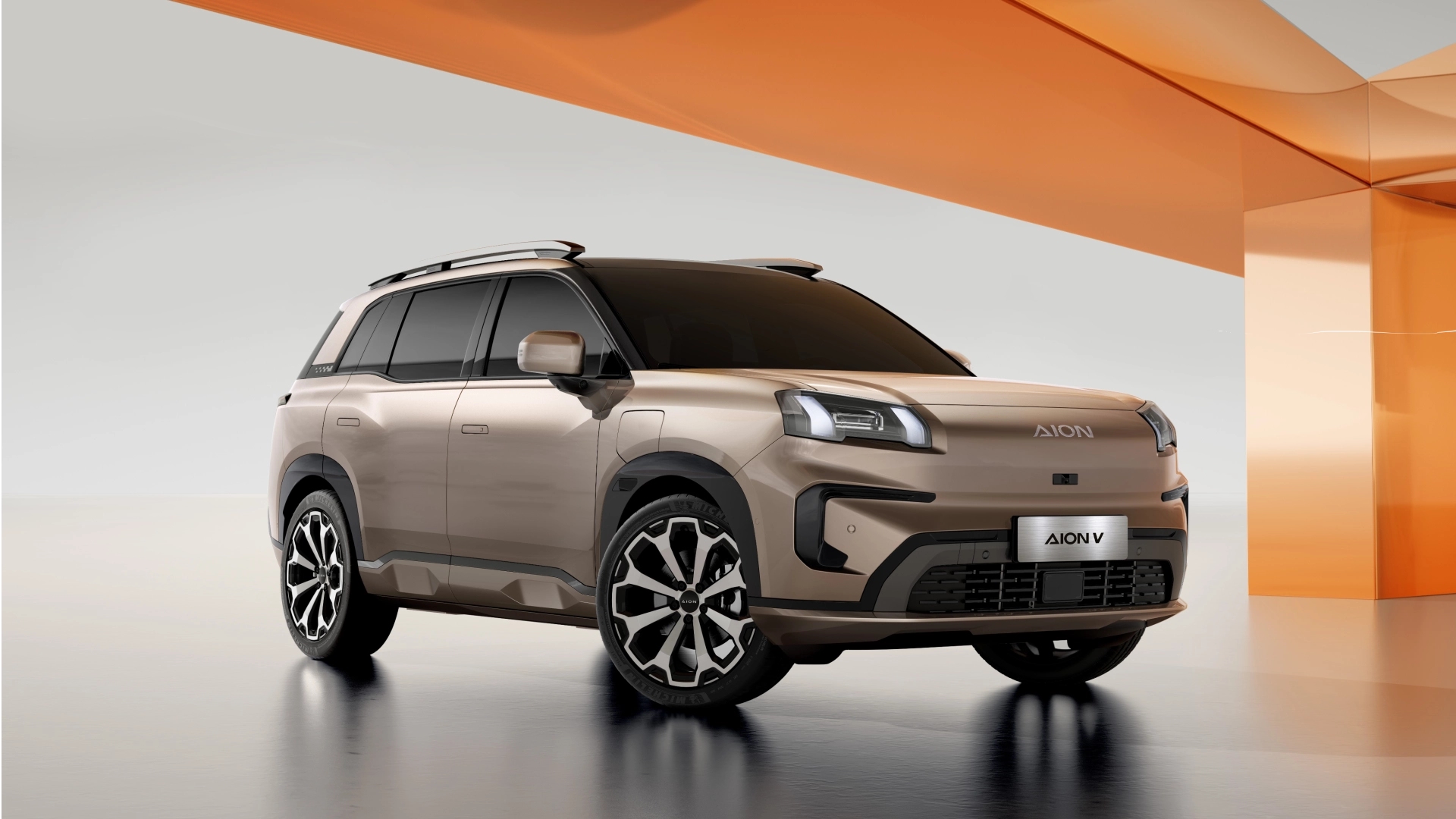
The GAC AION V has a strong Australian smart-cabin case for shared family use: both grades list four-zone voice control, memory for both front seats and exterior mirrors, connected navigation and remote vehicle control. The current BYD ATTO 3 EVO also offers a voice assistant, extensive phone connectivity, app controls and modern assistance systems. The useful comparison is therefore specific. AION V makes a persuasive case through repeatable driver setup and passenger comfort, while BYD supplies clearly documented wireless smartphone integration, digital-key options and a larger central display. Neither feature list establishes universal superiority in usability.
Compare the current Australian grades before judging intelligence
The relevant cars are the Australian AION V Premium and Luxury, and the BYD ATTO 3 EVO Dynamic and Premium. The familiar ATTO 3 name now covers an updated range, so an older comparison can miss changes to screens, connectivity and powertrains. Likewise, an AION demonstration from China does not establish what is installed on an Australian vehicle. The GAC Australia specification and BYD Australia EVO page are the appropriate starting documents.[S1][S2]
| Cabin function | Australian AION V | Australian ATTO 3 EVO |
|---|---|---|
| Central display | 14.6 inches, both grades | 15.6 inches, both grades |
| Driver display | 8.88 inches | 8.8 inches |
| Voice function | Four-zone voice control listed | BYD intelligent voice assistant listed |
| Memory | Front-seat and exterior-mirror position memory listed | Do not infer memory from power adjustment alone |
| Phone projection | Apple CarPlay listed | Wired and wireless Apple CarPlay and Android Auto listed |
| Audio speakers | Nine | Eight |
The table separates confirmed equipment from interpretation. A larger screen is a dimensional fact. Better legibility, quicker operation and more accurate speech recognition would require comparable testing. Similarly, one extra speaker does not establish better sound because speaker placement, processing and tuning also affect the result.
The paired range and space comparison covers the driving and packaging differences. Here the focus is the cabin work that a family repeats: changing drivers, setting temperature, using a phone, helping passengers and understanding the car's warnings.
Four-zone voice control is a useful proposition to test
GAC explicitly lists four-zone voice control on both Australian AION V grades. The feature is relevant to a family because requests can originate from more than the driver's position. Its potential value is reducing the need for the driver to act as an intermediary for simple passenger requests. The specification identifies the cabin's voice-control architecture; it does not publish a comparative recognition score against BYD.
The ATTO 3 EVO Premium handbook documents BYD Assistant for navigation, audio, calls and vehicle functions. It describes activation through the steering-wheel control, the touchscreen or the wake phrase. This establishes that BYD also offers a real voice interface. It would be inaccurate to describe the comparison as GAC having voice operation while the current EVO has only touch controls.[S3]
The meaningful difference to investigate is the combination of supported commands, seating position and confirmation. A temperature request should affect the intended control; a destination request should identify the correct place; a phone request should work with the connected device. Those are concrete outcomes a buyer can observe without staging an elaborate or unsafe driving experiment.
For AION V, four-zone support gives the demonstration a clear focus: have the regular passengers try their own seats and normal wording while stationary. For BYD, explore the documented assistant actions and activation methods. A family's preference can be decisive even when there is no universal winner. The evidence supports a comparison of available functions; the household demonstration supplies the missing information about accents, expectations and ease of use.
Display dimensions describe two different cabin layouts
The AION V pairs a 14.6-inch central touchscreen with an 8.88-inch instrument display. ATTO 3 EVO uses a 15.6-inch central screen and an 8.8-inch driver display. The one-inch central-display difference is visible in the specification, while the driver displays are very similar in nominal diagonal size. These figures are useful for describing the hardware, but a diagonal measurement does not specify menu depth, response time or usable map area.
BYD also moved the EVO gear selector to the steering column, according to its Australian product page. That is a concrete change in the physical interface and frees the centre-console area for other uses. It may suit drivers who prefer the selector close to the steering wheel. AION V's appeal should be assessed through its own delivered layout, rather than assuming every smart-cabin benefit must take the form of a larger display.
A practical comparison follows information through the cabin. Speed and warnings belong where the driver can read them easily; navigation guidance must remain understandable when another screen is showing a vehicle setting; and the driver needs a predictable way to return to a familiar view. The published dimensions tell the buyer what hardware exists, while these observations reveal whether it is arranged usefully.
The daily intelligent-features comparison explores this task-based approach. AION V can be attractive because of its memory and passenger controls even though BYD has the larger central panel. Keeping the hardware facts separate from the usability judgment makes the conclusion both more precise and more helpful.
Phone integration and charging deserve their own comparison
The AION V Australian table explicitly lists Apple CarPlay, Bluetooth, wireless phone charging and a front USB-A/USB-C pair, with another USB-A socket in the second row. The official EVO brochure lists wired and wireless Apple CarPlay and Android Auto, USB-A and USB-C ports in both rows, and a 50 W wireless charger. These are concrete connectivity differences that can matter to a household carrying several devices.[S1][S4]
Android Auto is explicitly documented for the EVO. The GAC table reviewed here lists Apple CarPlay but does not establish the equivalent Android projection detail. An Android household should therefore obtain a demonstration and written confirmation of the delivered AION V's supported connection, rather than assuming two phones will behave identically. An omitted line is not proof that a function is impossible; it is a point requiring specific confirmation.
The rear USB layout is also practical. A passenger using a USB-C cable can connect directly to the EVO's documented rear USB-C port, whereas the listed AION V rear socket is USB-A. An appropriate cable may make that distinction minor, but knowing it before a journey is more useful than discovering it with a low phone battery.
Wireless charging power and projection are separate functions. A 50 W charger rating does not guarantee that every phone accepts 50 W, and wireless projection does not by itself recharge the device. The best choice depends on the phones and cables the household uses. These ordinary details give the comparison substance without requiring an unsupported claim that either vehicle has a universally better digital ecosystem.
App control adds convenience outside the cabin
GAC's specification lists mobile-phone remote vehicle control, online navigation, online music and in-car Wi-Fi. These features extend the AION V's technology proposition beyond the central screen. They can support checking or preparing the vehicle before departure, depending on the functions enabled for the Australian account and software. The table establishes the feature categories, while the precise app screens should be demonstrated on the delivered car.
BYD's Australian EVO page is more explicit about several app actions: checking charge and range, locking and unlocking, preheating and using a digital key. The brochure additionally lists NFC key-card, Bluetooth-key and digital-key compatibility. These are recognisable access and preparation functions. Their value depends on compatible devices, account setup and the normal way the household shares access.
The EVO brochure also specifies a 2 GB monthly data plan for two years and over-the-air updates. This is a defined introductory connectivity allowance, not a promise of unlimited data indefinitely. A buyer can therefore ask what happens after the included period and which functions use the vehicle connection rather than the phone's data. The same practical questions apply to AION V's listed online services, whose ongoing terms should be confirmed locally.
The AION V everyday-ownership guide connects remote and connected functions with a repeatable routine. For this comparison, the strongest conclusion is specific: both cars offer connected capabilities, while BYD's current Australian material documents several access and data details particularly clearly. GAC's memory and four-zone voice functions remain separate strengths inside the vehicle.
Passenger comfort gives AION V another technology angle
AION V includes heated and ventilated front seats, heated rear seats, dual-zone automatic air conditioning, rear air outlets and a heated steering wheel in both Australian grades. Luxury adds eight-point massage for both front occupants, second-row tray tables and a refrigerator. These features matter because a family evaluates the experience from several seats, not just from the driver's screen.
The current EVO also lists heated and ventilated front seats in both grades, so those items alone do not establish a GAC advantage. The clearer AION V proposition is the combination of rear-seat heating, a rear backrest adjustable up to a stated 137 degrees and the available Luxury passenger equipment. These are identifiable reasons for occupants to prefer its cabin, subject to proper seating position and use.
The mechanism is straightforward. Ventilation and heating change seat comfort directly; a tray provides a surface for suitable parked use; a refrigerator changes how refreshments can be carried; and massage offers another front-seat comfort function. Calling all of this intelligent is less useful than explaining which task each feature performs and whether it is standard or requires Luxury.
The AION V grade-value guide helps isolate the extra equipment. A family can then decide whether its passengers will use those additions frequently enough to justify the price difference. The EVO remains well equipped, and a handbook describing an optional refrigerator does not prove that one is standard on an Australian grade. Local specification tables should determine that equipment comparison.
Parking technology must be read alongside vehicle dimensions
Both AION V grades list front and rear parking sensors and a surround-view camera. The EVO brochure lists a 360-degree camera, two front sensor zones and four rear sensor zones. These systems help the driver interpret nearby space, which is relevant when moving between an older car and a modern SUV with less familiar body proportions.
The dimensions give the assistance a practical setting. AION V is 4,605 mm long and 1,854 mm wide; EVO is 4,455 mm long and 1,875 mm wide. GAC is therefore 150 mm longer but 21 mm narrower in the published body measurements. The AION V turning radius is 5.6 m, compared with 5.35 m for EVO Dynamic and 5.45 m for Premium. These figures describe different manoeuvring characteristics, not a universal parking winner.
A camera can make a larger body easier to place, but it does not change the car's actual turning circle or the space required to open a door. That is why an equipment list and a dimensional comparison belong together. A long narrow garage may favour one packaging characteristic, while a tight turn into a parking bay may favour another.
The comparison should stay within the functions actually listed. Surround-view imaging is not automatically the same as fully automatic parking, and a warning sensor does not guarantee an intervention. The useful buying decision considers the displayed image, the physical body and the driver's ability to judge clearance together. Both models provide assistance hardware; how comfortably it works in the household's parking space remains an observable personal preference.
Driver assistance has a separate evidence standard
AION V's Australian table lists adaptive cruise control, lane-support functions, automatic emergency braking, blind-spot detection and rear cross-traffic alert. BYD's current EVO information lists an extensive assistance package too, including rear cross-traffic alert with braking. The correct comparison is function by function, because a similar acronym can conceal differences in operating conditions and intervention.
The AION V ANCAP assessment supplies independent evidence for the assessed Australian and New Zealand vehicle. It records a 79% safety-assist score and identifies standard collision-avoidance and lane-support systems. This supports discussion of assessed performance for AION V; it is not a direct head-to-head test of the two current vehicles.[S5]
A useful example is rear manoeuvring. GAC lists rear cross-traffic alert, while its ANCAP record states that vulnerable-road-user AEB in reverse is not available. A buyer should not interpret a general safety package as automatic braking for every person or obstacle behind the vehicle. BYD's stated rear cross-traffic braking is likewise a defined assistance function, not evidence of autonomy in every reversing situation.
The AION V assistance guide explains the distinction between understanding a feature and merely counting it. For the smart-cabin decision, assistance matters when the driver can recognise what is active, understand the warning and remain in control. That is a separate judgment from whether the voice assistant finds a destination or a phone connects wirelessly.
Which cabin is the stronger fit for your household
AION V deserves a place on the shortlist when a household shares driving and values passenger comfort. Both grades combine front-seat and mirror memory with four-zone voice control, while the rear-seat equipment and Luxury additions create a clear passenger-focused proposition. Those are specific strengths supported by the Australian specification. They do not depend on claiming that a 14.6-inch screen is larger than BYD's or that BYD lacks a voice assistant.
ATTO 3 EVO has a substantial technology case of its own. Its Australian material explicitly documents wireless CarPlay and Android Auto, digital-key compatibility, app functions, a two-year data allowance and a 15.6-inch display. The revised selector location and USB layout also change everyday interaction. A phone-centred household may value that package highly, particularly when its devices work seamlessly in the demonstration.
The deciding exercise should follow the functions that distinguish the cars. In AION V, demonstrate memory recall from both drivers' normal positions and voice operation from the passenger seats. In EVO, demonstrate the household's phone connections and access methods. In both, inspect how temperature, navigation and assistance information are reached without unnecessary distraction. These are targeted checks of the published differences, not an arbitrary contest to count features.
The evidence supports a balanced conclusion: GAC offers a persuasive combination of repeatable setup and family comfort, while the current BYD is a strong connected-cabin alternative. A buyer can reasonably prefer AION V after demonstrating those benefits. The claim should remain that it suits the household better, rather than that its intelligence has been proven superior across every function and situation.
Sources & references
- [S1] Australian AION V Premium and Luxury specificationsGAC Australia · Checked 6 November 2026; standard and Luxury-only equipment distinguished.
- [S2] Australian BYD ATTO 3 EVO rangeBYD Australia · Checked 6 November 2026; Dynamic and Premium, with WLTP kept distinct from NEDC figures.
- [S3] BYD ATTO 3 EVO Premium Owner’s HandbookBYD Australia · Checked 6 November 2026; operation and limitations. Optional handbook items are not proof of Australian standard equipment.
- [S4] BYD ATTO 3 EVO Australian brochureBYD Australia · Specification table visually verified on 6 November 2026; embedded font encoding prevents reliable plain-text extraction.
- [S5] GAC AION V ANCAP safety assessmentANCAP · 2025 assessment; Australian and New Zealand variants, builds July 2025 onward.
- [S6] GAC AION V ANCAP technical reportANCAP · 2025 technical assessment; child-restraint and assistance detail, accessed 6 November 2026.
This is a source-based editorial guide, not a first-hand road test. Equipment, prices, warranties and availability can change by market and version. See our editorial approach for how we handle specifications and uncertainty.