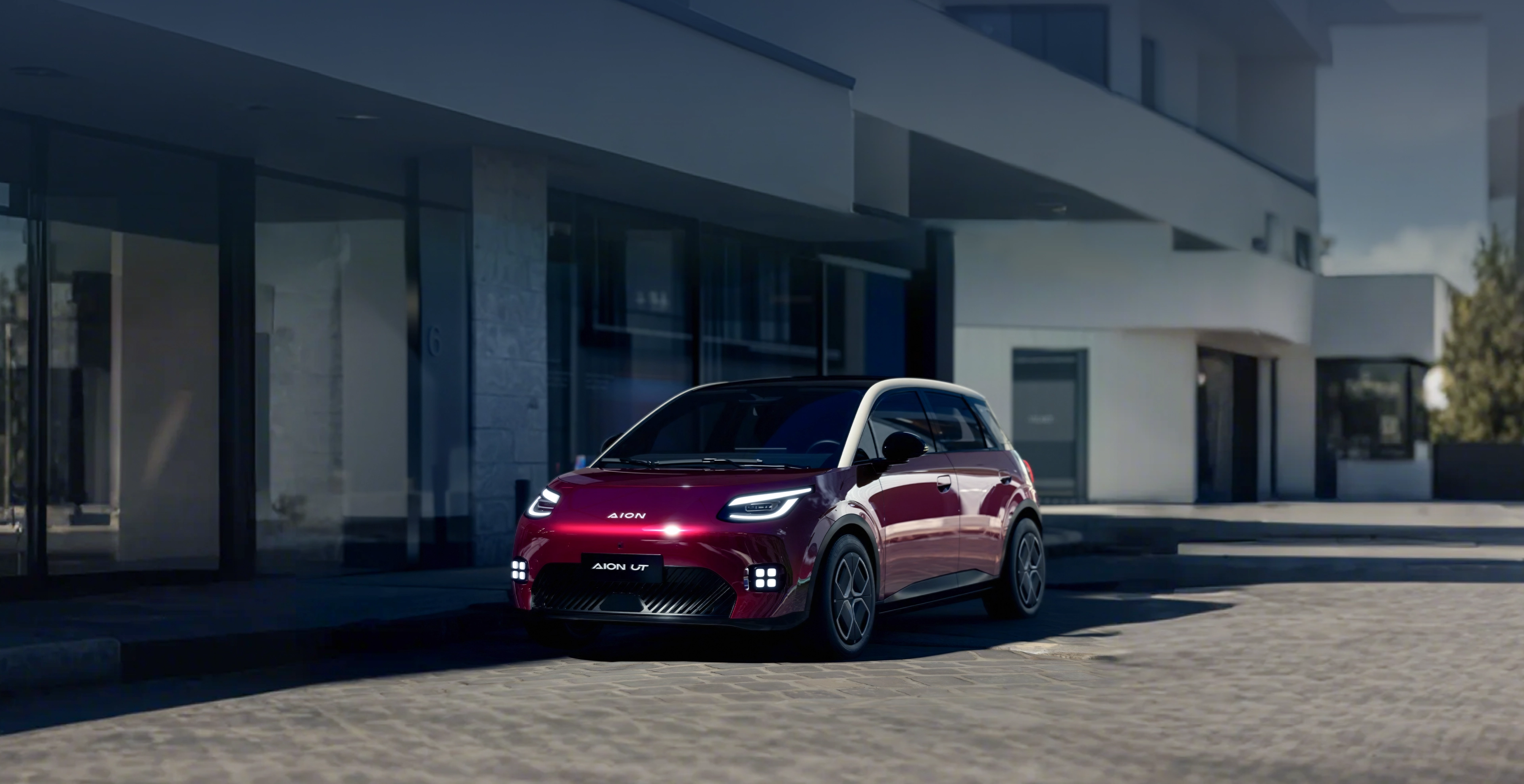
The European AION UT offers a persuasive amount of everyday room for a compact electric hatchback: its manufacturer table pairs a 4,270 mm body with a 2,750 mm wheelbase, five seats and a 440-litre luggage compartment with the seats in use. The AION UT uses its compact footprint to protect everyday room. This is a packaging judgment, not a claim that wheelbase alone measures legroom. The strongest buying case combines passenger fit, an occupied-seat luggage check and the car's manageable exterior dimensions. [S1]
Read the footprint, wheelbase and luggage figures together
Space is useful when it remains available during the journey a family actually makes. A folded-seat photograph answers a different question from a car carrying five people. The UT's published figures are therefore most informative when they are read as a set: exterior size, distance between the axles, occupied seating and luggage volume each describe a different part of the package.
GAC's European table supplies a sufficiently concrete starting point for that assessment. It lists the regular AION UT; a separate UT Cross announcement should not be used to alter these figures. The following table keeps the measurements distinct. [S1]
| Measure | European specification | Use in a space assessment |
|---|---|---|
| Body length | 4,270 mm | Consider parking-bay length and rear loading clearance. |
| Wheelbase | 2,750 mm | A packaging reference; verify the resulting seat positions physically. |
| Width | 1,850 mm; 2,073 mm with mirrors unfolded | Check travel clearance and the space needed to open doors. |
| Occupied seating | 5 seats | Establish who must remain seated during the trip. |
| Luggage volume | 440 L seats up; 1,600 L seats folded | Use the volume corresponding to the occupied-seat arrangement. |
| Turning radius | 5.35 m | A separate manoeuvring measure rather than an interior-space claim. |
These are manufacturer specifications, not measurements taken by this publication. Storage-volume methods can differ between brands. [S1]
A long wheelbase gives the packaging story substance
A 2,750 mm wheelbase within a 4,270 mm body is one reason the UT deserves attention from buyers who want useful passenger room without moving to a long vehicle. It shows how the car's overall dimensions are allocated between the axles and the remaining body. It does not reveal every detail of seat design, floor height or foot accommodation, which still need their own inspection.
This distinction makes the dimensions more useful, rather than less. A family can set the front seat for its regular driver, then examine the rear position that remains. Check knees, feet, head clearance and the ease of reaching a belt buckle. Repeat with the front passenger in their normal position. That exercise connects the published layout to the actual people using it.
The useful conclusion is specific: the UT offers a substantial wheelbase in a short hatchback footprint, with a manufacturer-listed five-seat cabin. Our rear-seat and restraint-fit guide explains how to keep seat count separate from the compatibility of a particular child restraint.
Protect the seats you need before planning the luggage
The UT's 440-litre figure describes the luggage compartment with the seats up. That is the relevant starting point when the normal passengers will all travel. The 1,600-litre folded figure becomes useful only when the occupancy allows a different arrangement. Neither number replaces a check of the bags' shape and the opening through which they must pass. [S1]
A compact EV can be particularly appealing when it performs this ordinary task well: adults and children remain in their required seats, the routine bags fit, and the tailgate closes without rearranging the whole cabin. Bring the regular pushchair, instrument case or work bag to the showroom. A volume number describes capacity in aggregate; a trial load tests the household's specific combination.
The rear seat's 40/60 split provides another arrangement where the passenger count permits it. Secure cargo appropriately and keep the occupied places available. The value of flexibility is choosing a usable layout for a particular trip, not treating every possible folded configuration as if it could be used simultaneously.
Exterior compactness remains part of interior usefulness
A car that fits its passengers still needs to work where they enter and leave. The UT's 4,270 mm body length is therefore relevant to the space question. Shorter parking spaces, a garage wall and a tailgate opening all affect whether the available cabin and boot can be used conveniently. The specified unfolded-mirror width also matters on a narrow approach. [S1]
Check access from both sides in a realistic parking position. A caregiver may need room beside a rear door, while another occupant may need to leave from the pavement side. These are route and location questions, not simply dimensions inside the car. They help explain why a compact footprint and good accommodation can reinforce one another.
A sensible showroom exercise includes sitting, loading and manoeuvring. Evaluate the turning space separately from rear legroom: a turning-radius figure does not determine how comfortably a passenger sits, but it can influence how easily the household reaches the place where that passenger gets out.
That combination of occupied seating and usable loading supports our assessment: The AION UT uses its compact footprint to protect everyday room.
Permitted load is another part of a usable five-seat package
The European table also includes load-capacity figures that vary by grade. Passenger accommodation, cargo volume and permitted mass should remain separate checks. Five seating positions do not describe the weight of the people and possessions placed in them. This is particularly relevant when a household plans to use the car's room regularly rather than only on a short demonstration. [S1]
Ask the retailer to identify the load figure for the delivered configuration and explain where it is recorded. Then consider the usual occupants and luggage together. There is no need to guess an average family weight or invent a universal allowance: the useful number is the one attached to the particular vehicle.
The same discipline improves volume comparisons with other cars. A large liquid-volume or block-measured storage figure can still be attached to a different measurement method or seating arrangement. The UT's roomy-car case is strongest when the household uses the published figures to organise a real fit exercise, rather than treating an isolated number as a class ranking.
A family space assessment should include the occupied positions
Euro NCAP's 2026 assessment identifies the tested UT as a left-hand-drive Premium and records a five-star overall result. Its report examines occupant protection and other safety stages separately from the manufacturer's cabin dimensions. That gives buyers a second type of information to read alongside the packaging figures. [S2]
The connection is practical. The rear place that looks generous still needs a suitable restraint when a child occupies it, while adult passengers need a comfortable position and access to their belts. Safety assessment information supports the choice, but does not establish that every restraint or bag arrangement has already been checked for the buyer.
GAC's own UT packaging discussion provides model context, while the current regional specification remains the numerical anchor. [S3] Our UT luggage and loading article develops the distinction between a compartment's stated volume and the objects that must fit inside it.
The AION UT uses its compact footprint to protect everyday room.
The UT's attractive combination is a short exterior body, a substantial wheelbase and an occupied-seat luggage compartment that remains useful before the rear bench is folded. That is a meaningful proposition for buyers who want one vehicle to handle passengers, daily possessions and constrained parking spaces.
The final decision should use a repeatable sequence: set the front positions, seat the regular passengers, secure the appropriate restraints, load the usual bags and check the entry space beside the doors. The AION UT uses its compact footprint to protect everyday room. When those tasks work for the household, the dimensions support a clear positive answer to the original question.
The AION UT space overview brings these packaging considerations together with the European seating and luggage specification.
Questions about AION UT space
Is the 1,600-litre figure available with five passengers? It is the folded-seat figure in the European table. For a trip using all seats, begin with the 440-litre seats-up figure and a physical loading trial. [S1]
Does a long wheelbase guarantee rear comfort? It is a useful packaging measurement, but the resulting fit also depends on seat positions and passenger proportions. Check the occupied cabin rather than assuming every dimension follows from wheelbase.
Can this be described as a roomy compact EV? The combination of body length, wheelbase and stated luggage capacity supports that description. An absolute best-in-class claim would require equivalent measurements across a defined comparison group.
Do these figures describe the UT Cross? No. They refer to the regular European AION UT in the cited table. Confirm the exact local specification before applying them to another vehicle.
Sources & references
- [S1] AION UT European specificationGAC Europe · Regular European UT table reviewed 26 October 2026. Volumes, permitted loads and equipment remain version-specific.
- [S2] AION UT 2026 assessmentEuro NCAP · Five-star 2026 assessment; tested UT Premium LHD. Not a cabin-space measurement.
- [S3] AION UT, ReviewedGAC Global · Manufacturer model and packaging discussion; regional specification is the anchor for figures.
This is a source-based editorial guide, not a first-hand road test. Equipment, prices, warranties and availability can change by market and version. See our editorial approach for how we handle specifications and uncertainty.