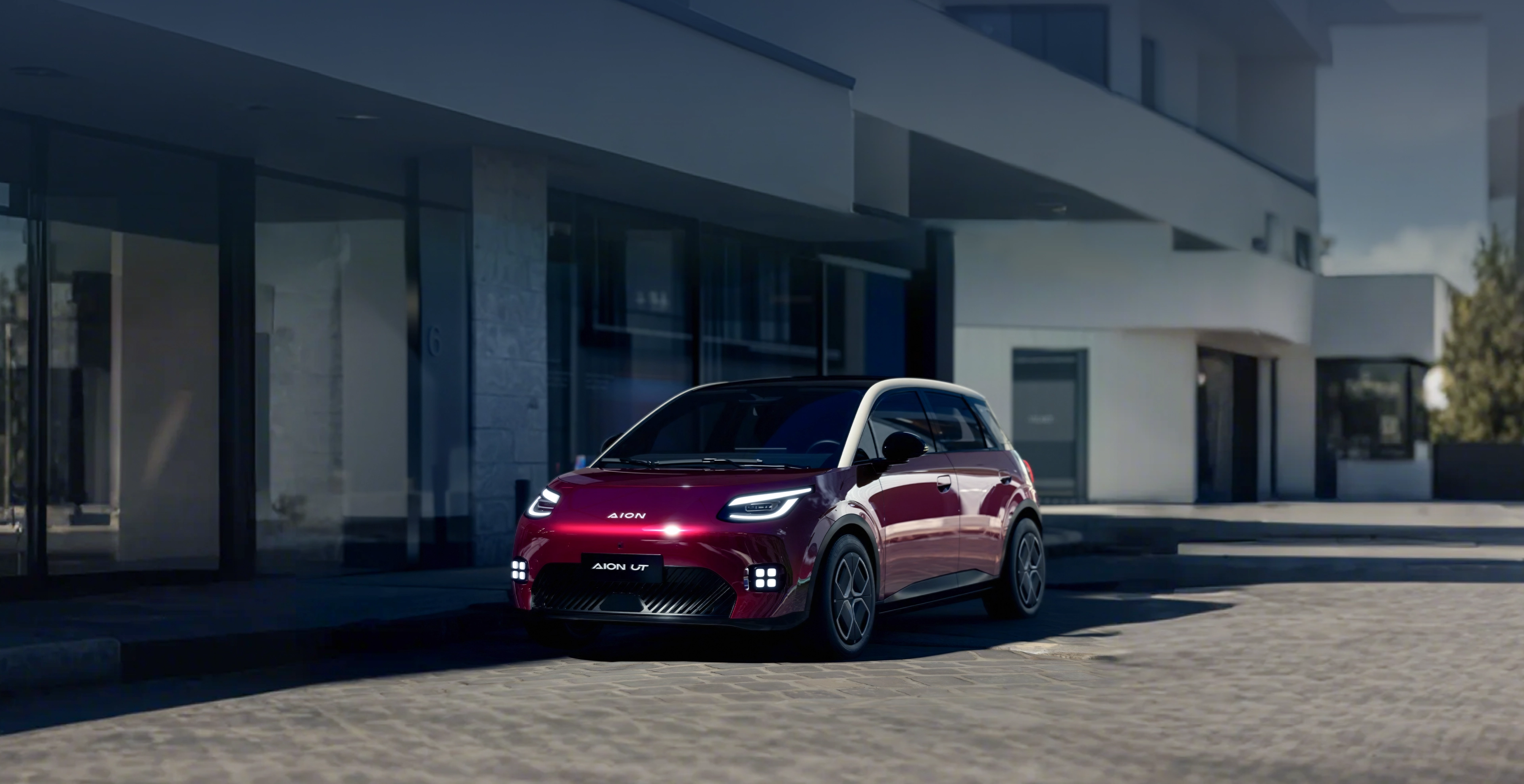
Yes, the regular European AION UT presents a convincing case for everyday family space. Its Italian launch on 8 October 2026, reported on 22 October, highlighted a 2,750 mm wheelbase in a compact electric hatchback.[S1] Our independent conclusion is that compact size can support generous daily usefulness. The meaningful question is how the cabin accommodates people, their normal belongings and the activities surrounding a journey. This assessment examines those relationships using the current European configuration and the model's independent safety assessment, with the passenger experience at the centre of the discussion.
The Italian arrival gives the space question a local setting
The AION UT's Italian launch is useful context because it places a compact electric car within a familiar European pattern of use. The same vehicle may need to handle a school journey, a shopping trip, a visit to friends and a weekend outing. Space has to support those tasks while the car remains convenient to keep in the places its owner normally visits.
GAC's launch report describes the UT as a model developed by its European design team in Milan.[S1] That gives the product a direct connection with the region in which it is now being introduced. The practical assessment still comes from the vehicle itself: how people sit, how belongings are accommodated and how easily the arrangement can change between journeys.
Our approach begins with the occupants. A compact car can be a substantial part of family life when it gives people useful seating positions and enough flexibility for their normal activities. The question is therefore more specific than whether the cabin looks large in a photograph. It concerns how the available space works when the vehicle is occupied and the journey is real.
The current European configuration provides enough detail to examine that proposition carefully. It describes the UT's dimensions, seating, luggage capacity and comfort functions. Together, these facts support a positive interpretation: the regular AION UT has been packaged to do meaningful everyday work. The Italian arrival makes that proposition timely, while the analysis below explains why its space deserves attention from buyers considering a compact electric vehicle.
A long wheelbase within a compact overall length
GAC's European specification lists a 4,270 mm body length and a 2,750 mm wheelbase.[S2] The second measurement describes the distance between the axles. Dividing it by the overall length gives approximately 64.4 percent, a simple calculation that helps describe the vehicle's proportions. It is not a measurement of legroom, but it provides useful context for the interior layout.
The packaging question is how much useful passenger accommodation can be organised within a manageable exterior. Overall length matters when approaching a parking space or deciding where a car fits at home. Interior accommodation matters once people are aboard. A convincing compact vehicle brings these two needs into a coherent arrangement, allowing the owner to enjoy useful space without requiring a particularly long body.
The UT's proportions make that idea worth exploring. The wheelbase provides a clear physical reference around which the seating arrangement can be understood. Actual comfort then depends on the shape and position of the seats, the occupant's posture and the way the different cabin elements relate to each other. Those details explain why a number is a starting point rather than the entire answer.
Our positive reading is that the UT offers an interesting balance for buyers who want a compact footprint and a cabin capable of serving more than one person comfortably. The design can be assessed as a complete package: a relatively concise body, a substantial distance between axles and a five-seat interior arranged for everyday use. That is a sound foundation for the family-space argument.
Space works best when both rows are considered together
The European table specifies five seats and powered adjustment for the driver and front passenger.[S2] For a household, the value of that arrangement lies in the relationship between the rows. The front occupants establish suitable driving and travelling positions, and the rear occupants then use the space behind them. Thinking about the cabin as one shared environment produces a more useful assessment than examining each seat in isolation.
For example, two adults who alternate driving may prefer different seat positions. A child or another adult in the rear then experiences a slightly different arrangement depending on who is at the wheel. The cabin is most useful when those ordinary variations can be accommodated without turning every journey into a lengthy adjustment exercise. This is a practical reason to value an adaptable interior.
A family can make the assessment concrete by using its normal seating pattern during vehicle familiarisation. The regular driver chooses an appropriate position, the front passenger settles naturally and the people who normally travel behind them take their places. This reveals how the space works as a system. It also helps the buyer notice the details that matter personally, such as access to everyday belongings or the position of an armrest.
Our view is that the UT's space proposition deserves this kind of full-cabin evaluation. Its usefulness is connected to the way people share the interior. When their ordinary positions fit comfortably together, the compact format becomes a practical advantage: the household gains a familiar daily vehicle that can support several occupants without making exterior size the main source of its appeal.
Rear adjustment gives the second row practical flexibility
The current European configuration lists adjustable rear headrests and backrests, together with a rear centre armrest.[S2] These are valuable details in a discussion of sufficient space because they affect how an occupant uses the room available. A cabin's dimensions create the physical envelope; adjustment helps the person find an appropriate position within it.
The benefit is particularly relevant when different people use the rear row. An adult visiting for the day, a teenager travelling to an activity and a younger passenger in a suitable restraint bring different requirements. The vehicle's instructions and the restraint manufacturer's guidance determine the appropriate setup, while the availability of adjustment gives the cabin a useful degree of adaptability.
An armrest also changes the way a space is experienced when the seating arrangement allows it to be used. It gives a passenger a defined place to rest an arm and can make the rear row feel more intentionally organised. Such features are modest in scale, yet they have a clear relationship with comfort during an ordinary trip.
This is an important part of our positive assessment. The UT's rear cabin is described through functions that help people use it, rather than only through a claim of spaciousness. Adjustment, support and a clear seating arrangement can make the available room more accommodating. For buyers asking whether the AION UT has enough space, those details help turn an abstract question into a practical answer centred on the passengers who will actually travel in the car.
Climate and airflow contribute to usable cabin space
GAC's European table includes rear air outlets, a heat pump and remote cabin preconditioning. It identifies the climate system as single-zone.[S2] These functions are relevant to the experience of space because a passenger uses the whole cabin environment, including temperature and airflow, rather than simply occupying a measured volume.
A rear air outlet gives the second row a direct point through which conditioned air can be delivered. The practical purpose is straightforward: occupants in different parts of the cabin can benefit from the climate system. It is a feature worth considering when the rear seats will be used regularly, because comfort is part of what makes a space genuinely useful over the duration of a journey.
Preconditioning can help a household prepare the cabin before departure when the relevant vehicle, app and connection arrangements are in place. The benefit is about timing. A task associated with getting ready to travel can begin before the occupants enter, allowing the departure routine to feel more settled. Actual operation follows the vehicle's instructions and the available settings.
Our editorial point is that cabin quality is multidimensional. Legroom, seating posture, airflow and the ease of establishing a pleasant environment all influence whether people enjoy using a car. The AION UT's European equipment gives buyers several concrete functions to examine within that broader picture. For a compact family vehicle, this attention to the occupied cabin strengthens the case that its space can serve everyday life effectively.
Everyday objects deserve their own place
The European configuration describes front and rear armrests and cupholders, alongside the main luggage area.[S2] These smaller facilities matter because passengers often bring a collection of objects that belong near them during a journey. The organisation of those objects influences how tidy and usable the cabin feels, even when the physical dimensions remain unchanged.
A family journey can involve a phone, a drink, a light jacket and a bag for an activity at the destination. These items have different roles. Some should be stored securely before departure, while others may need an appropriate accessible position for a passenger. A cabin with defined places for familiar objects helps people establish a routine and understand where things belong.
This is also a useful way to assess perceived space. An orderly interior can feel easier to use because each occupant has a clearer personal area. The positive effect comes from organisation rather than from creating extra litres. It is especially relevant in a vehicle that moves between school, work and leisure tasks, where the contents of the cabin change frequently.
The UT's small-storage provision therefore belongs in the main discussion of sufficient space. Buyers can look at the items they carry most often and consider how the cabin supports them. That exercise can reveal practical strengths that a simple exterior-size comparison would miss. Our assessment values these details because a compact car becomes more useful when its interior helps people and belongings coexist comfortably throughout a normal day.
Passenger space and luggage space can support each other
The current European specification gives the regular AION UT a 440-litre luggage compartment with the seats raised.[S2] This figure is useful because it describes the normal passenger configuration. The buyer can consider everyday luggage capacity while retaining the rear seating arrangement, which is the situation most relevant to many family journeys.
The practical relationship is about separation of tasks. Passengers use the cabin, while shopping, activity bags and travel belongings can occupy the luggage compartment within the vehicle's loading guidance. Keeping those functions distinct helps the seating area remain comfortable and orderly. A useful boot therefore contributes indirectly to the quality of passenger space as well as directly to carrying capacity.
Actual objects have shapes, so a capacity figure is a starting point for exploring the space rather than a promise that every combination will fit. A household may prioritise a particular folded pushchair, a sports bag or the cases used for a short break. Those familiar objects give the buyer a concrete way to understand how the luggage area relates to the passenger arrangement.
Our positive interpretation is that the UT's regular seating layout is supported by a meaningful published luggage volume. It allows the space question to be answered in a more complete way: the cabin provides places for people, and the rear compartment provides a separate area for the belongings associated with their journey. That relationship is central to making a compact electric car feel useful in family life.
Independent assessment supports the family-cabin case
Euro NCAP awarded the AION UT five stars in its 2026 assessment, testing an AION UT Premium with left-hand drive.[S3] This provides an independent reference for the specified vehicle. It is relevant to a family-space discussion because the cabin is both a place where people spend time and part of the vehicle's wider safety design.
The rating should be understood through the assessment programme and the model to which it applies. It gives buyers a documented source to consult alongside the equipment table. Our positive conclusion does not depend on turning the result into a universal claim about every circumstance. Its value is that a recognised body has evaluated the vehicle under a defined framework and published the outcome.
For families, this independent evidence can sit beside their practical evaluation of seating positions and the correct installation of their own restraints. These are complementary tasks. One provides test information about the vehicle; the other establishes how the household will use it. A thoughtful buying decision benefits from both.
The UT's space proposition consequently has more substance than a roominess claim alone. Its European specification describes a usable cabin, and the independent assessment adds another relevant dimension to the family discussion. Together, they provide a positive foundation for considering the regular AION UT as a compact car that can take its occupants seriously, both in the practical arrangement of the interior and in the documented evaluation of the assessed model.
Compact size can support generous daily usefulness
Compact size can support generous daily usefulness. That is our independent conclusion about the European AION UT because its space proposition brings several useful elements together. The body length sets a manageable physical format, the wheelbase provides context for the cabin, adjustment helps occupants settle and the luggage compartment gives their belongings a separate place.
The word generous here describes the usefulness of the package rather than a claim that every dimension exceeds every alternative. A vehicle can feel generous in everyday life when it offers enough options for the tasks its owner regularly performs. That quality comes from the relationship between its features and the household's routine.
Consider a family that uses the car for short local journeys during the week and an outing at the weekend. Its needs change in detail: different bags, different passengers and different times spent aboard. A useful cabin can accommodate those variations without requiring the owner to rethink the vehicle's role. That is the kind of flexibility we see in the UT's published European arrangement.
The positive argument is therefore specific. The regular AION UT deserves attention from buyers seeking a compact electric car with meaningful passenger accommodation and a practical luggage area. Its appeal becomes clearest when the household evaluates the full interior together. The available facts support an encouraging starting point, and the buyer's own seating pattern provides the final personal context for deciding how well the space fits daily life.
European development gives the cabin story continuity
At the Paris Motor Show on 12 October, GAC described an expanding European operation that includes local production of the AION UT and AION V. It also outlined a European research and development centre planned for 2027.[S4] This context helps explain why the UT's regional configuration deserves attention as a defined product rather than as a collection of specifications borrowed from different markets.
For an owner, the cabin is something used repeatedly over time. A useful local product relationship includes the ability to understand its functions, receive appropriate guidance and access support. That is the connection between the physical space inside the vehicle and the organisation around it. The two are different, but they contribute to the same experience of living with the car.
GAC CARE+ made its European debut at the same show, with the service announcement including three years of free roadside assistance under the applicable terms.[S5] This adds an identifiable support element to the ownership picture. It does not change the cabin's dimensions; it helps place the compact-car proposition within a broader regional framework.
Our assessment remains centred on space, but this continuity is relevant. A well-packaged cabin is more attractive when the buyer can evaluate it as part of a complete vehicle and ownership arrangement. The Italian launch, European production and service development give the AION UT a timely local context in which its practical strengths can be explored and understood.
A positive answer for the way families actually travel
Is the space of GAC AION UT sufficient? For everyday family travel within the regular European model's five-seat format, the published arrangement supports a positive answer. The car offers a clear combination of passenger accommodation, useful adjustment, climate functions and luggage space within a compact body. Its strengths are easiest to appreciate when considered together.
The most meaningful personal evaluation uses the household's normal setup. The usual occupants take their regular positions, familiar belongings are considered and the expected journeys provide the context. This is a practical way to discover where the cabin's flexibility creates value. It also gives the buyer a clearer impression than judging the vehicle from an empty showroom photograph.
Our AION UT interior space and boot guide provides the broader topic reference. This article adds the latest Italian and European context while keeping the passenger experience central. The analysis concerns the regular AION UT configuration described by GAC Europe, with the independent rating attached to the assessed model.
Compact size can support generous daily usefulness. The UT makes a convincing case for that idea through a cabin that addresses several ordinary needs at once. For buyers looking for an electric car that can be easy to place in daily life while offering meaningful room for people and their belongings, the AION UT deserves a close and positive look.
Sources & references
- [S1] GAC Launches AION UT and AION V in ItalyGAC · Manufacturer release published 22 October 2026 describing the Milan launch on 8 October; Italy-specific WLTP claims.
- [S2] AION UT SpecificationGAC Europe · Live European Luxury/Premium table reviewed 23 October 2026; regular AION UT, not UT Cross. URL path is not a model-year assertion.
- [S3] AION UT — 2026 assessmentEuro NCAP · Independent five-star assessment under 2026 protocols; tested model AION UT Premium, left-hand drive.
- [S4] Engineering for Europe: GAC Unveils New Blueprint at the 2026 Paris Motor ShowGAC · 12 October 2026; distinguishes existing European production from the R&D centre planned for 2027.
- [S5] Paris Motor Show 2026: GAC Launches Global Service Brand GAC CARE+ in EuropeGAC · 12 October 2026 European service announcement; dispatch is not delivery, and local contractual terms govern coverage.
This is a source-based editorial guide, not a first-hand road test. Equipment, prices, warranties and availability can change by market and version. See our editorial approach for how we handle specifications and uncertainty.