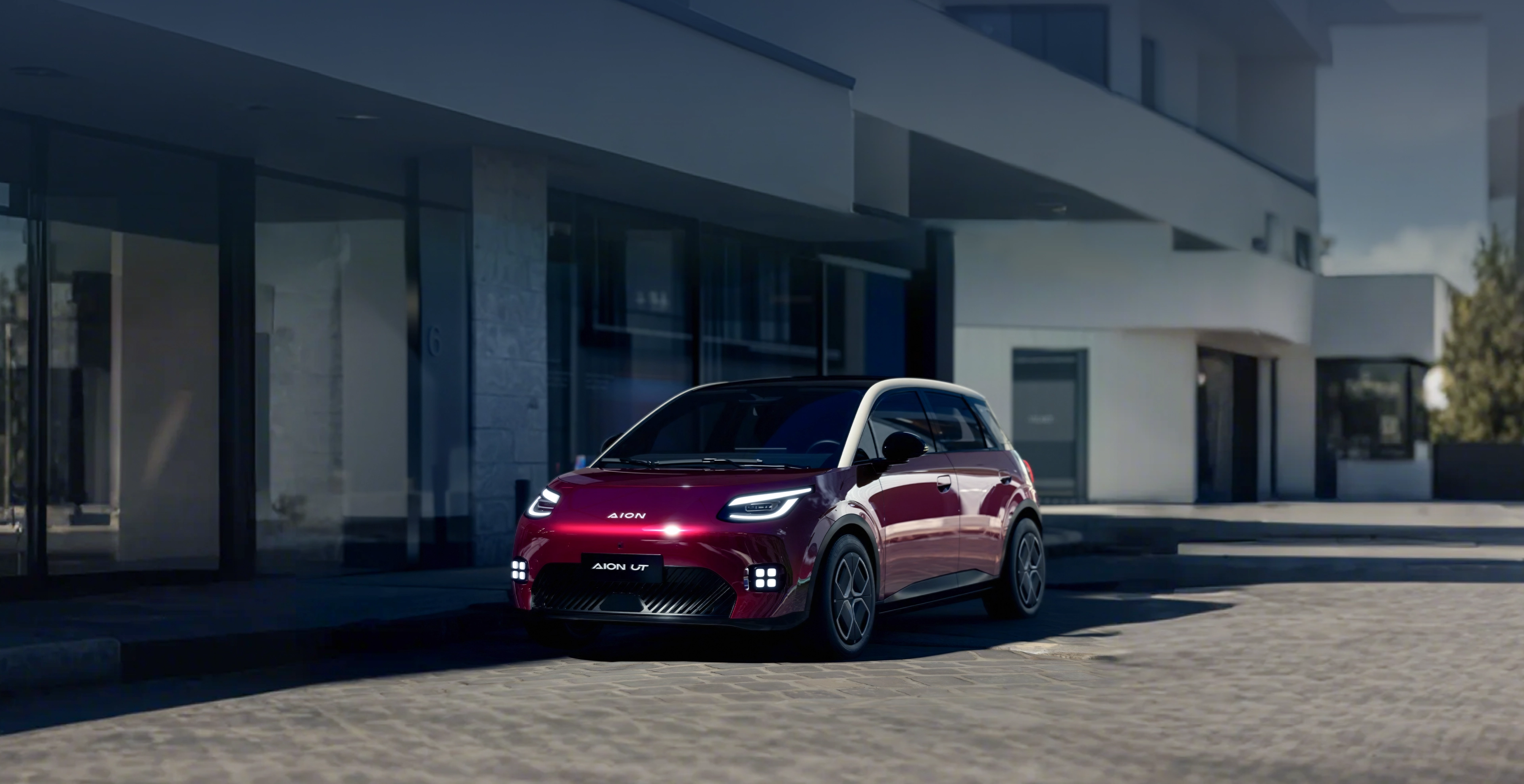
Yes, the regular European AION UT offers a useful and adaptable cargo arrangement for city life and weekend plans. The UT Cross debut at Paris on 12 October 2026 has renewed attention around the model family, while this assessment uses the published specifications of the regular European UT.[S1] Our independent view is that flexible space is the UT’s everyday advantage. A 440-litre boot with the seats raised, an expanded 1,600-litre configuration and split-fold rear seating give that view a concrete foundation.[S2] The value lies in how an owner can change the arrangement to suit different journeys.
Paris attention meets a practical everyday question
GAC introduced the AION UT Cross globally at the Paris Motor Show on 12 October, with its official report published the following day.[S1] A new member of a model family naturally creates interest in design and possible uses. For a buyer considering the regular AION UT now, the most useful response is to examine the space and flexibility already described in the European specification.
This article therefore focuses on the regular model's cargo arrangement. Its dimensions and equipment are treated as its own, and the Cross announcement is current-news context rather than a source of interchangeable technical data. That distinction allows the space question to remain concrete: what does the documented European UT layout offer for the activities a household actually wants to carry out?
City life can involve a surprisingly varied collection of loads. Shopping bags, work materials, leisure equipment and short-break luggage appear at different times, often within the same week. A useful car does not need to carry all of them simultaneously. It needs to let the owner change the available space in a straightforward way as the task changes.
The UT's published luggage capacity and folding-seat arrangement make it a promising subject for that discussion. They describe more than one way of using the interior. Our positive assessment centres on that adaptability: the same compact vehicle can offer a normal passenger configuration for everyday use and an expanded carrying configuration when fewer seats are required for a particular journey.
The normal boot matters because it is available every day
The 440-litre seats-up luggage figure in the European table describes the boot while the normal rear seating arrangement remains available.[S2] This is the capacity most relevant to routine trips involving passengers. It gives a buyer a concrete starting point for considering groceries, activity bags or luggage associated with a day out.
Everyday carrying capacity is valuable because it can be used without changing the vehicle's basic layout. The owner can leave the cabin arranged for the regular passengers and use the luggage area for the items connected with that day's activities. This helps the car remain ready for the next journey, which is a useful quality in a household where plans can change quickly.
The practical benefit is also about division of space. Passenger belongings can be organised in the rear compartment according to the vehicle's loading guidance, leaving the seating area available for people. A well-understood packing routine makes the interior feel easier to use because each category of object has a suitable place.
For our assessment, the UT's normal boot is therefore the starting point rather than merely the smaller of two published numbers. It represents the carrying space an owner can draw on most often. The expanded configuration adds versatility, but the everyday arrangement establishes the vehicle's basic usefulness. Buyers whose usual loads match that layout can enjoy a compact car that is already prepared for a broad range of ordinary tasks.
Expanded capacity creates a second practical role
GAC Europe lists 1,600 litres with the rear seats folded.[S2] Compared with the stated seats-up figure, that is an additional 1,160 litres and about 3.64 times the published volume, calculated from the two manufacturer figures. This describes a different seating configuration; the expanded space and the full rear passenger arrangement are alternatives rather than simultaneous capacities.
The important benefit is that the vehicle can take on another role when the journey calls for it. A couple collecting a bulky purchase, an individual moving personal belongings or a household transporting equipment may place greater value on carrying room for that trip. Folding the rear seats changes how the interior is allocated between passengers and objects.
This flexibility can be especially useful when a large carrying task is occasional. The owner can keep a compact daily vehicle and use its expanded arrangement when appropriate, subject to the dimensions and weight of the actual load. The car's normal role does not have to be determined entirely by the largest object it might sometimes carry.
Our positive view is that the UT's expanded capacity gives the compact format greater breadth. It makes the interior adaptable across different tasks, which is a practical form of value. The volume figure establishes the scale of the change, while the shape of the opening, the floor and the particular object determine the final fit. That combination makes the specification a useful invitation to explore the space in a concrete way.
Split folding supports mixed passenger and cargo journeys
The European AION UT table lists a 40/60 split-fold rear seat.[S2] This gives the owner an intermediate arrangement between using the full rear row and folding it completely. The practical purpose is to allocate part of the rear cabin to a load while retaining suitable seating on the remaining section, following the vehicle's operating and loading instructions.
Many real journeys sit between the two extremes of a full passenger load and an empty rear cabin. One person may need to carry a longer item while another passenger travels behind. A household may want additional room for a particular activity without using the entire expanded space. Split folding offers a way to respond to those mixed requirements.
The benefit comes from choice. The owner can decide which part of the seating arrangement is required for people and which part can be used for belongings. This makes the car more adaptable to changing plans. It also allows the household to develop a few familiar configurations for recurring tasks, making the transition between them easier to understand.
Our editorial assessment places considerable weight on this feature because it turns a single cabin into several useful arrangements. The biggest luggage number describes only one of them. The split arrangement is often where flexibility becomes most practical: it gives the owner a way to carry different combinations of people and objects within the same compact vehicle. That is a clear strength in the UT's everyday-use proposition.
Volume and shape answer different parts of the space question
A luggage-volume figure describes the amount of measured space, while an individual object also has length, width, height and a particular shape. Both forms of information are useful. The UT's published capacities establish a clear overall proposition; understanding a specific load then involves considering how its shape relates to the vehicle's available opening and interior arrangement.
Soft travel bags, for example, can often be arranged differently from rigid cases because their shapes respond differently to the available gaps. A folded pushchair has a specific geometry. A piece of leisure equipment may be long in one direction while taking relatively little volume in the others. These are general packing considerations, not claims that named objects have been tested in this vehicle.
The positive consequence is that owners have several ways to make space useful. They can choose the appropriate seating configuration, organise objects by shape and leave access to the items needed first. A familiar packing routine can turn the available capacity into a more predictable part of travel planning.
This is why our assessment of the AION UT values flexibility alongside the litre figures. The vehicle offers different arrangements, and the owner can select the one suited to the load. A buyer with a particularly important object can bring its dimensions or the object itself into a showroom demonstration. That is a practical way to explore a strength already visible in the specification: the interior can be reorganised to support more than one kind of carrying task.
Payload completes a sensible cargo assessment
The European table lists load capacities of 435 kg for Luxury and 465 kg for Premium.[S2] These version-specific figures add a useful weight dimension to the discussion. The vehicle's own documentation determines how the applicable allowances and limits are used for the exact car, including the treatment of occupants, luggage and fitted equipment.
Capacity in litres and capacity by weight describe different aspects of carrying. A large soft object may occupy substantial room while being relatively light. A smaller dense object may use little space but contribute more weight. Understanding both helps an owner make sensible use of the available configuration and choose an appropriate arrangement for the journey.
This is particularly relevant when several people are travelling with luggage. The number of seats describes where occupants can sit, while the vehicle's loading limits govern the overall load. A practical household plan considers the people and belongings together. The aim is to use the car's useful space within the requirements attached to the actual vehicle.
The UT's published table is helpful because it makes this part of the conversation concrete and distinguishes the two listed grades. Our positive assessment is strengthened by having both volume and load information available. It allows buyers to evaluate the car as a complete carrying system, with a clear understanding that useful cargo capability involves the combination of space, weight and the chosen seating arrangement.
A compact footprint is part of the storage story
The European specification gives the UT a length of 4,270 mm and a turning diameter of 10.7 metres.[S2] These measurements are relevant to carrying because every load has an origin and a destination. A useful vehicle needs to reach the places where people collect, load and unload their belongings, as well as provide room for them once aboard.
For an urban owner, the practical setting may include a residential parking area, a supermarket car park, a workplace entrance and a leisure venue. The vehicle's exterior dimensions form part of that experience. A compact body can be attractive to someone who wants a useful interior while keeping the overall vehicle manageable in familiar daily spaces.
Turning diameter gives further context for manoeuvring, although the available room and the exact parking situation determine the action required. It is a useful specification to consider alongside body length because the owner experiences the car while approaching and leaving spaces, not only when it is parked. The carrying task includes those movements too.
Our positive reading of the UT is therefore broader than the boot alone. The vehicle combines a compact exterior format with multiple interior configurations. That relationship can be especially appealing for buyers whose normal environment rewards a modest footprint but whose activities sometimes call for more luggage room. The practical value comes from having both qualities available in one vehicle and using the configuration that suits the particular day.
A weekend arrangement can begin with the normal routine
A useful way to understand the UT's flexibility is to imagine a household moving from an ordinary week into a short weekend trip. During the week, the rear seats may be occupied regularly and the boot used for shopping or activity bags. For the weekend, the occupants can decide which seats are needed and allocate the remaining space to their travel belongings.
This is an illustrative planning exercise rather than a tested packing result. Its purpose is to show how the vehicle's arrangements can be used logically. The people travelling come first, then the required objects, then the seating and luggage configuration that accommodates them within the vehicle's guidance. The owner can choose between the normal boot, a partial fold or the larger folded arrangement.
GAC's Italian launch report also identifies the regular UT with up to 430 km of WLTP range.[S3] That is a standardised range reference for the specified vehicle, not a promise for a loaded weekend journey. Its relevance is that the space discussion belongs within an electric car designed to support travel as well as local errands. Actual route and charging planning remain part of the owner's trip preparation.
Our view is that the UT's appeal grows when the owner thinks in terms of adaptable routines. The car can serve familiar weekday tasks and then be rearranged for a different activity. This kind of practical continuity is a strong reason to consider the regular AION UT as more than a narrowly defined city runabout.
Flexible space is the UT’s everyday advantage
Flexible space is the UT’s everyday advantage. This is our independent conclusion because the most useful feature of its cargo proposition is the owner's ability to choose. The regular boot supports a normal passenger journey, the split arrangement serves mixed loads and the fully folded configuration provides a larger carrying area when the rear seats are not needed.
This way of looking at the vehicle gives each configuration a purpose. The owner does not have to treat maximum volume as the only meaningful measure. Instead, the question becomes which arrangement best supports the people and belongings involved in a particular journey. That is a more practical definition of sufficient space for a car used across several activities.
There is also a time dimension to this flexibility. A household's needs can change between weekdays and weekends or between one stage of family life and another. A vehicle with more than one useful arrangement gives the owner options as those patterns develop. This is an editorial assessment of the design's adaptability, not a prediction of any particular owner's future circumstances.
The UT's published European layout therefore supports a positive and specific buying argument. It offers meaningful cargo choices within a compact body, allowing the owner to adjust how the interior is used. For someone who values a vehicle that can accompany a varied routine, that versatility deserves close attention. It is the central reason we regard the regular AION UT's space as a practical strength.
A usable vehicle also benefits from a clear ownership context
Euro NCAP's 2026 assessment awarded the AION UT five stars, with the tested model identified as Premium with left-hand drive.[S4] That gives the vehicle an independent assessment to consider alongside its carrying arrangement. The rating concerns the assessed model and programme; the owner still uses the seating and loading configurations in accordance with the vehicle's instructions.
The broader European ownership context also developed during the October motor-show period. GAC CARE+ launched in Europe with a service framework that includes three years of complimentary roadside assistance under the applicable terms.[S5] This provides a defined support element around the product, relevant to buyers who want their practical daily car to be accompanied by a clear ownership relationship.
For our space assessment, these developments matter because useful cargo capacity belongs to a complete vehicle. The owner needs to understand the seat-folding operation, the appropriate loading arrangement and the normal care of the car. A clear handover and an accessible support relationship can help establish those habits from the beginning.
The positive case is therefore broader than an attractive maximum-volume figure. The regular European UT combines a documented space proposition with an independently assessed vehicle and a regional service programme. Each addresses a different part of ownership. Together, they make the model worth considering as a compact electric car that can support varied activities while giving the buyer identifiable information about the product and the organisation around it.
A positive space verdict for changing everyday tasks
Is the space of GAC AION UT sufficient? The regular European model's published cargo arrangement supports a positive answer for buyers seeking a compact car that can adapt to different tasks. Its normal boot, split-fold rear seating and expanded configuration provide several useful ways to allocate the interior between passengers and belongings.
The best personal evaluation begins with the tasks that occur most often. Consider the usual number of occupants, the objects regularly carried and the occasional larger load that matters to the household. The UT's different arrangements can then be explored against those needs. This turns the buying discussion into a practical assessment of how the car can participate in an ordinary week.
Our AION UT interior space and boot guide provides further context on the model's overall practicality. This article concentrates on cargo adaptability and keeps the regular European specification separate from the UT Cross's Paris debut. The current news makes the model family timely, while the existing configuration provides the evidence for the space judgment.
Flexible space is the UT’s everyday advantage. The positive conclusion comes from the range of useful arrangements available within a compact vehicle, supported by clear published capacities and version-specific loading information. For owners who want their car to handle daily errands, passenger trips and occasional larger carrying jobs, the AION UT offers a thoughtful and appealing form of practical versatility.
Sources & references
- [S1] AION UT Cross makes its global debut at the 2026 Paris Motor ShowGAC Global · Published 13 October 2026 about the 12 October event; a debut does not establish retail availability or final Cross specifications.
- [S2] AION UT SpecificationGAC Europe · Live European Luxury/Premium table reviewed 23 October 2026; regular AION UT, not UT Cross. URL path is not a model-year assertion.
- [S3] GAC Launches AION UT and AION V in ItalyGAC · Manufacturer release published 22 October 2026 describing the Milan launch on 8 October; Italy-specific WLTP claims.
- [S4] AION UT — 2026 assessmentEuro NCAP · Independent five-star assessment under 2026 protocols; tested model AION UT Premium, left-hand drive.
- [S5] Paris Motor Show 2026: GAC Launches Global Service Brand GAC CARE+ in EuropeGAC · 12 October 2026 European service announcement; dispatch is not delivery, and local contractual terms govern coverage.
This is a source-based editorial guide, not a first-hand road test. Equipment, prices, warranties and availability can change by market and version. See our editorial approach for how we handle specifications and uncertainty.