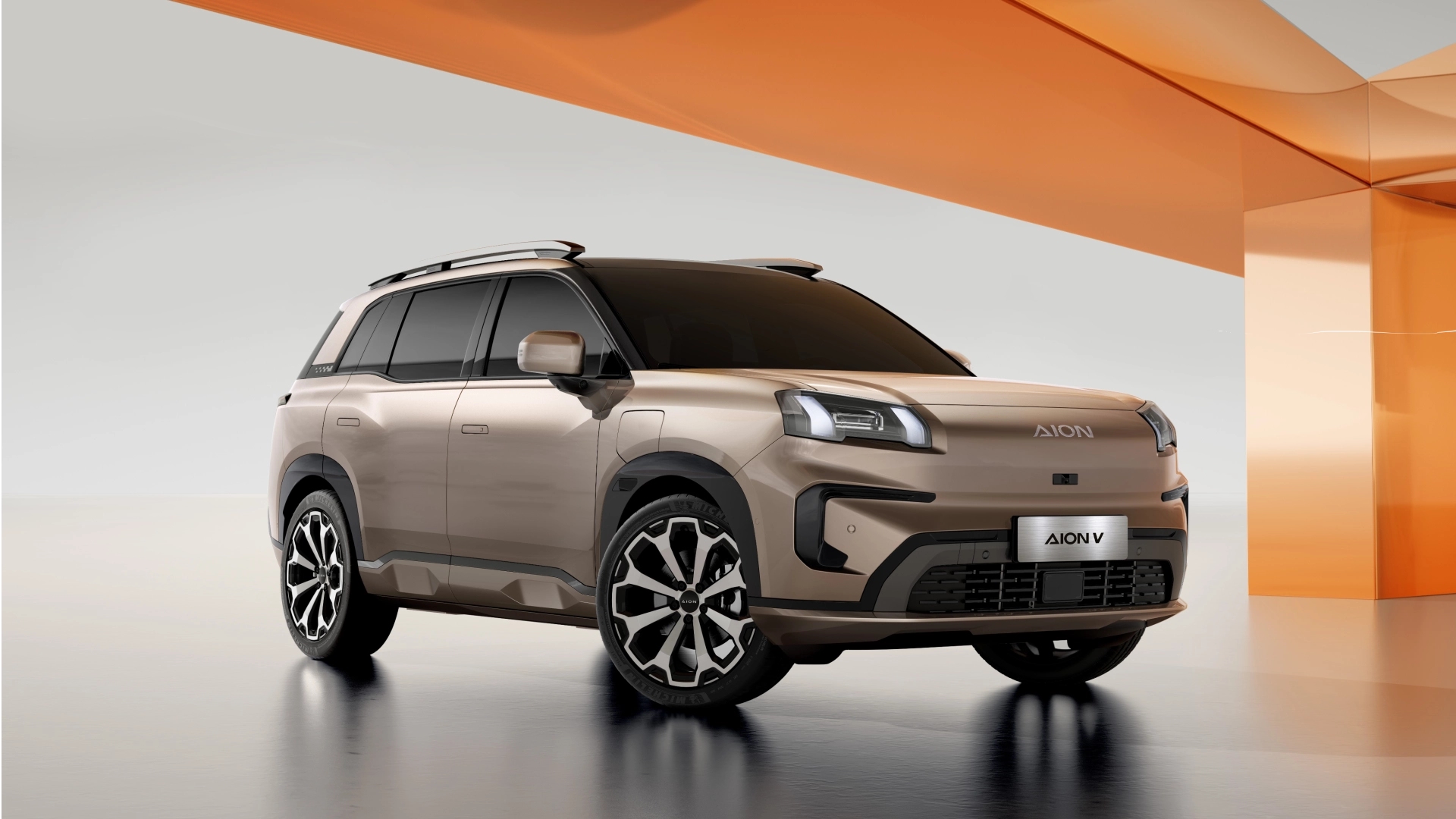
AION V is worth considering when an electric SUV needs to make family ownership feel manageable as well as comfortable. The Australian model brings together a substantial driving-range rating, independent safety assessment and a long manufacturer warranty. Its strongest buying argument is that these benefits support different parts of the same ownership experience: getting through ordinary journeys, protecting occupants and providing a route for help when something needs attention. This guide examines that case using Australian Premium and Luxury specifications and the applicable ANCAP record. Our assessment is based on published information, not a claimed road test.
Reassuring family ownership comes from protection, predictable routines and support that can actually be used. AION V has a credible basis in all three areas. The useful question is how closely that package matches the household that will drive it.
Why reassurance has more than one meaning
An electric car can look persuasive on a specification sheet while still leaving its buyer uncertain about daily life. A parent may worry about a school pickup after an unexpectedly long working day. Another driver may be more concerned about an unfamiliar warning, the distance to a service centre or the practicalities of carrying a child seat. These are different concerns, and a convincing family SUV should address them with different parts of its product and ownership package.
AION V's buying case is strongest when considered as a complete routine. A useful range allowance creates choices about when to charge. Occupant protection and collision-avoidance equipment address a different set of needs. Warranty coverage gives a defined support framework for eligible faults. None of these replaces the others. A large battery cannot substitute for correct child-restraint installation, and a long warranty does not tell a driver where the nearest suitable charging station is.
That combined perspective helps explain why the model deserves a place on a family shortlist. It offers more than a single attractive cabin feature. A buyer can connect the published hardware to an actual journey pattern and the ownership arrangements to a realistic support plan. The result is a car that can be judged against ordinary life, instead of a list of isolated superlatives.
For a household moving from petrol to its first EV, this matters especially. The purchase involves learning a different refuelling habit while keeping the same responsibilities to work, children and relatives. A reassuring transition is one in which those existing responsibilities remain easy to organise. That is the standard used throughout this assessment.
The Australian specification gives the plan a foundation
The following figures identify the versions discussed here. They are manufacturer specifications, with rated range and charging claims retaining their stated conditions. The date embedded in a webpage address does not, on its own, establish the model year of a particular vehicle. [V_SPEC]
| Australian AION V item | Premium and Luxury |
|---|---|
| Seats / driven wheels | Five / front-wheel drive |
| Battery | 75.26 kWh, LFP |
| Combined rated range | 510 km WLTP |
| AC / peak DC charging | 11 kW / 180 kW |
| Manufacturer DC charging claim | 10–80% in 24 minutes |
| Length / wheelbase | 4,605 / 2,775 mm |
A family should read this combination as a starting position for planning. The range rating is substantial enough to make the model relevant beyond very short errands, while the two charging routes give owners different ways to replenish energy. The actual distance available varies with conditions, and a peak charging figure describes a maximum rather than a constant rate throughout a session.
One practical benefit of a shared battery and range specification is that the grade decision can focus on comfort preferences. A buyer does not have to assume that the more expensive interior automatically buys a longer rated journey. This simplifies the choice: select the cabin equipment that the household will use, then assess the charging routine on its own merits.
Exterior dimensions also deserve a practical reading. A vehicle can have useful family accommodation and still need careful checking against a narrow garage. Measure the space used by open doors and the charging cable, as well as the parked body. Those are purchase-fit questions, rather than reasons to discount the model's overall proposition.
Range becomes convenience when charging fits the household
The most valuable charging session is often one that happens while the owner is doing something else. For some buyers that means charging at home overnight. For others it means a reliable workplace arrangement or a regularly used destination. In each case, the car becomes easier to own when energy replenishment has a place in the schedule before the family needs to make a special journey for it.
Consider an illustrative household covering 35 kilometres on each of five weekdays, followed by another 85 kilometres over the weekend. The weekly distance is 260 kilometres. This is a planning example, not an AION V road-test result. Its purpose is to show that the relevant decision is about the complete weekly pattern: whether the chosen charging opportunities comfortably support that distance, including changes of plan and a sensible reserve.
A second household may cover a similar total but in two concentrated intercity trips. That produces a different charging problem. The first family needs a convenient recurring habit; the second needs dependable stops along particular routes. AION V's combination of AC and DC charging makes it a candidate for both patterns, but it does not make the two situations identical.
The quoted fast-charge interval is useful because it concerns the middle portion of the battery's state of charge, where a journey stop may be most productive. It should be treated as a manufacturer claim under suitable conditions. Charger capability, battery temperature, starting charge and the vehicle's charging curve affect the result. A short food or comfort break can be a sensible place for a charging stop, but this article does not promise a fixed stop duration for every trip.
For the charging part of ownership, confidence grows when the car fits a dependable weekly pattern. For charging, the predictable routine is more valuable than a theoretical maximum used without context. A buyer who already knows the preferred charging location, an alternative nearby and the connector arrangement has turned the specification into an ownership benefit.
Independent protection evidence strengthens the buying case
ANCAP's 2025 AION V assessment covers all variants in its Australian and New Zealand scope, with the listed build period beginning in July 2025. The assessment reports 88% for adult occupants, 87% for children, and 79% in both vulnerable-road-user protection and safety assistance. The report also identifies standard frontal, side and centre airbags together with several emergency-braking and lane-support functions. [V_ANCAP]
These results offer a more substantial basis for confidence than a generic statement that a vehicle has many safety features. An independent assessment looks at defined protection and assistance scenarios. Buyers can consult a named report for the assessed vehicle and understand what was evaluated. That makes the evidence useful when comparing an unfamiliar brand with more established alternatives.
A family interpretation should still separate crash protection from collision avoidance. Protective structures, restraints and airbags matter when a crash occurs. Assistance systems may help a driver recognise or respond to particular hazards, but they operate within limits. The presence of equipment does not turn the vehicle into an autonomous driver, and a rating does not guarantee a particular outcome in every accident.
For parents, the purchase visit should include the exact child restraints that will be used. Check attachment instructions, front-seat clearance, access to buckles and the ability to install the restraints correctly. For an older relative, examine seatbelt reach and whether getting into the vehicle can be done comfortably. These practical observations complement the independent assessment; they do not replace it.
The positive conclusion is clear: AION V's reassurance argument has named, model-specific support. It is reasonable to regard that as a meaningful part of buying value, alongside the actual fit of the car to its passengers.
Long warranty coverage helps make ownership easier to budget
The Australian warranty document lists eight years of unlimited-kilometre vehicle coverage for non-commercial AION V use and eight years or 200,000 kilometres for the traction battery. Coverage is subject to the document's conditions, maintenance requirements and exclusions; some components have different periods. Commercial-use terms are separate. Buyers should retain the terms supplied with their own vehicle. [V_WARRANTY]
A long warranty is helpful because family-car ownership usually extends beyond the initial excitement of delivery. A household may keep the same vehicle through a child's school years, a job change or a move. Defined coverage for eligible defects provides a basis for planning through those transitions. It can reduce uncertainty about how a qualifying problem will be handled, even though it does not eliminate every ownership expense.
The practical distinction is between protection against covered defects and the total cost of running a car. Tyres, insurance, electricity, regular maintenance and accidental damage belong in the household budget independently. Putting those costs alongside the purchase price gives a more useful view of affordability than assuming that a warranty makes the vehicle cost-free to maintain.
Record keeping is a small habit with a large practical benefit. Keep invoices, service records and copies of the applicable terms together. If more than one person manages the car, both should know where those documents are stored and which service contact to use. That makes a future conversation with a workshop more straightforward and reduces the chance that a simple administrative problem becomes an unnecessary delay.
The reassurance here is tangible but measured. The manufacturer provides a long coverage framework, and the owner can make it useful through correct use and maintenance. It is support for ownership confidence, rather than a claim that faults cannot occur or that every repair will be completed within a guaranteed time.
Passenger comfort is useful every time the car is used
Both Australian grades list heated and ventilated front seats, rear-seat heating, a heat pump and a power tailgate. Luxury adds items including front-seat massage and a refrigerator. These are specific equipment distinctions, not an assertion that every AION V sold worldwide has the same interior. [V_SPEC]
Comfort equipment deserves attention because family journeys are repeated, often with passengers who want different things. A short commute may still involve a cold early start, a hot afternoon pickup or a passenger who has spent much of the day standing. Useful temperature and seating adjustments can make those ordinary journeys easier to tolerate. Their value is cumulative rather than confined to a rare long holiday.
A shared car also needs to be comfortable for the person who drives it less often. During a test drive, both regular drivers should adjust the seat and steering position, check outward visibility and practise the controls they will use most. A feature that one driver finds intuitive may require a little explanation for the other. The buying value is greatest when the household can use the equipment confidently.
Rear-seat comfort should be assessed with the usual passengers present. Bring the child seats, consider where school bags will go and check that an adult passenger can sit naturally beside them. The aim is to retain a calm passenger environment without turning the footwells into storage spaces or leaving loose items where they can interfere with occupants.
These are practical reasons to appreciate a generously equipped SUV. They also help separate desirable upgrades from essential needs. A refrigerator may suit a particular family's travelling habits; another family may put more value on an accessory, charging installation or insurance arrangement. A good purchase uses the equipment budget where it improves the most frequently repeated journeys.
Local service turns a broad promise into a usable relationship
GAC Australia provides an official dealer map and a dedicated service page. Those are the appropriate starting points for checking current local support rather than relying on a historical nationwide outlet count. Availability and facilities should be confirmed with the selected outlet. [V_NETWORK][V_SERVICE]
For a buyer, a nearby address is only the beginning of the support question. Establish how routine appointments are arranged, where diagnostic work is performed and whom to contact if the car cannot be driven. Ask about the process for obtaining an estimate and authorising work. These conversations make ownership more predictable without requiring an unrealistic promise that every part is permanently in stock.
The location that is convenient for buying may not be the most convenient place for servicing. A family should consider the route from home, the route from work and the practical consequences of leaving the car for an appointment. Where local arrangements are suitable, this becomes another reason for confidence: the support framework exists within the owner's actual weekly geography.
It is useful to distinguish that practical confidence from a sweeping claim of reliability. A local service channel and a long warranty support the owner if something needs attention. They do not provide a measured failure rate or establish how this car will compare with every rival over ten years. This assessment therefore treats service access as a concrete ownership resource, without inventing long-term statistics.
AION V's convenience case becomes stronger when the buyer can identify the people and procedures behind the published offer. The ownership relationship then extends beyond the product itself to a place where questions can be answered and scheduled work can be handled.
Choose the grade around repeated use, then assess the complete cost
Premium deserves close attention for buyers who mainly want the fundamental electric-SUV package. Luxury makes more sense when its additional comfort features will be used often enough to justify the difference in the actual quotation. The relevant comparison is between complete local offers, including any options, delivery charges and ownership services that are genuinely included at the time of purchase.
A simple decision exercise helps. List the three situations that happen most frequently: perhaps a daily commute, two school runs and a weekly visit to relatives. Then list the less frequent situations that still matter, such as an annual holiday or airport collection. Assess whether each desired upgrade improves one of those situations. This makes the grade choice specific to the household instead of dependent on which specification column looks longer.
For electricity costs, use the owner's expected charging mix. Home charging, workplace charging and public rapid charging can have different prices. If an illustrative journey requires 18 kWh and the electricity price is 0.30 currency units per kWh, the energy purchase is 5.40 currency units before any other fees. Those are example inputs, not measured AION V consumption or a current tariff. Replacing them with local figures produces a useful personal budget.
The same discipline applies to finance. Compare the complete cost and the obligations in the offer, not only a displayed monthly amount. Because quotations and promotions change, this guide does not attach its verdict to a temporary offer that may have ended. The enduring product argument rests on protection, usable electric range and passenger comfort.
Who is most likely to appreciate the AION V?
AION V is particularly relevant to a household seeking a five-seat electric SUV with a reassuring combination of protection evidence, charging flexibility and everyday equipment. It is an especially sensible candidate when the owner has a dependable place to charge and local service arrangements that fit the way the car will be used. Those circumstances allow the product's strengths to become practical advantages.
It is less useful to choose any car solely because one advertised figure looks impressive. A buyer with very unusual loading needs should check those needs directly. A household expecting frequent travel through places with sparse charging should plan its actual routes. A person who needs commercial use must read the applicable commercial terms. These are ordinary suitability questions that help match a good product to the right owner.
Our judgement is positive within that clearly defined scope. Its strongest reassurance comes from bringing occupant protection, manageable daily travel and usable support into the same purchase. The Australian AION V offers evidence for that proposition through its assessed safety package, published range and charging capability, long non-commercial warranty and accessible local service channels.
For the broader model context, see our AION V buying guide. Readers comparing family space, range and equipment can also use the AION V and BYD ATTO 3 comparison, keeping each market and grade attached to its own figures. The next useful step is a family test drive with the usual passengers and luggage, followed by a written local quotation and charging plan.
Sources & references
- [V_SPEC] Australian AION V Premium and Luxury specificationGAC Australia · Current Australian specification; WLTP range and manufacturer charging conditions; checked 1 November 2026.
- [V_ANCAP] AION V Australian and New Zealand safety assessmentANCAP · 2025 assessment; listed build dates July 2025 onward and sale dates November 2025 onward; checked 1 November 2026.
- [V_WARRANTY] Australian vehicle warranty terms and conditions, V3.2GAC International Australia · Non-commercial AION V vehicle and battery terms; component exclusions and commercial terms remain separate; checked 1 November 2026.
- [V_NETWORK] Australian dealer mapGAC Australia · Official locator; contact individual outlets for current facilities and appointments; checked 1 November 2026.
- [V_SERVICE] Australian service informationGAC Australia · Official service entry point; checked 1 November 2026.
This is a source-based editorial guide, not a first-hand road test. Equipment, prices, warranties and availability can change by market and version. See our editorial approach for how we handle specifications and uncertainty.