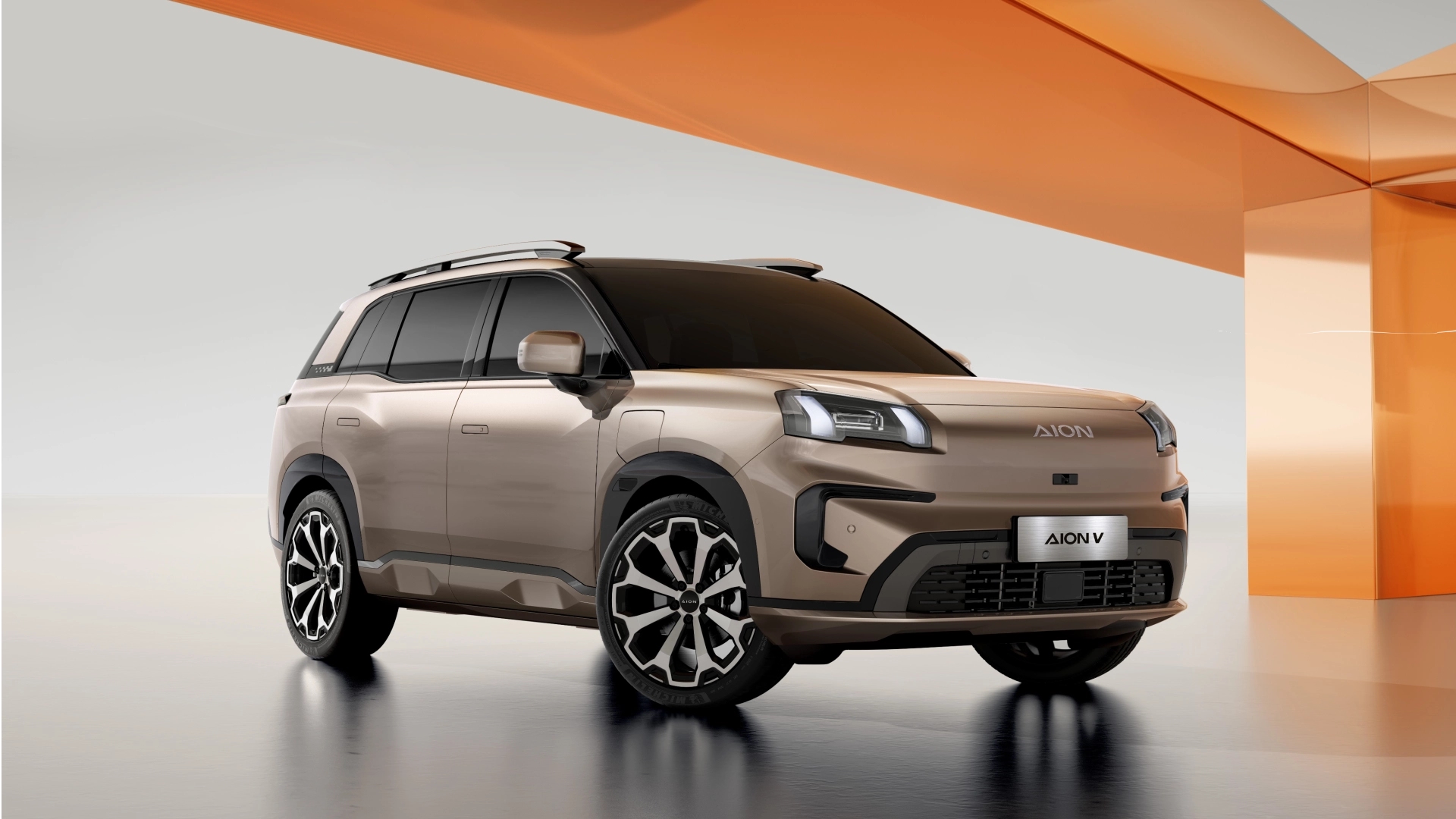
AION V is worth considering for buyers who want documented crash protection alongside everyday electric-SUV comfort. ANCAP's Australian and New Zealand assessment provides independent, model-specific evidence, while the local equipment sheet identifies what the purchased vehicle contains. The most useful buying step is a structured handover that makes assistance, visibility and family seating understandable before the first busy journey. This is a purchase assessment based on published records, not a claim of our own road testing. [V_AN][V_AU]
Start with the exact safety record
ANCAP identifies the relevant AION V as the battery-electric SUV introduced in Australia and New Zealand in November 2025, with the assessment applying to all listed variants built from July 2025. The published assessment includes a centre airbag and several collision-avoidance and lane-support functions. That is a concrete basis for reassuring protection: the reader can identify the vehicle, the assessment and the equipment behind the conclusion. [V_AN]
The practical benefit of an identifiable record is that a salesperson and buyer can discuss the same car. A generic statement that a brand makes safe vehicles is much harder to check. Keep the vehicle identification, local specification and assessment together when comparing quotations. Imported versions or later equipment revisions should be matched again rather than assumed identical.
Turn assistance into familiar controls
Reassuring protection works best when the driver knows what a warning means and where its settings live. Ask the demonstrator to show the speed-warning menu, lane-support controls and the information that appears when an assistance function is unavailable. These are suggested handover tasks, not claims that every alert behaves identically in every situation.
Try the ordinary tasks while parked: adjusting mirrors, selecting a camera view, setting demisting, changing the navigation volume and returning to the main driving screen. A system can be capable while its menu layout takes practice. A buyer who understands the controls before delivery has a better basis for judging convenient ownership than someone who evaluates the cabin only by screen size. Normal driving still requires the driver to observe the road and control the vehicle.
Use an evidence-to-action checklist
The following checklist translates the published safety record into decisions a buyer can actually complete. It deliberately separates verified equipment from personal fit. Neither a camera nor a crash rating measures whether your preferred seating position gives you comfortable visibility.
| Decision | Published anchor | Useful handover action |
|---|---|---|
| Collision protection | Model-specific ANCAP assessment [V_AN] | Match the assessment to the local vehicle and read category detail |
| Assistance | Local equipment and ANCAP system list [V_AN][V_AU] | Locate settings and identify availability messages |
| Family accommodation | The purchased vehicle and its restraint instructions | Install the intended child restraint in an approved seating position |
| Daily convenience | Australian equipment table [V_AU] | Practise climate, cameras and charging controls while parked |
Record the questions that remain unresolved and have the dealer answer them for the actual grade. This creates a reusable delivery checklist rather than a collection of disconnected promotional statements.
Make the whole household part of the handover
If two adults share the car, each should adjust the seat and mirrors and repeat the basic controls. Do not let the person most interested in technology become the only person who can operate everyday functions. The second driver may notice a display, a menu or an entry posture that the first driver overlooks.
For families, bring the restraint or other equipment that will be used regularly. Check belt access and the space available after the front seat is set for its normal occupant. An independent child-occupant assessment is valuable evidence, but it does not remove the need to use an approved restraint correctly. Convenient ownership comes from combining the vehicle's protection with a setup that the household can repeat consistently.
Two questions buyers often ask
Does a five-star rating mean there is no reason to test the controls?
No. A rating answers defined assessment questions. Familiarity with daily operation answers a different question: whether this driver can use the vehicle comfortably and attentively. Both belong in a sound purchase decision.
Is the more expensive grade automatically safer?
Do not infer that from the price. Compare the local safety rows, the assessment's applicability and any optional equipment. A higher price can buy comfort or trim changes without changing the relevant crash-rating result.
The buying conclusion
AION V offers a credible case for reassuring protection because an independent assessment can be linked to an identifiable local product. The next step is to make that protection understandable at handover. If the household can operate the important controls, fit its restraints and obtain clear local support information, the case for convenient ownership becomes much stronger. That is a useful reason to shortlist the vehicle, while leaving the final choice to the actual driving position, quotation and support arrangements.
Sources & references
- [V_AN] Rating year 2025, AU/NZ all variants built July 2025 onward and on sale November 2025 onwardANCAP · Rating year 2025, AU/NZ all variants built July 2025 onward and on sale November 2025 onward; reviewed 29 October 2026
- [V_AU] AION V Australian specificationGAC Australia · Current Australian Premium/Luxury table reviewed 29 October 2026; local versions, loading limits and charge conditions apply.
This is a source-based editorial guide, not a first-hand road test. Equipment, prices, warranties and availability can change by market and version. See our editorial approach for how we handle specifications and uncertainty.